The Rarest Cat Eye Color: What I’ve Seen in 12 Years as a Veterinarian
As a small-animal veterinarian for over a decade, I’m often asked: What is the rarest cat eye color? From thousands of exams, I can confidently say true copper is the rarest naturally occurring eye shade in cats.
Owners notice it immediately. A cat’s eyes are striking, expressive, and sometimes unusual enough to spark curiosity.
Among all the eye colors I see in my clinic, one question comes up again and again: What’s the rarest cat eye color?
From both my clinical experience and what we know from feline genetics, the rarest naturally occurring eye color in cats is true copper. Close behind it is heterochromia, where a cat has two different eye colors.
But rarity in eye color isn’t just trivia. Sometimes it hints at genetics, breed traits, or health considerations that owners should understand.
Why Most Cats Don’t Have Rare Eye Colors
When kittens are born, they all start with blue eyes. I explain this to new cat owners almost every spring when “kitten season” hits and people bring in young litters for their first exams.
The blue color at birth happens because the iris hasn’t developed melanin yet. As the kitten grows—usually between six and twelve weeks—the pigment builds up, and the eyes change.
Most adult cats settle into common shades like:
- Yellow
- Gold
- Green
- Hazel
These colors dominate because they’re controlled by typical melanin distribution in the iris.
Rare eye colors arise when genetic shifts alter pigment in unusual ways.
The Rarest Eye Color I See: True Copper
True copper eyes are stunning. They’re deeper and richer than the golden eyes many cats have. The iris looks almost metallic—like a polished penny under sunlight.
In my clinic, I probably see this color in only a handful of cats each year.
One case that sticks in my memory was a large male British Shorthair brought in by a breeder a few winters ago. The moment I shone my exam light into his eyes, the color jumped out. Instead of the warm yellow I expected, his eyes were a deep reddish copper.
The breeder was proud of it—and rightly so. That shade is extremely difficult to produce consistently, even in breeds where copper eyes are desired.
Breeds most likely to have true copper eyes include:
- British Shorthair
- Bombay
- Persian
- Some American Shorthairs
Even in those breeds, the color doesn’t appear in every cat.
Genetically speaking, copper eyes occur when the iris has a very high melanin concentration, but without shifting toward brown.
The Rare Case of Odd-Eyed Cats
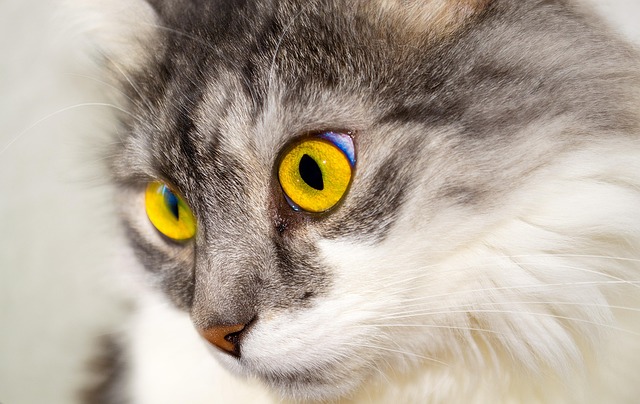
Another eye pattern people find fascinating is heterochromia, often called “odd eyes.”
This means one eye is blue while the other is green, yellow, or copper.
The first odd-eyed cat I treated belonged to a rescue volunteer who brought him in for a routine neuter. One eye was icy blue, and the other a bright gold. I remember double-checking the chart because I assumed someone had made a note about it earlier—turns out the volunteer hadn’t noticed it until after adopting him.
Odd eyes are rare because they result from uneven pigment development during early growth.
It’s most commonly seen in:
- White cats
- Turkish Angoras
- Turkish Vans
White cats are genetically predisposed because the gene responsible for their coat color can interfere with pigment migration during development.
A Common Mistake I See From Owners
One misconception I encounter surprisingly often is that blue eyes are considered rare in all cats, but in reality, blue is a common eye color in certain breeds. They’re actually quite common in certain breeds.
For example, every Siamese cat I’ve ever examined has blue eyes. It’s part of the breed’s genetic profile. The same goes for Ragdolls and Balinese cats.
The real rarity is finding blue eyes in cats whose breed or coat genetics don’t typically produce this color. Blue is rare only when it appears unexpectedly, outside the breeds known for it. Whenever I see that combination, I take a closer look because it sometimes connects to unusual genetics.
When Eye Color Might Signal a Health Issue
Most of the time, unusual eye color is simply genetic.
But in practice, I always check carefully when an owner tells me their cat’s eyes have suddenly changed color.
A client brought in a domestic shorthair whose green eyes had turned cloudy amber, which turned out to be inflammation.
Eye color shifts in adult cats can indicate:
- Uveitis
- Injury
- Glaucoma
- Rare pigment disorders
That’s why I tell owners to treat sudden color changes differently from natural color variations.
Why Breeders Care So Much About Eye Color
Breeders often ask me to examine cats intended for shows, and eye color is one of the first things judges look at.
A Bombay cat with anything other than copper eyes, for instance, won’t meet breed standards.
I remember evaluating a young Bombay that had slightly golden eyes instead of copper. The breeder was disappointed because the difference was subtle to most people, but in show competitions, it mattered.
Genetics can be unpredictable. Even carefully planned breeding programs sometimes produce unexpected eye shades.
What Cat Owners Should Actually Pay Attention To
From a veterinary perspective, eye color itself rarely matters.
What matters is clarity, symmetry, and stability.
Healthy cat eyes should be:
- Clear, not cloudy
- Consistent in color over time
- Free of redness or discharge
If those factors look normal, the specific color—whether green, copper, or blue—is mostly a matter of genetics and aesthetics.
The Moment I Realized How Rare Copper Eyes Really Are
One experience cemented it for me.
A few years ago, I volunteered at a large spay-and-neuter clinic that processed hundreds of stray cats over a weekend. We examined cat after cat—tabbies, tortoiseshells, black cats, calicos.
Out of the entire group, I remember seeing only one cat with unmistakable copper eyes.
That memory stands out, even after thousands of exams.
It’s a reminder that while rare eye colors get attention online, they’re genuinely uncommon in everyday veterinary practice.