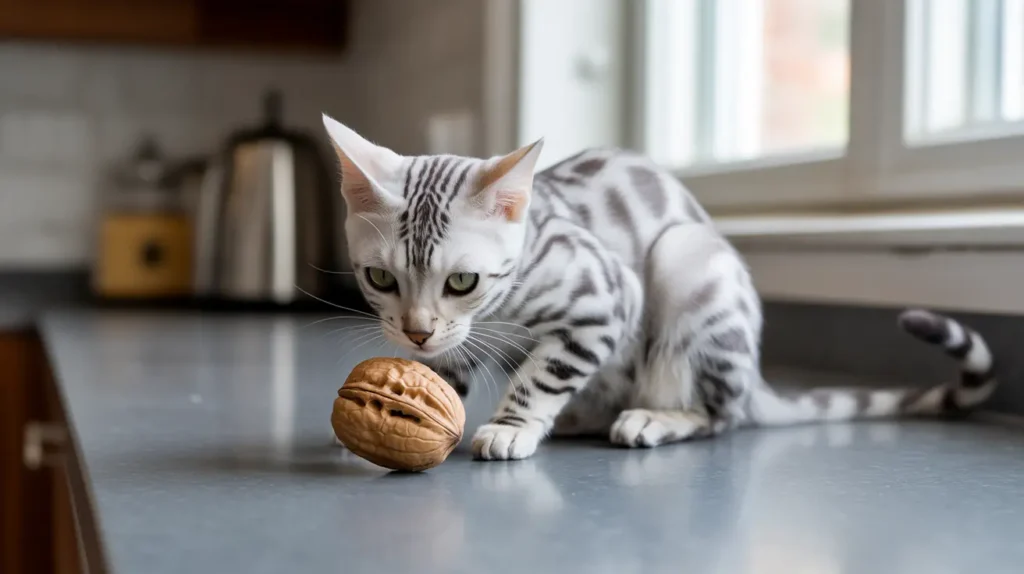
Can Cats Safely Eat Walnuts? A Guide for Pet Owners
After more than a decade working as a small-animal veterinarian, I’ve learned that cats have a remarkable ability to show interest in the one food they absolutely shouldn’t eat. Walnuts are one of those foods owners often ask me about, usually after their cat has already stolen a piece from the kitchen counter.
The short answer is simple: cats shouldn’t eat walnuts. They’re not just unnecessary in a cat’s diet; in some situations, they can cause digestive upset or even more serious health issues.
But the real concern isn’t only the walnut itself. It’s the context in which cats usually encounter them.
Why Walnuts Aren’t a Good Food for Cats
Cats are obligate carnivores. Their bodies are built to process animal protein, not nuts, seeds, or plant fats. A walnut doesn’t offer any nutritional benefit to a cat, and in many cases, it introduces risks.
In my practice, the problems I’ve seen with walnuts usually fall into three categories: digestive irritation, mold toxicity, and choking hazards.
Fresh walnuts aren’t technically poisonous to cats, but they’re very high in fat. A cat’s digestive system isn’t designed to handle that kind of fat load. Even a small amount can lead to stomach upset.
More concerning is the possibility of mold. Walnuts—especially ones stored improperly—can grow certain molds that produce toxins. These toxins can cause neurological symptoms in pets, including tremors and weakness. Dogs are more commonly affected, but cats are not immune.
Then there’s the physical issue. A walnut chunk is firm and uneven, which makes it a potential choking risk, especially for curious cats that like to swallow pieces without chewing.
A Case I Remember From Last Fall
One situation that stuck with me involved a young indoor cat whose owner had been baking during the holidays. The kitchen counter had a bowl of mixed nuts, including walnuts, sitting out.
At some point during the evening, the cat managed to snag a piece.
The owner didn’t see it happen, but noticed the cat vomiting several hours later and acting uncomfortable. When she brought him in the next morning, he was drooling slightly and refusing food.
In that case, the issue was straightforward gastrointestinal irritation. The walnut had simply been too fatty and too difficult for the cat’s stomach to process. With fluids and anti-nausea medication, he recovered quickly.
But it was a good example of something I tell clients all the time: just because a food isn’t labeled “toxic” doesn’t mean it’s safe for cats.
The Mold Risk Most Owners Don’t Consider
The bigger risk with walnuts isn’t the nuts themselves but how they’re stored.
Several years ago, I saw a situation involving a barn cat on a rural property. The owners had stored bags of walnuts in a shed. Some had been sitting there for quite a while.
The cat had apparently gotten into a few of them.
When they brought her to the clinic, she was trembling and seemed disoriented. Those symptoms immediately raised a red flag for mold toxins. Certain molds that grow on nuts can produce compounds called mycotoxins.
The cat needed supportive care and monitoring for several hours before the symptoms settled down.
That experience changed the way I talk to pet owners about nuts in general. The danger isn’t always obvious until something goes wrong.
Another Problem: Cats Don’t Always Chew Their Food
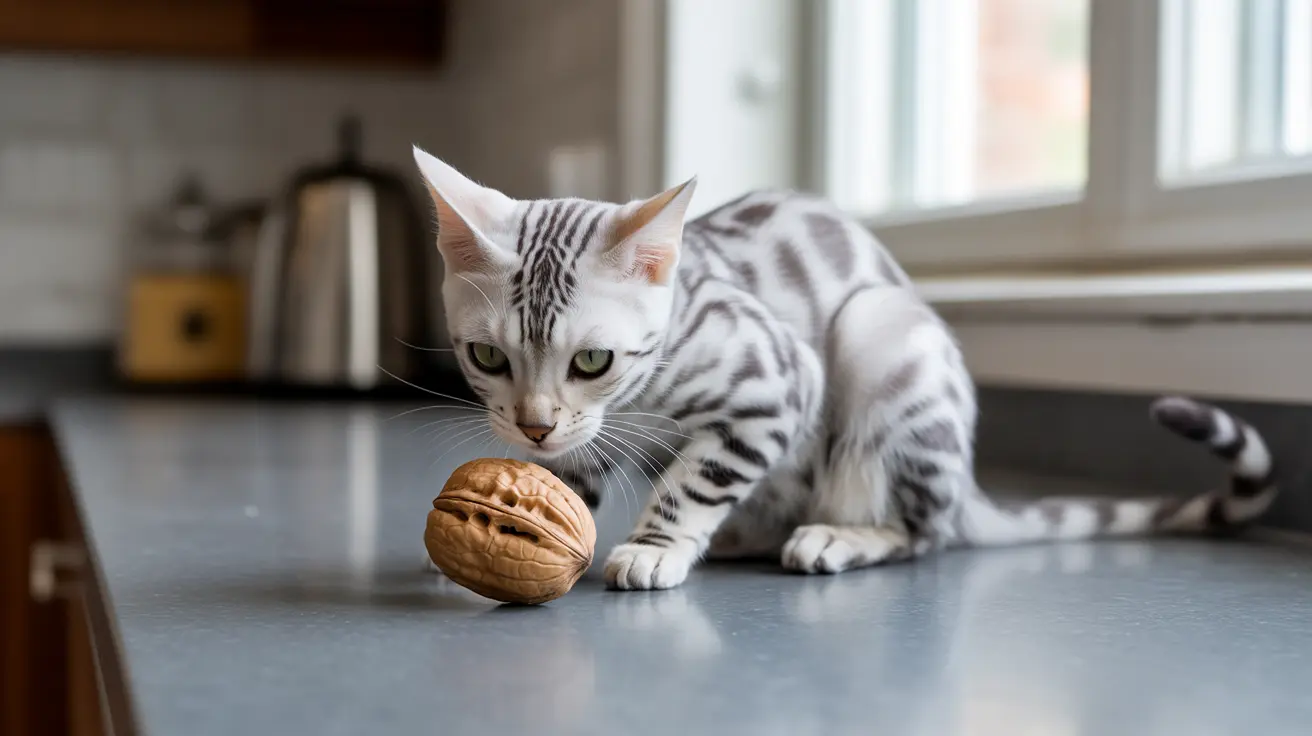
Many cat owners don’t realize that cats often swallow small pieces of food whole.
I remember a client who assumed her cat had only “played” with a walnut shell that had fallen on the floor. The cat later started gagging intermittently.
An X-ray showed a small fragment lodged in the esophagus. It wasn’t large, but it was sharp enough to cause irritation.
Situations like that are uncommon, but they happen often enough that I discourage giving nuts to cats entirely.
What Happens If a Cat Eats a Walnut?
If a cat manages to eat a small piece of a fresh walnut, most of the time the result is mild stomach upset—vomiting, diarrhea, or temporary loss of appetite.
However, there are a few symptoms that should prompt a call to your veterinarian:
- Persistent vomiting
- Tremors or muscle twitching
- Lethargy or unusual weakness
- Difficulty swallowing or gagging
- Lack of appetite lasting more than a day
These signs could indicate digestive irritation, obstruction, or exposure to mold toxins.
The Bigger Issue: Human Foods in General
One thing I’ve noticed over the years is that walnuts rarely appear alone. They’re usually part of a larger pattern of cats being offered human snacks.
Owners sometimes assume that because a food is healthy for people, it must also be safe for pets.
That’s rarely true.
A cat’s nutritional needs are extremely specific. Their bodies rely heavily on nutrients like taurine, which they naturally obtain from meat. Plant-based foods—including nuts—simply don’t contribute anything meaningful to their diet.
From a veterinary standpoint, there’s really no upside to feeding them.
Safer Alternatives If Your Cat Wants a Snack
If a cat seems curious about what you’re eating, the safest option is to offer something that actually aligns with their nutritional needs.
In my clinic, I often suggest small pieces of plain cooked chicken or turkey as occasional treats. These foods match a cat’s natural diet far better than nuts ever could.
Commercial cat treats formulated for feline digestion are also a safer option.
The key is moderation. Even healthy treats should only make up a very small portion of a cat’s daily calories.
My Advice After Years in Practice
If a client asks whether their cat can eat walnuts, my answer is straightforward: it’s best to avoid them.
They don’t provide nutritional value, can upset a cat’s stomach, and, in certain situations, pose risks that simply aren’t worth taking.
After years of seeing pets brought in for preventable food mishaps, I’ve become a firm believer in keeping human snacks away from curious paws. Cats are remarkably good at finding trouble in the kitchen, and walnuts are just one more temptation that’s better left off their menu.