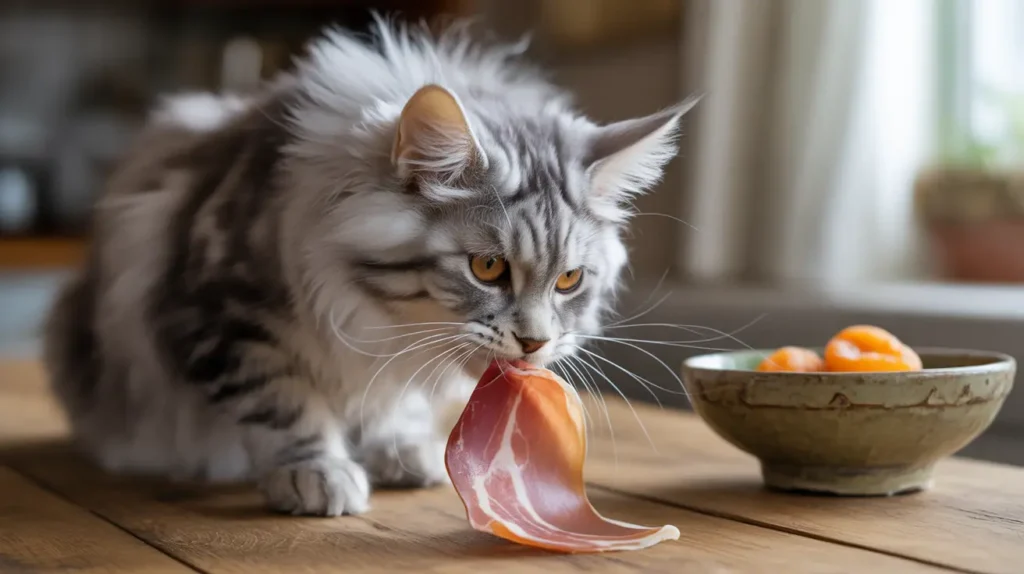
Guide to Giving Cats Prosciutto: What You Need to Know
I’ve been a practicing small-animal veterinarian for more than a decade, and I can’t count how many times a client has casually asked whether they can share human food with their cat. It usually comes up during routine visits. Someone pulls out their phone, shows me a picture of their cat staring intently at a charcuterie board, and asks, “Is it okay if she eats a little prosciutto?”
Prosciutto smells incredible to cats. It’s salty, fatty, and intensely meaty—basically everything that attracts a carnivore. So the question makes sense. But the answer isn’t quite as simple as yes or no.
From a veterinary perspective, prosciutto falls into that gray zone of foods that aren’t immediately toxic but aren’t something I recommend feeding regularly.
Why Prosciutto Attracts Cats So Easily
Cats are obligate carnivores. Their bodies are designed to run on animal protein and fat. Because of that, cured meats like prosciutto can smell irresistible to them.
I remember a client bringing in a young orange tabby that had jumped onto the kitchen counter during a dinner party. The cat grabbed a slice of prosciutto from a platter and ran under the table with it like a trophy. By the time anyone noticed, the slice was gone.
The owner was worried they’d poisoned their cat.
They hadn’t. The cat was completely fine.
But experiences like that highlight the real issue with prosciutto: not toxicity, but salt and processing.
The Real Problem With Prosciutto: Sodium
Prosciutto is a dry-cured ham. The curing process uses a large amount of salt to preserve the meat and intensify flavor.
Cats simply don’t handle sodium the same way humans do.
Even a small portion of prosciutto can contain far more salt than a cat should consume in a day. If it happens once, most healthy cats will be fine. But repeated exposure can start causing problems.
Over the years, I’ve treated several cats with early kidney concerns, and many of those owners loved sharing table scraps. Deli meats, bacon, and prosciutto were more common in the diet than people realized.
Cats are already predisposed to kidney disease as they age. Diets high in sodium can add unnecessary strain.
A Situation I See More Often Than You’d Think
A few winters ago, a client came in with a middle-aged cat who had been vomiting occasionally and drinking more water than usual. Nothing dramatic, just subtle changes.
While we were discussing diet, the owner mentioned giving the cat “tiny bits” of prosciutto most evenings while preparing dinner. It had become a routine reward because the cat would sit politely on the counter stool and wait.
Those small pieces added up to several slices a week.
Was the prosciutto the sole cause of the problem? Probably not. But reducing salty treats made a noticeable difference once the owner switched to safer alternatives.
Cats are small animals. Foods that seem harmless to us can accumulate in ways we don’t expect.
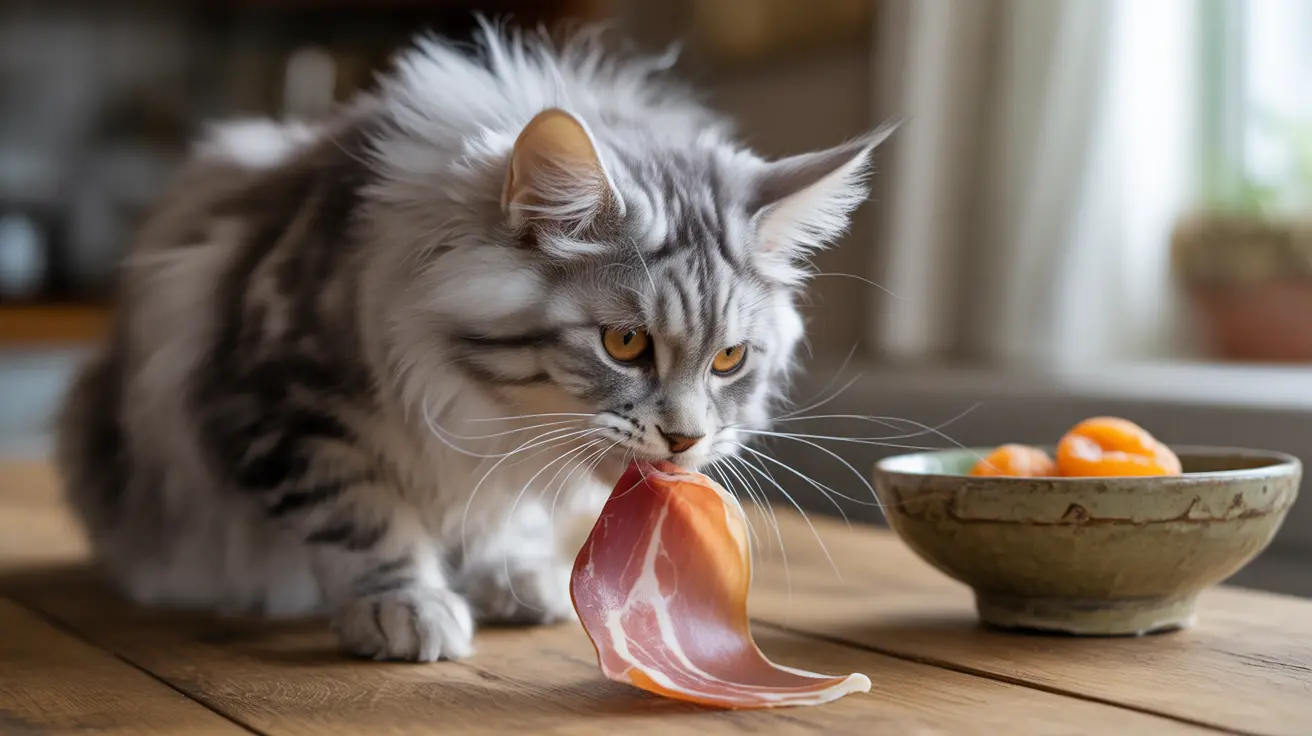
The Occasional Bite Isn’t Usually Dangerous
I don’t panic if a cat sneaks a piece of prosciutto. Most healthy cats can tolerate a tiny amount without any immediate issues.
If a client calls my clinic after their cat stole a slice from a plate, my first question is simple: how much did the cat eat?
A small shred or corner of a slice rarely causes problems. A whole serving, especially for a small cat, is a different story.
Too much salt can lead to symptoms like:
- Vomiting
- Excessive thirst
- Lethargy
- Diarrhea
In severe cases, high sodium intake can trigger more serious complications, though that usually involves much larger amounts than a single slice.
Another Issue: Fat Content
Prosciutto is also fairly fatty. Fat itself isn’t bad for cats—they actually rely on it for energy—but processed fatty meats can upset their digestive systems.
I’ve seen cats develop mild pancreatitis after their owners repeatedly shared rich table foods. It often starts innocently: a little bacon one morning, some deli turkey the next day, a bite of ham during dinner prep.
Over time, the digestive system pushes back.
Cats thrive on consistency, and highly processed foods introduce variables their bodies weren’t designed to handle regularly.
What I Usually Recommend Instead
When clients want to give their cat something special, I suggest sticking to simple, unseasoned animal protein.
Plain cooked chicken or turkey works well. No salt, no oils, no spices.
I’ve had many clients switch to tiny pieces of boiled chicken breast as a treat, and cats usually love it just as much as deli meat. It smells strong enough to satisfy their curiosity without adding unnecessary sodium.
Some people also use freeze-dried cat treats. Those can mimic the texture and flavor cats enjoy without the additives found in human food.
A Mistake I See Frequently
One pattern I’ve noticed over the years is owners treating prosciutto like a high-value training treat.
Cats can absolutely be trained, and food rewards help. But deli meats often become the default because they’re already in the refrigerator.
The problem is portion control.
I once worked with a client whose cat had learned to sit, spin, and high-five. The training was impressive. The treat being used was chopped prosciutto.
By the time we talked about it, the cat was eating several pieces per day during training sessions. That’s a lot of sodium for a ten-pound animal.
Switching the reward to freeze-dried chicken solved the issue without affecting the cat’s enthusiasm for training.
The Bottom Line From a Veterinary Perspective
Cats can technically eat a tiny piece of prosciutto without immediate harm. But that doesn’t mean it belongs in their regular diet.
From my experience in practice, the concerns aren’t dramatic poisoning events. They’re the slow accumulation of salty, processed foods that place unnecessary strain on a cat’s body over time.
A rare nibble from a charcuterie board probably won’t cause problems in a healthy cat. Making it a habit is where things start to go wrong.
Most cats are just as happy with a small piece of plain meat, and their kidneys will thank you for the swap.