What Do Different Cat Eye Colors Really Mean?
From a Veterinarian’s Perspective
During my years as a practicing small-animal veterinarian, I’ve found that cat eye color fascinates both owners and professionals. Surprisingly often, instead of medical questions, clients lean over the exam table and ask, “Is it normal that her eyes changed color?” or “Why are his eyes two different colors?”
Cat eye colors fascinate people, and honestly, they fascinate me too. After examining thousands of cats over the years, I’ve learned that those striking eye colors aren’t just cosmetic. They often tell a quiet story about genetics, age, and sometimes health.
Why Kittens Start With Blue Eyes
Nearly every kitten I examine during early wellness visits has the same eye color: cloudy blue. New cat owners often assume that’s the color their cat will keep forever.
That’s rarely the case, and the color changes are just the beginning of the story.
In kittens, the blue appearance isn’t actually pigment. It’s simply light scattering through an eye that hasn’t developed melanin yet. As the kitten grows—usually between six and twelve weeks—the cells that produce pigment begin to activate. Gradually, the eye color shifts into its permanent shade.
I remember a young couple bringing in a gray kitten they had rescued from behind a restaurant dumpster. The kitten had bright blue eyes, and they were convinced they had found a rare breed. A few weeks later, during the follow-up vaccine appointment, those eyes had turned a deep golden amber. They were shocked, but the explanation was a completely normal development.
I’ve seen this transition hundreds of times, and it never ceases to be interesting.
The Most Common Cat Eye Colors I See
While there are many variations, most domestic cats fall into a handful of color groups. Over the years of exams, these are the shades I encounter most often.
Yellow or Gold
Golden eyes are extremely common, especially in mixed-breed cats. The color ranges from pale honey to deep copper. I probably see this shade more than any other during routine checkups.
Green
Green eyes are slightly less common but still widely seen. Some cats develop a pale sea-green tone, while others have darker emerald shades that stand out dramatically against darker fur.
Blue
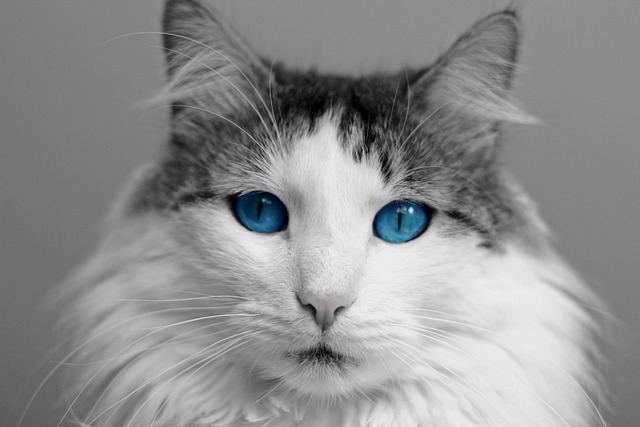
Adult blue eyes usually appear in cats with specific genetic traits. Many color-point breeds keep their blue eyes permanently. When I see a mature cat with bright blue eyes, genetics almost always explains it.
Copper or Orange
Occasionally, I see cats with very rich, copper-colored eyes that almost glow under exam lights. These deeper pigments are especially striking against black coats.
When Cats Have Two Different Eye Colors
Every so often, a cat walks into my clinic with something that always grabs attention: two different eye colors.
This condition is called heterochromia, and in most cases it’s completely harmless.
One eye may be blue while the other is green, gold, or copper. White cats are particularly likely to have this trait because of the way pigmentation genes develop.
A client once adopted a white rescue cat with one sky-blue eye and one bright-green eye. She was concerned, but after an exam, I assured her the cat was healthy.
That said, there is one thing veterinarians watch for. White cats with blue eyes may be at a higher risk of congenital hearing loss. It doesn’t happen in every case, but I usually advise owners to test their cat’s response to sound at home if they’re unsure.
When Eye Color Changes Should Raise Concern
Most eye color differences are genetic or developmental, but sudden changes in an adult cat can signal a problem.
This is something I’ve learned to take seriously.
A tabby came in for mild eye irritation; the owner noted that one eye appeared darker. Closer examination showed pigment changes and inflammation.
It turned out to be early uveitis, an inflammatory condition that can be associated with infections, injury, or immune problems.
The owner almost ignored it because the cat seemed otherwise healthy.
As a rule, I tell clients to watch for these warning signs:
- Sudden color change in one eye
- Cloudiness or milky appearance
- Redness or swelling
- Squinting or light sensitivity
Any of those deserves a veterinary exam. Eye problems can worsen quickly in cats, and early treatment makes a big difference.
Breed Influence on Eye Color
People sometimes assume eye color tells them a cat’s breed. That’s rarely reliable for mixed-breed cats, but purebred cats do show predictable patterns.
For example, color-point cats almost always have blue eyes due to the gene responsible for their coat pattern. Some breeds are known for deep copper or vivid green shades.
Still, genetics can surprise you. I’ve seen shelter cats with eye colors that rival some of the most expensive pedigreed animals.
One of my favorite patients—a scruffy brown rescue cat who visits annually for vaccines—has bright emerald-green eyes that look almost artificial in certain light. Visitors often assume she’s a rare breed. In reality, she came from a barn litter outside town.
A Common Mistake I See Cat Owners Make
A mistake I encounter fairly often is assuming eye discharge or mild redness is simply “part of their eye color.”
Owners sometimes think darker tear stains or subtle pigment changes are cosmetic. Occasionally, they wait weeks before scheduling an exam.
By the time I see the cat, the issue has progressed into an infection or ulcer.
Eyes are delicate organs, and cats are remarkably good at hiding discomfort. If something about your cat’s eyes suddenly looks different—color, clarity, or symmetry—it’s safer to have it checked.
Most of the time, the issue turns out to be minor. But catching the rare serious problem early is worth the visit.
Why Cat Eyes Fascinate Even Veterinarians
After years in clinical practice, I’ve examined countless cats under exam lights, ophthalmoscopes, and magnification lenses. Despite that routine exposure, I still pause occasionally to admire the variety.
A copper-eyed black cat, a blue-eyed Siamese, a green-eyed rescue with half-wild instincts—they all show how much genetic variation exists within a single species.
Eye color might not determine a cat’s personality or health in most cases, but it’s often the first detail that makes someone fall in love with their pet.
And from my side of the exam table, it remains one of the most visually striking features I encounter every day in veterinary practice.