CatChinMitesvsAcn
Mar
Cat Chin Mites vs Acne: What I Look For as a Veterinarian

As a licensed veterinarian who has spent years in small-animal clinics, I’ve examined countless cats brought in for “black spots on the chin.” Owners often assume it’s dirt, fleas, or something contagious. More often than not, the issue turns out to be feline acne. Occasionally, though, those spots are something different entirely—mites.

Distinguishing between cat chin mites and acne can be surprisingly tricky without experience. I’ve had owners treat the wrong condition for weeks because the two problems can look similar at first glance. Understanding how they differ—and what signs I rely on during an exam—can save a lot of frustration for both cats and their owners.

Why Cat Chins Develop Skin Problems

The chin is one of those areas cats can’t groom very well. Oil glands sit close to the surface of the skin, and those glands sometimes overproduce sebum. When that oil mixes with dirt and dead skin cells, pores clog. That’s the foundation of feline acne.

Mites, on the other hand, are parasites that live in or on the skin. These microscopic organisms can cause irritation, inflammation, and crusty lesions that sometimes resemble acne at a glance.

I’ve noticed a pattern over the years: acne tends to appear gradually and stays localized to the chin, while mite problems often bring additional symptoms that owners didn’t initially connect to the chin spots.

What Cat Chin Acne Actually Looks Like

Most cases I see in the clinic involve classic feline acne. The earliest stage usually looks like tiny black specks along the chin and lower lip. Many owners think it’s dirt that won’t wash off.

During exams, I sometimes use gauze to rub the chin to show owners what’s happening. Those black dots are essentially feline blackheads.

A few typical features stand out:

  • Small black plugs in hair follicles
  • Mild redness or swelling around the chin
  • Greasy or slightly dirty-looking fur
  • In more advanced cases, small pustules or crusts

I remember a young domestic shorthair brought in by a college student who was convinced his cat had parasites. The chin looked peppered with black debris. Under magnification, it was textbook acne—plugged follicles and mild inflammation. Switching the cat’s plastic food bowl to stainless steel and adding a simple cleaning routine cleared it up within a few weeks.

That sort of outcome is very common.

When Mites Are the Real Problem

Mite infestations on a cat’s chin are much less common than acne, but they do occur. The mites I occasionally diagnose include Demodex, which live within hair follicles.

Unlike acne, mite issues usually don’t stay confined to a single tiny area.

One case that stuck with me involved an older rescue cat brought in by a shelter volunteer. The chin appeared crusty and inflamed, resembling severe acne. But the cat also had patchy hair loss around the eyes and neck. That detail immediately pushed mites higher on my list of possibilities.

A skin scraping confirmed it.

Signs that make me consider mites include:

  • Hair loss around the chin or face
  • Thick crusts instead of small blackheads
  • Intense itching or scratching
  • Skin problems spreading beyond the chin.
  • Lesions around the eyes, ears, or neck

Mites trigger stronger irritation than typical acne, so cats often scratch or rub their faces more aggressively.

CatChinMitesvsAcn

A Closer Look During Diagnosis

In the clinic, I rely on a few simple tools to tell the difference.

The first step is always a physical exam with magnification. Acne usually reveals clogged follicles and mild inflammation. Mites tend to create a rougher texture and sometimes visible scaling.

When I suspect mites, I perform a skin scraping. It’s a quick procedure where a small sample of surface skin cells is collected and examined under a microscope.

That’s the moment the mystery resolves. If mites are present, they’re unmistakable under magnification.

I’ve learned over the years not to skip that step when symptoms don’t perfectly match acne. A quick microscope check can prevent weeks of ineffective treatment.

Common Mistakes I See Cat Owners Make

One mistake I encounter frequently is aggressive cleaning.

Owners see the black specks and try to scrub them away with human acne products or harsh antiseptics. That often makes feline acne worse. Cat skin is sensitive, and overcleaning irritates the follicles further.

Another mistake is assuming every chin problem is acne. A few months ago, a cat owner told me she had been treating “chin acne” for nearly two months with wipes and shampoos. The lesions were spreading across the cat’s face.

A microscope exam revealed mites almost immediately.

The treatments for these conditions are completely different, which is why guessing can delay recovery.

How I Usually Treat Cat Chin Acne

Most cases of feline acne are manageable with simple care.

In my practice, treatment often includes:

  • Switching plastic food bowls to stainless steel or ceramic
  • Cleaning the chin gently with veterinary wipes
  • Occasionally, prescribing topical antiseptic solutions.
  • Antibiotics if infection develops

One thing I always tell owners: acne tends to recur. Some cats simply produce more oil in that area.

That doesn’t mean the condition is dangerous, but it does mean occasional maintenance is part of life for some cats.

Treating Mites Requires a Different Approach

Mite infestations require targeted medications that eliminate the parasites.

Depending on the species involved, I may prescribe:

  • Topical antiparasitic treatments
  • Oral medications
  • Medicated baths in certain cases

The good news is that most mite problems respond quickly once the correct medication is used. The key challenge is recognizing that mites—not acne—are causing the issue.

A Practical Way to Think About the Difference

After years of seeing these cases, I often explain the difference to owners in simple terms.

Acne usually looks like black pepper sprinkled on the chin.

Mites tend to look more like irritated, crusty skin that spreads and causes itching.

That mental image isn’t perfect, but it helps people understand why their cat’s symptoms matter.

When a Vet Visit Makes Sense

A small amount of black debris on the chin isn’t always an emergency. Mild acne can often be monitored at home for a short time.

But I recommend scheduling an exam if:

  • The chin becomes swollen or painful.
  • Hair starts falling out.
  • Lesions spread beyond the chin.
  • The cat seems itchy or uncomfortable.

Those changes are exactly the clues that push mites or infection higher on the list of possibilities.

Over the years, I’ve seen many cat owners feel relieved once they understand what they’re dealing with. Most chin conditions—whether acne or mites—are treatable with the right approach. The challenge is simply knowing which problem you’re actually looking at.

Different Cat Eye Colors
Mar
What Do Different Cat Eye Colors Really Mean?

From a Veterinarian’s Perspective

During my years as a practicing small-animal veterinarian, I’ve found that cat eye color fascinates both owners and professionals. Surprisingly often, instead of medical questions, clients lean over the exam table and ask, “Is it normal that her eyes changed color?” or “Why are his eyes two different colors?”

Cat eye colors fascinate people, and honestly, they fascinate me too. After examining thousands of cats over the years, I’ve learned that those striking eye colors aren’t just cosmetic. They often tell a quiet story about genetics, age, and sometimes health.

Why Kittens Start With Blue Eyes

Nearly every kitten I examine during early wellness visits has the same eye color: cloudy blue. New cat owners often assume that’s the color their cat will keep forever.

That’s rarely the case, and the color changes are just the beginning of the story.

In kittens, the blue appearance isn’t actually pigment. It’s simply light scattering through an eye that hasn’t developed melanin yet. As the kitten grows—usually between six and twelve weeks—the cells that produce pigment begin to activate. Gradually, the eye color shifts into its permanent shade.

I remember a young couple bringing in a gray kitten they had rescued from behind a restaurant dumpster. The kitten had bright blue eyes, and they were convinced they had found a rare breed. A few weeks later, during the follow-up vaccine appointment, those eyes had turned a deep golden amber. They were shocked, but the explanation was a completely normal development.

I’ve seen this transition hundreds of times, and it never ceases to be interesting.

The Most Common Cat Eye Colors I See

While there are many variations, most domestic cats fall into a handful of color groups. Over the years of exams, these are the shades I encounter most often.

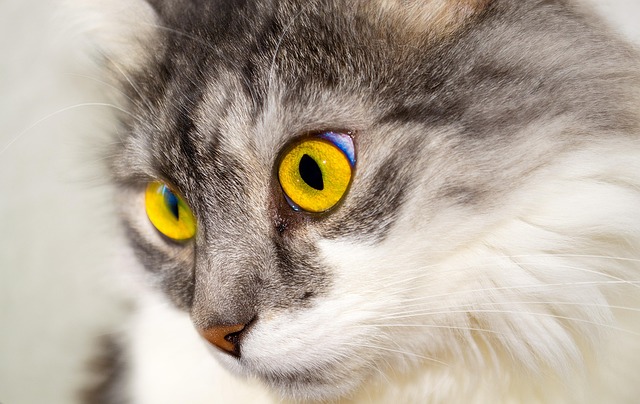
Yellow or Gold

Golden eyes are extremely common, especially in mixed-breed cats. The color ranges from pale honey to deep copper. I probably see this shade more than any other during routine checkups.

Green

Green eyes are slightly less common but still widely seen. Some cats develop a pale sea-green tone, while others have darker emerald shades that stand out dramatically against darker fur.

Blue

Adult blue eyes usually appear in cats with specific genetic traits. Many color-point breeds keep their blue eyes permanently. When I see a mature cat with bright blue eyes, genetics almost always explains it.

Copper or Orange

Occasionally, I see cats with very rich, copper-colored eyes that almost glow under exam lights. These deeper pigments are especially striking against black coats.

When Cats Have Two Different Eye Colors

Every so often, a cat walks into my clinic with something that always grabs attention: two different eye colors.

This condition is called heterochromia, and in most cases it’s completely harmless.

One eye may be blue while the other is green, gold, or copper. White cats are particularly likely to have this trait because of the way pigmentation genes develop.

A client once adopted a white rescue cat with one sky-blue eye and one bright-green eye. She was concerned, but after an exam, I assured her the cat was healthy.

That said, there is one thing veterinarians watch for. White cats with blue eyes may be at a higher risk of congenital hearing loss. It doesn’t happen in every case, but I usually advise owners to test their cat’s response to sound at home if they’re unsure.

Different Cat Eye Colors

When Eye Color Changes Should Raise Concern

Most eye color differences are genetic or developmental, but sudden changes in an adult cat can signal a problem.

This is something I’ve learned to take seriously.

A tabby came in for mild eye irritation; the owner noted that one eye appeared darker. Closer examination showed pigment changes and inflammation.

It turned out to be early uveitis, an inflammatory condition that can be associated with infections, injury, or immune problems.

The owner almost ignored it because the cat seemed otherwise healthy.

As a rule, I tell clients to watch for these warning signs:

  • Sudden color change in one eye
  • Cloudiness or milky appearance
  • Redness or swelling
  • Squinting or light sensitivity

Any of those deserves a veterinary exam. Eye problems can worsen quickly in cats, and early treatment makes a big difference.

Breed Influence on Eye Color

People sometimes assume eye color tells them a cat’s breed. That’s rarely reliable for mixed-breed cats, but purebred cats do show predictable patterns.

For example, color-point cats almost always have blue eyes due to the gene responsible for their coat pattern. Some breeds are known for deep copper or vivid green shades.

Still, genetics can surprise you. I’ve seen shelter cats with eye colors that rival some of the most expensive pedigreed animals.

One of my favorite patients—a scruffy brown rescue cat who visits annually for vaccines—has bright emerald-green eyes that look almost artificial in certain light. Visitors often assume she’s a rare breed. In reality, she came from a barn litter outside town.

A Common Mistake I See Cat Owners Make

A mistake I encounter fairly often is assuming eye discharge or mild redness is simply “part of their eye color.”

Owners sometimes think darker tear stains or subtle pigment changes are cosmetic. Occasionally, they wait weeks before scheduling an exam.

By the time I see the cat, the issue has progressed into an infection or ulcer.

Eyes are delicate organs, and cats are remarkably good at hiding discomfort. If something about your cat’s eyes suddenly looks different—color, clarity, or symmetry—it’s safer to have it checked.

Most of the time, the issue turns out to be minor. But catching the rare serious problem early is worth the visit.

Why Cat Eyes Fascinate Even Veterinarians

After years in clinical practice, I’ve examined countless cats under exam lights, ophthalmoscopes, and magnification lenses. Despite that routine exposure, I still pause occasionally to admire the variety.

A copper-eyed black cat, a blue-eyed Siamese, a green-eyed rescue with half-wild instincts—they all show how much genetic variation exists within a single species.

Eye color might not determine a cat’s personality or health in most cases, but it’s often the first detail that makes someone fall in love with their pet.

And from my side of the exam table, it remains one of the most visually striking features I encounter every day in veterinary practice.

Identify Your Cat's Breed
Mar
Identify Your Cat’s Breed: A Step-by-Step Guide

A Veterinarian’s Perspective

One of the most common questions I hear in the exam room is surprisingly simple: “What breed is my cat?” As a veterinarian with more than a decade of experience in small-animal practice, I’ve had this conversation with hundreds of cat owners. Many people expect a quick, definitive answer. The truth is that identifying a cat’s breed is rarely that straightforward.

Most cats I see in everyday practice are not purebred. They’re wonderful, unique companions with mixed ancestry, and that’s part of what makes them interesting. Still, there are clues—both physical and behavioral—that can help narrow things down. Over the years, I’ve learned that understanding those clues can also help prevent many misconceptions.

Cat's Breed

Most Cats Aren’t a Specific Breed

One of the first things I explain to owners is that most cats don’t belong to any formal breed. In veterinary records, we usually classify them as Domestic Shorthair, Domestic Medium Hair, or Domestic Longhair. Those terms aren’t breeds in the strict sense; they simply describe coat length.

Many people assume their cat must be something more specific. A fluffy gray cat might be labeled a “Russian Blue mix,” while a large, long-haired cat is often assumed to be part Maine Coon. In my experience, these guesses are usually based on appearance rather than genetics.

I remember a family that brought in a striking silver-gray cat they had adopted from a shelter. They were convinced she was a rare breed and had spent weeks comparing photos online. After examining her, I explained that she was most likely a domestic shorthair with a beautiful coat color. The owners seemed a bit disappointed at first, but by the end of the appointment, they were laughing about how they had tried to trace her “royal lineage.”

Physical Traits Can Offer Clues

Although many cats are mixed, certain physical features can suggest breed ancestry. When I examine a cat, I usually start with the overall body structure.

Some breeds have distinctive builds. Large, muscular cats with long bodies and prominent ear tufts sometimes resemble Maine Coons. Slender cats with long legs and wedge-shaped faces may hint at Siamese ancestry. Others have unusual coat patterns or textures.

Coat type can also reveal something about a cat’s background. Curly coats, for instance, occasionally appear in breeds like the Devon Rex. Thick double coats and heavy ruffs around the neck are more typical in northern breeds.

Still, appearance alone rarely confirms a breed. Many mixed-breed cats share these traits simply by chance.

Behavior Sometimes Points to Heritage

Behavior can occasionally provide another hint. Over the years, I’ve noticed certain personality traits that loosely align with breed tendencies.

Siamese-type cats tend to be vocal and socially demanding. Bengal-type cats often show intense curiosity and a love for climbing. Persian-type cats usually have calmer temperaments.

That said, personality is shaped by environment as much as genetics. I’ve met quiet Siamese mixes and extremely talkative domestic shorthairs. Cats have a way of ignoring the rules we try to assign them.

A client once brought in a young cat who constantly chirped and followed her around the house. She suspected Siamese ancestry even though the cat didn’t have the typical color pattern. After watching the cat interact during the exam, I agreed that some behavioral traits matched what I see in Siamese lines. But without pedigree records, we could only describe it as a possibility.

The Limits of Visual Identification

People are often surprised to learn that even veterinarians can’t reliably identify most cat breeds by sight alone. The majority of cats lack documented lineage.

A few years ago, a couple adopted a fluffy orange kitten they believed to be a purebred Maine Coon. They had seen photos online and felt certain. By the time the cat reached adulthood, he was clearly much smaller than a typical Maine Coon and lacked several defining features. He turned out to be a perfectly healthy domestic longhair—just not the breed they expected.

Situations like that aren’t uncommon. Breed identification in cats works very differently from that of dogs. Dog breeds often exhibit dramatic physical differences, whereas many cat breeds share a similar appearance.

DNA Tests for Cats

In recent years, several companies have begun offering DNA testing for cats. Some owners ask about them during appointments, especially if they’re curious about their cat’s ancestry.

These tests can provide interesting insights, but I usually explain their limitations. The science is still developing, and results may not always be definitive. For mixed-breed cats, the report may simply indicate small genetic similarities to multiple breeds.

One client showed me a DNA report for her cat that listed five different breeds in tiny percentages. She joked that her cat was “a little bit of everything,” which honestly wasn’t far from the truth.

Shelter Cats and Unknown Backgrounds

Cats adopted from shelters or found outdoors often have the most mysterious backgrounds. In my experience, these cats are typically domestic mixes with no specific breed ancestry.

I once treated a rescued kitten that had an unusual spotted coat. The owners hoped it might be related to Bengal cats. As the kitten grew, however, the coat pattern changed significantly, looking more like a standard tabby pattern. Genetics can surprise you, especially in mixed cats.

The important thing I remind people is that a cat doesn’t need a documented breed to be special. Many of the healthiest and most adaptable cats I’ve treated have been mixed-breed rescues.

Common Mistakes Owners Make

Over the years, I’ve noticed a few recurring misunderstandings when people try to identify their cat’s breed.

The most common mistake is assuming that a physical trait automatically means a specific breed. Long fur doesn’t necessarily mean Persian ancestry, and a large body doesn’t guarantee Maine Coon heritage.

Another mistake is relying heavily on internet comparisons. Photos online can be misleading, and lighting, grooming, or camera angles can make a cat look like something it isn’t.

I’ve also seen owners assume that a rare coat color indicates a rare breed. In reality, many unusual colors appear naturally in mixed-breed cats.

Identify Your Cat's Breed

Why Breed Matters Less Than Health

In veterinary practice, breed identification rarely changes how I care for a cat medically. Health history, age, lifestyle, and current symptoms matter far more than breed labels.

There are a few genetic conditions linked to certain breeds, but those situations typically involve cats with documented pedigrees. For the average household cat, routine wellness care remains the same.

In fact, mixed-breed cats often benefit from genetic diversity. They sometimes show fewer inherited health problems than highly specialized breeds.

Appreciating the Cat You Have

After years of practice, I’ve learned that breeding curiosity usually comes from affection. Owners want to better understand their cats. That curiosity is completely natural.

Still, I often encourage people to shift the focus slightly. Instead of asking “What breed is my cat?” it can be more helpful to ask, “What kind of personality and needs does my cat have?”

Those answers tend to matter far more in daily life. A cat’s habits, energy level, and preferences tell you how to care for them far better than any breed label ever could.

Most cats are simply unique individuals with mixed ancestry and their own quirks. In my experience, that unpredictability is part of what makes living with cats so fascinating.

Smurf Cat
Mar
Smurf Cat and the Real Questions Cat Owners Should Be Asking

A practicing small-animal veterinarian who regularly deals with unusual pet trends

Every few months, something strange from the internet makes its way into my exam room. A few years ago, it was cats wearing tiny shark costumes. More recently, clients started showing me pictures of something called the “Smurf Cat.” Usually, the conversation begins with a phone screen sliding across my desk and the question: “Is this safe for cats?”

Internet trends often blur the line between humor and real animal care. The Smurf Cat meme—blue cats paired with whimsical edits—may seem harmless, but viral ideas can prompt people to copy them with their pets. That’s when problems start.

Where the Smurf Cat Idea Comes From

Most people encountering the Smurf Cat for the first time assume it’s either a photoshopped image or some exotic breed they’ve never heard of. In reality, it’s neither. The meme typically shows a cat edited to resemble a blue cartoon character, inspired by the little blue creatures from the classic Smurfs franchise.

From a veterinary perspective, it’s important to be clear: there is no naturally blue cat breed.

Cat coats come in a range of colors and patterns—black, orange, gray, cream, tabby variations, and more—but a true bright blue like the meme shows doesn’t exist in nature. The closest natural color people sometimes call “blue” is a soft gray seen in breeds like the Russian Blue and the Chartreux.

These cats are elegant, slate-colored animals, but they look nothing like the neon blue Smurf Cat circulating online. This distinction is essential as we move from online images to real-life concerns.

The First Time Someone Asked Me About Dyeing a Cat

One spring afternoon, a client brought in a young white domestic short-haired for a routine vaccination. While we were talking, she hesitated and then asked something that caught me off guard.

She said her teenage son wanted to recreate a Smurf Cat for a video.

They weren’t planning anything extreme—just “a little blue coloring,” she told me. Still, she wanted to make sure it wouldn’t harm the cat, prompting our conversation.

I explained that dyeing cats is rarely safe. Even “pet safe” products can irritate skin, especially if the cat licks and ingests the dye.

Cats lick everything off their fur. That’s part of normal grooming behavior. When you add dye to that equation, you introduce chemicals directly into the digestive system.

In that particular case, the owner decided against it. A week later, she told me her son just edited the video digitally instead. That was the right decision.

Why Coloring a Cat Can Be Risky

At first glance, coloring a cat may seem harmless if the product says it’s safe. Yet in my experience, I’ve seen enough reactions to approach it with caution.

Cats have sensitive skin, and their grooming habits amplify the risks.

Some of the problems I’ve encountered include:

  • Skin irritation or dermatitis after topical dyes
  • Gastrointestinal upset from ingesting residues while grooming
  • Stress from bathing or handling during the coloring process.

One case from a few years ago involved a long-haired cat whose owner used a temporary pet dye before a costume party. The color eventually washed out, but the cat developed an itchy rash along its neck and shoulders where the dye had been applied most heavily.

Treatment was simple, but the cat was miserable for days. Situations like that sayk with yo.u.

The Bigger Issue: Internet Trends and Animal Welfare

The Smurf Cat meme itself is mostly harmless online. The main caution is that when internet jokes become real, pets can be harmed. It’s crucial to remember that safety and animal well-being must come first.

I’ve noticed a pattern over the years. Viral trends tend to follow three stages:

  1. A funny edited image spreads online.
  2. People begin recreating the idea with real animals.
  3. Veterinarians start seeing the consequences.

Not every trend causes harm, but many involve animals being dressed, dyed, or manipulated for content—a pattern I’ve seen repeat itself with each viral sensation.

A cat doesn’t understand that it’s participating in a meme. It only experiences stress when it is handled or altered.

Smurf Cat

A Situation That Changed How I Talk About This

One early situation in my career shaped how I discuss internet trends with clients.

A young couple brought in a rescue kitten that had been dyed pink by its previous owner for a social media photo shoot. By the time the kitten reached our clinic, most of the dye had faded, but patches of fur were brittle and dry.

What stood outwas the kitten’s panic when handled near its head or neck, likely from repeated batting during coloring.

We helped the kitten recover, but stress can last longer than skin irritation.

That case made me much more direct when people ask about cosmetic changes to pets.

If You Love the Smurf Cat, look

There are safer ways to enjoy the humor of the meme without using chemicals or stressing your cat.

Editing apps, filters, and digital overlays can produce the exact same effect as dye. In fact, many of the viral Smurf Cat images online are already digitally altered.

The internet rarely shows the behind-the-scenes process.

From my perspective, if the goal is a funny photo or video, editing software is far kinder to the animal.

A Quick Note About “Blue” Cat Breeds

Sometimes, conversations about Smurf Cat lead to genuine curiosity about gray-blue cat breeds, which is an important distinction to address.

The Russian Blue is the one I get asked about most often. They’re naturally slate-colored with dense coats and bright green eyes. They’re also known for being quiet, reserved cats that bond closely with their owners.

But even that beautiful gray tone is subtle. It’s nothing like the bright cartoon blue associated with the meme.

Nature tends to favor more muted palettes.

What I Usually Tell Clients

Over the years, I’ve developed a simple rule for cosmetic pet trends.

If a cosmetic change does not benefit the animal and involves any risk, I clearly advise against it. The pet’s health and safety should always be the top priority.

Cats don’t need dyed fur, costumes, or themed makeovers to be entertaining. Anyone who lives with a cat already knows they bring plenty of personality to the table.

One of my own cats—an elderly orange tabby who wanders through the clinic occasionally—once knocked an entire stack of appointment cards off the front desk and then calmly sat on the pile like it was a throne. No editing required. The staff still jokes about it.

Moments like that remind me why people love cats in the first place. The real magic of cats is in their character—not a coat of blue paint.int.

Understand Your Albino Cat's Unique Needs
Mar
How to Understand Your Albino Cat’s Unique Needs

What I’ve Learned as a Veterinarian

I’ve been practicing as a small-animal veterinarian for more than a decade, and every so often, a patient walks into my clinic that immediately draws attention from everyone in the room. Albino cats tend to do that. Their pale coats, light eyes, and delicate skin make them striking, but they also come with health considerations many owners don’t expect.

Over the years, I’ve treated a handful of albino cats, and they’ve taught me that caring for them is slightly different from caring for most other cats. The differences aren’t dramatic, but they matter.

What Makes a Cat Albino

Many white cats are mistaken for albino cats. True albinism is actually quite rare.

Albinism is a genetic condition in which the body produces little or no melanin, the pigment that gives skin, fur, and eyes their color. Without melanin, an albino cat appears almost entirely white, often with very pale blue or pinkish eyes and pink skin.

One of the easiest ways I explain the difference to pet owners is this: a typical white cat may still have pigment in the eyes or skin. A true albino cat lacks pigment almost everywhere.

I remember examining a young kitten brought into my clinic by a couple who thought they had adopted a rare albino. Under the exam light, I could see faint pigment around the ears and nose. The kitten was simply a white cat with blue eyes. Beautiful, yes, but not albino.

True cases of albino cats are rare.

The First Albino Cat I Treated

The first confirmed albino cat I worked with came in several years ago for persistent sunburn on the ears. The owner lived in a rural area and allowed the cat to roam outdoors most of the day.

When I looked at the cat’s ears, I immediately saw redness and peeling. Albino skin lacks the protective pigment that shields against ultraviolet light, so sun damage happens quickly.

We talked for quite a while that afternoon about lifestyle adjustments. I recommended limiting outdoor exposure during peak sunlight and keeping the cat indoors most of the day. A few months later, the owner returned for a checkup and told me the difference was dramatic. Once the cat stayed indoors and spent time near shaded windows instead of roaming fields, the skin problems disappeared.

That case stuck with me because it highlighted the biggest challenge these animals face: sunlight.

Sun Sensitivity Is the Biggest Concern

My main message to albino cat owners is unwavering: prioritize sunlight protection above all else.

Melanin acts like a natural sunscreen. Without it, the skin is extremely vulnerable. Areas with little fur coverage—especially ears, noses, and eyelids—are the most at risk.

Over the years, I’ve unfortunately seen cases where chronic sun exposure led to skin cancers, particularly on the ear tips. Those situations are heartbreaking because they often require surgical removal of damaged tissue.

Many such outcomes are preventable with simple precautions.

For albino cats, I usually recommend:

  • Primarily indoor living
  • Limited outdoor time early in the morning or late evening
  • Careful monitoring of the ears and nose for redness or crusting

Some owners ask about sunscreen for cats. There are veterinary-approved products, but I typically encourage lifestyle changes first. Keeping the cat indoors is far more reliable than trying to maintain sunscreen coverage on a grooming animal.

Understand Your Albino Cat's Unique Needs

Vision Can Be Different

Albino cats sometimes have subtle differences in vision.

Because melanin plays a role in eye development, albino animals may experience mild light sensitivity or reduced visual sharpness. In practice, I’ve noticed that some albino cats prefer dimmer environments.

One patient I saw regularly was unusually cautious around bright windows. The owner initially worried something was wrong with the cat’s eyesight. During the exam, I observed the cat moving comfortably in the room but squinting slightly when facing strong light.

Once the owner rearranged a few sunny resting spots and added shaded areas in the home, the cat’s behavior normalized.

Small lifestyle changes, guided by awareness of their needs, can significantly improve albino cats’ well-being.

Hearing Issues: A Common Misunderstanding

White cats with blue eyes are often associated with deafness, but that link is not quite as straightforward with albino cats.

In my experience, true albino cats don’t always show the same rate of congenital deafness seen in certain white-coated cats with the dominant white gene. Still, hearing issues can occur, so I always test responses to sound during exams.

I once evaluated an albino adult cat whose owner believed it was deaf because it rarely responded to calls. During the visit, I made a quiet clicking sound behind the cat while it was distracted. The ears turned immediately.

The cat wasn’t deaf at all. It had simply learned to ignore the owner’s voice.

Cats can be selective about what they hear.

Skin Care Matters More Than Owners Realize

Albino cats often have very delicate skin.

Even minor scratches or irritation can look dramatic because the pink skin shows inflammation quickly. I often advise owners not to panic at the first sign of redness but to monitor changes closely.

A small scratch usually heals quickly. Persistent redness or scabbing deserves a veterinary check.

One detail many people overlook is reflective surfaces in the home. Large glass doors, bright patios, and sunlit balconies can increase UV exposure indoors. I’ve suggested window films or curtains in a few cases where cats liked to nap in intense sunlight.

Simple environmental tweaks can make a noticeable difference.

Grooming and Coat Care

From a grooming standpoint, albino cats aren’t drastically different from other cats. Their coats tend to be fine and soft, though, so regular brushing helps prevent matting and keeps the skin healthy.

Because their skin is sensitive, I advise against frequent bathing unless medically necessary. When bathing is needed—usually for skin conditions—I recommend gentle, veterinarian-approved shampoos.

Owners sometimes worry about keeping the coat perfectly white. In practice, a little discoloration is normal, especially around the face or paws.

Cats don’t care about cosmetic perfection.

Personality Traits I’ve Observed

After working with several albino cats, I’ve noticed they often develop strong bonds with their owners. That may partly be because many of them spend more time indoors and interact closely with others.

One cat that visited my clinic regularly had a habit of climbing onto the owner’s shoulder during exams. It was unusually calm in a clinical environment, almost as if it had grown used to careful handling.

Animals that require a little extra care often receive a little extra attention. That relationship can create very affectionate companions.

Mistakes I Often See Owners Make

The most common mistake I encounter is assuming albino cats can live exactly like any other outdoor cat.

In many cases, owners simply aren’t aware of the risks. Once they understand the sun sensitivity issue, they’re usually eager to make adjustments.

Another mistake is misidentifying albino cats altogether. Many white cats are labeled “albino” online or by breeders, even though they have normal pigmentation genetics. A proper veterinary evaluation can clarify that fairly quickly.

Are Albino Cats Difficult to Care For?

Albino cats are not difficult to care for with the right knowledge. Awareness and targeted precautions lead to healthy lives.

Provide shade, limit sun exposure, monitor skin health, and maintain regular veterinary visits—these are the key takeaways to ensure albino cats live long, healthy lives just like other cats.

Albino cats make an impression with their appearance, but the most lasting impact comes from their personalities and the deeper owner bonds formed through mindful care.

Care for Your Russian White Cat
Mar
How to Care for Your Russian White Cat: A Vet’s Guide

I’ve been practicing as a feline-focused veterinarian for more than a decade, and certain cat breeds leave a lasting impression. The Russian White is one of them. They aren’t the most common cats I see in the clinic, but the ones that come through my exam room tend to stick in my memory.

Their striking white coats and calm personalities catch people’s attention right away. But what I’ve learned over the years is that their beauty is only a small part of the story. Living with one has its own quirks, advantages, and responsibilities that new owners often don’t anticipate.

The Russian White developed from the same lineage as the Russian Blue, and they share many personality traits: intelligence, loyalty, and a tendency to bond closely with one or two people. In practice, that combination can make them wonderful companions—but sometimes challenging patients.

The First Russian White I Treated

The first Russian White I remember clearly came into my clinic several years ago. The owner was worried because the cat refused to eat whenever guests visited the house. At first glance, the cat looked perfectly healthy—bright eyes, a glossy coat, and a normal weight.

But during the exam, the behavior made sense.

The moment a technician entered the room, the cat retreated deep into the carrier and wouldn’t make eye contact. Russian Whites often have a sensitive temperament, and in my experience, they react strongly to unfamiliar environments.

I advised the owner to establish a predictable routine and a quiet feeding area for the cat. A few months later, she returned for a checkup and told me the cat had improved dramatically simply by moving its food bowl to a quiet bedroom away from household noise.

That situation comes up more often than people expect. Russian Whites are not fragile cats, but they are emotionally perceptive animals.

Personality Traits You Notice at Home

Owners often describe Russian Whites as gentle, intelligent, and observant. In practice, I’ve found those descriptions to be accurate.

They tend to watch before they act. While many cats rush to greet strangers or explore new spaces, Russian Whites usually study the situation first.

A client once told me her Russian White would sit quietly at the top of the staircase whenever someone new entered the house, watching like a silent supervisor. After about ten minutes, the cat would decide whether the visitor was acceptable.

This cautious nature can make them excellent companions for calm households. They form deep attachments and often follow their preferred person from room to room.

But they are rarely the type of cat that enjoys constant noise or chaotic activity.

Grooming Is Easier Than Most People Expect

Many people assume a white cat must require constant grooming. Surprisingly, Russian Whites are relatively low-maintenance.

Their coats are dense but fine, which means they shed moderately rather than heavily. In most homes, brushing once or twice a week is enough to keep the coat healthy.

In my clinic, I occasionally see owners over-grooming their pets, brushing daily out of concern for shedding. That usually isn’t necessary and can actually irritate the skin if done too aggressively.

What I recommend instead is a simple routine:

  • Weekly brushing
  • Regular nail trimming
  • Occasional ear checks

Their coats naturally stay clean because Russian Whites are meticulous self-groomers.

Care for Your Russian White Cat

Health Patterns I’ve Seen Over the Years

Overall, Russian Whites are a fairly robust breed. Compared with some pedigree cats, they tend to have fewer inherited conditions.

However, I’ve noticed a few patterns in practice.

Weight gain is surprisingly common. Their calm temperament means they may not burn as much energy as highly active breeds. I’ve seen several Russian Whites gradually become overweight simply because their owners underestimated how little exercise they were getting indoors.

Another issue is stress sensitivity. They often react strongly to environmental changes—such as moving homes, new pets, or schedule disruptions.

One case I remember involved a Russian White that stopped using the litter box after the owner rearranged furniture and added a new sofa. After ruling out medical causes, we realized the cat had lost its preferred resting spot near a window. Restoring that perch solved the problem almost immediately.

Cats like these thrive on predictability.

A Common Mistake New Owners Make

One mistake I frequently see is assuming Russian Whites will behave like outgoing breeds.

Some owners expect instant affection or playful attention from guests. When the cat hides or stays distant, they worry that something is wrong.

In reality, this breed often bonds deeply with one or two people while remaining reserved with everyone else.

Trying to force social interaction can backfire. I’ve seen nervous Russian Whites develop stress-related behaviors simply because well-meaning owners kept introducing them to large gatherings.

Quiet encouragement works much better than pressure.

Living With One Long-Term

What stands out most to me about Russian Whites is their loyalty. Over the years, I’ve treated many breeds, but owners of these cats often describe a particularly close bond.

One elderly client once told me her Russian White would sit beside her every evening at the same time without fail. The cat had learned her routine so precisely that it seemed almost like an internal clock.

That level of attentiveness is typical for the breed.

If someone wants an independent cat that disappears for hours, this may not be the best choice. Russian Whites tend to stay nearby, quietly observing and participating in daily life.

The Kind of Home That Fits Them Best

From what I’ve seen professionally, Russian Whites do best in calm, consistent environments.

They thrive with owners who appreciate quiet companionship rather than constant activity. Homes with predictable routines, cozy window perches, and moderate play sessions usually suit them well.

They can live happily with other pets, but introductions should be slow and respectful. Their cautious nature means they prefer time to adjust.

People who value a thoughtful, observant companion often find this breed especially rewarding. Russian Whites may not demand attention loudly, but they build relationships that feel deeply personal over time.

Cat Vomit Color Chart
Mar
Cat Vomit Color Chart: What the Colors Tell Me as a Veterinarian

After more than a decade working as a licensed veterinarian in small-animal clinics, I can say that cat vomit is one of the most common concerns pet owners bring through the door. Sometimes a client walks in with a worried expression and a paper towel wrapped carefully in a plastic bag. Other times, they just show me a photo on their phone.

I understand the worry. Vomiting in cats can mean anything from a harmless hairball to a serious illness. The color often provides the first clue about what’s happening inside.

Color alone doesn’t tell the whole story, but it can help point us in the right direction. I explain this with a simple mental ‘vomit color chart’ to help owners understand what they’re seeing.

Clear or Foamy Vomit

Clear or slightly foamy vomit is probably the type I hear about most often.

In many cases, this happens when a cat’s stomach is empty. The stomach continues producing acid, and eventually that irritation causes the cat to vomit a small amount of fluid. The liquid may look clear, white, or lightly foamy.

I remember a young indoor cat brought to me by a first-time owner a few years ago. The owner thought something was terribly wrong when the cat vomited clear foam early in the morning. After talking through the cat’s routine, we realized the cat had gone nearly 12 hours overnight without food. Splitting the meals into smaller portions throughout the day solved the problem almost immediately.

In my experience, clear vomit is commonly linked to:

  • Empty stomach irritation
  • Mild nausea
  • Hairballs are forming but not fully expelled.
  • Occasional stomach upset

If it happens occasionally and the cat otherwise behaves normally—eating, playing, and using the litter box—it usually isn’t alarming. But frequent episodes are worth investigating.

Yellow Vomit

Yellow vomit usually means bile is present.

Bile is produced in the liver and stored in the gallbladder, helping break down fats during digestion. When the stomach is empty or irritated, bile can reflux into the stomach and be vomited out.

It can range from pale yellow to mustard.

One case that sticks in my mind involved an older cat who vomited yellow bile several mornings in a row. The owner assumed it was hairballs. During the exam, I noticed the cat had lost some weight, and further tests eventually revealed early inflammatory bowel disease. Once the cat started a specialized diet and medication, the bile vomiting stopped.

Yellow vomit can indicate:

  • Empty stomach bile reflux
  • Digestive inflammation
  • Food intolerance
  • Early gastrointestinal disease

I tend to pay closer attention when bile vomiting becomes a pattern rather than a one-time incident.

Green Vomit

Green vomit is less common but tends to worry owners more because of the color.

True green vomit usually contains more bile or partially digested plant material. Cats that chew houseplants or grass often produce greenish vomit shortly afterward.

I’ve seen this many times in spring. A client once rushed in, convinced her cat had been poisoned because the vomit was green. After asking a few questions, she remembered the cat had been chewing a decorative plant on the windowsill. Fortunately, it wasn’t toxic—just irritating to the stomach.

Still, green vomit can occasionally signal:

  • Significant bile reflux
  • Intestinal irritation
  • Ingestion of plants or foreign material

If a cat seems lethargic, refuses food, or keeps vomiting green fluid, I advise owners not to ignore it.

Brown Vomit

Brown vomit can mean different things depending on its shade and consistency.

Sometimes it simply represents digested food that has been sitting in the stomach. Cats that eat quickly or regurgitate shortly after meals may produce brownish vomit containing partially digested kibble.

However, darker brown vomit can sometimes indicate digested blood from the stomach or upper intestines. This tends to have a thicker, almost coffee-ground appearance.

A few years ago, I examined a cat whose owner described the vomit as “mud-colored.” That description immediately caught my attention. The cat had been hiding more than usual and eating less. Tests later revealed a stomach ulcer, which fortunately responded well to treatment once we caught it.

Brown vomit isn’t always serious, but I’m cautious if the cat also shows appetite or behavior changes.

Cat Vomit Color Chart

Red or Pink Vomit

Red or pink vomit means blood is present, and that always deserves attention.

Sometimes the blood is minor, appearing as pink streaks in clear or yellow fluid. Minor irritation of the throat or stomach lining can cause this.

But brighter red blood suggests active bleeding somewhere in the digestive tract.

One situation I remember clearly involved a long-haired cat who had been vomiting repeatedly from a severe hairball obstruction. By the time the owner brought her in, the vomit had started showing pink streaks from irritation in the esophagus. Thankfully, we were able to resolve the obstruction before things became more serious.

Blood in vomit can result from:

  • Severe vomiting irritation
  • Foreign objects in the stomach
  • Ulcers
  • Toxin exposure
  • Gastrointestinal disease

Even small amounts of blood should be discussed with a veterinarian, especially if vomiting continues.

Hairballs Mixed With Vomit

Many owners assume every vomiting episode is a hairball. In reality, true hairballs look very specific.

They usually appear as tubular clumps of tightly packed hair surrounded by mucus or stomach fluid. The fluid may be yellow or clear.

During heavy shedding seasons, especially spring and fall, I see a spike in hairball-related vomiting. Long-haired breeds are particularly prone to it.

I often advise brushing routines and hairball-control diets before reaching for medications. In many cases, simple grooming changes can dramatically reduce the issue.

Mistakes I See Cat Owners Make

Over the years, I’ve noticed several patterns that lead to delayed treatment or unnecessary panic.

The most common mistake is thinking vomiting is always “normal for cats.” Occasional vomiting happens, but frequent episodes need investigation.

Another issue is focusing only on the color while ignoring the cat’s overall behavior. A bright, active cat who vomits once is very different from a cat who hides, refuses food, and vomits repeatedly.

I also see owners switch foods too quickly when vomiting appears. Sudden diet changes often make the situation worse rather than better.

When Vomit Color Signals an Emergency

Most vomiting cases can wait for a scheduled veterinary visit, but certain signs push me to act quickly.

If a cat vomits large amounts of blood, dark coffee-ground material, or persistent green bile, I recommend immediate evaluation. The same applies if vomiting is paired with lethargy, abdominal pain, or refusal to drink water.

Kittens and senior cats can deteriorate faster, so I’m especially cautious with them.

What I Tell Cat Owners to Watch For

Whenever a client calls the clinic about vomiting, I ask a few simple questions to determine urgency.

How often is the cat vomiting?

What color is the fluid?

Is there food, hair, or foreign material in it?

Is the cat still eating and behaving normally?

Those details give me a clearer picture than color alone.

After years of practice, I’ve learned that the floor stain a cat leaves behind often tells a story. Not always the whole story—but enough to guide the next step toward helping that cat feel better.

Can a Dog Get a Cat Pregnant
Mar
Can a Dog Get a Cat Pregnant? A Veterinarian Explains

During my years as a small-animal veterinarian, one question that surprises many people is whether a dog can get a cat pregnant. I’ve heard it from worried pet owners who saw unusual behavior between their pets, and from curious kids who genuinely want to understand how animals reproduce.

The main takeaway is clear: a dog cannot get a cat pregnant, under any circumstances.

Let’s explore why this is the case, so pet owners can better understand animal interactions and avoid unnecessary concerns.

Why Dogs and Cats Cannot Reproduce Together

Dogs and cats belong to entirely different biological families. Dogs are part of the Canidae family, while cats belong to Felidae. These groups separated millions of years ago in evolutionary history, and their reproductive systems are simply incompatible.

For pregnancy to occur, several very specific biological conditions must line up:

  • The sperm and egg must be genetically compatible
  • The sperm and egg must be genetically compatible. lization
  • The chromosome numbers must match closely enough to produce an embryo. chromosomes, and a cat has 38, so the genetic mismatch prevents fertilization or embryo development.

In practical veterinary terms, there has never been a documented case of a dog-cat hybrid. It’s biologically impossible.

Why Some Pet Owners Think It Happened

Over the years, I’ve had several conversations with owners who believed their dog might have impregnated their cat. The concern usually comes from witnessing unusual behavior.

A notable example was when a client brought in her cat, worried the neighbor’s dog had mated with her after seeing mounting behavior.

From the owner’s perspective, it looked like mating.

In reality, the dog was reacting to hormonal signals. When female cats are in heat, they release strong pheromones that can attract male animals—including dogs. The dog’s behavior was instinctive, not reproductive.

After learning about the biological differences, the owner was relieved. The cat later became pregnant by another neighborhood cat.

Animals Sometimes Attempt to Mate Across Species

This surprises people, but animals don’t always recognize species boundaries the way humans do. Hormones and instinct often drive their behavior.

Another example involved a dog persistently mounting the household cat. The cat tolerated it briefly before leaving.

What was happening was simple dominance and misplaced mating behavior. Male dogs, especially those that aren’t neutered, sometimes mount other animals—including cats, other dogs, or even objects like pillows.

It looks alarming, but it doesn’t lead to pregnancy.

Can a Dog Get a Cat Pregnant

The Real Risk: Stress and Injury

While pregnancy is impossible, these interactions can still create problems.

Cats generally don’t tolerate being mounted by dogs. Dogs are much larger, and even playful behavior can stress or injure a cat.

I once treated a limping cat after repeated harassment from a household dog, who became overly interested when the cat was in heat.

At first, the owner thought it was harmless, but the stress led the cat to stop eating normally and start hiding.

After we discussed the situation, the owners chose to spay the cat and neuter the dog. The behavior stopped almost immediately.

A Common Mistake I See in Multi-Pet Homes

One of the most common misunderstandings I encounter is the belief that different species don’t react to each other’s reproductive cycles.

In reality, dogs can absolutely detect when a cat is in heat. Their sense of smell is powerful enough to pick up hormonal changes easily.

When that happens, you might see:

  • Dogs obsessively sniffing the cat
  • Following the cat around, the dogs are obsessively sniffing the cat. Their agitation or whining.

Owners sometimes assume this means mating is possible. In truth, it’s simply a dog responding to strong reproductive scents.

Spaying or neutering usually eliminates the problem.

Why Cross-Species Hybrids Are So Rare

People often bring up animals like mules or ligers when this topic comes up.

Those hybrids occur because the parent species are very closely related genetically. Horses and donkeys share a recent evolutionary history. Lions and tigers belong to the same genus.

Dogs and cats are not remotely that close.

They diverged tens of millions of years ago and have completely different reproductive biology.

In practical veterinary medicine, this question comes up regularly, but the answer has always remained the same.

What to Do if Your Dog Keeps Mounting Your Cat

From a veterinary perspective, the goal is to reduce stress and prevent injury. If it hasn’t been done already

  • Provide escape spaces for the cat like high shelves or cat trees
  • Provide escape spaces for the cat, like high shelves or cat trees. Avoid training or exercise.

In my experience, once hormones are removed through spaying or neutering, most of these behaviors disappear quickly.

The Question That Always Comes From Kids

Every so often, a child in the exam room asks this question directly. I actually enjoy those moments because they open the door to explain how animal biology works.

I usually tell them something simple: dogs can only have puppies with other dogs, and cats can only have kittens with other cats.

It’s a straightforward truth that clears up the confusion immediately. Suppose their biology might overlap more than it does. But despite occasional strange behavior between pets, their reproductive systems are entirely separate.

To reiterate the main message: a dog cannot get a cat pregnant. What looks like mating is simply instinct, hormones, or dominance—not reproduction.

Different Types of Siamese Cats
Mar
How to Identify Different Types of Siamese Cats

What I’ve Learned After Years Working With the Breed

After more than a decade working as a veterinary technician in a busy small-animal clinic, I’ve handled hundreds of cats of all temperaments and body types. Few breeds spark as many questions from owners as Siamese cats. People often assume there’s only one “type,” but in reality, Siamese cats come in several distinct varieties.

I’ve had owners walk into the clinic holding two cats they both believed were Siamese, yet the animals looked completely different. One might have a sleek, wedge-shaped face and huge ears, while the other had a rounder head and thicker body. Both were technically Siamese — just different types.

Understanding these differences matters. Siamese types influence personality, health, and a cat’s vocalization. Matching the right type with the right household can make a big difference.

Types of Siamese Cats

Traditional Siamese (Applehead)

The traditional Siamese, often called the Applehead Siamese, is the closest to the original cats that came from Thailand generations ago. In my experience, these cats have the most balanced personalities of the group.

Physically, they’re easy to recognize once you know what to look for. The head is rounder, the body is sturdier, and the ears are proportionate rather than oversized. The name “Applehead” comes from the slightly rounded shape of its skull.

A few years ago, a couple brought in their Applehead Siamese because they were worried about her weight. They had read online that Siamese cats should look extremely thin. What they didn’t realize is that the term “slim body type” usually refers to modern show-line Siamese. Their cat was perfectly healthy — just built the way traditional Siamese are supposed to be.

Appleheads tend to be affectionate without being overwhelming. Many still talk a lot, but the volume and intensity usually feel more manageable than what I see in some modern Siamese lines.

Classic Siamese (Old-Style)

The Classic Siamese, sometimes called “Old-Style Siamese,” sits somewhere between the traditional Applehead and the modern show type.

These cats still have a slightly rounded face, but their bodies are slimmer and more elongated. The ears are larger, though not dramatically oversized.

I remember examining one belonging to a retired teacher who described her cat as “a roommate who talks constantly.” That’s actually a very accurate description of many Classic Siamese cats. They tend to be incredibly social and will often follow their owners from room to room.

One thing I’ve personally noticed about Classic Siamese cats is their intelligence. They learn routines quickly. In the clinic, they’re often the cats that figure out how to open carriers or manipulate latches. I’ve watched one push repeatedly against the carrier door until it popped open while the owner was filling out paperwork.

They’re wonderful companions, but they’re not a breed that enjoys being ignored for long stretches.

Modern Siamese (Show-Type)

The Modern Siamese is what most people picture after seeing show cats or advertisements. These cats have extremely slender bodies, long legs, very large ears, and a sharply triangular face.

The first time I handled one early in my career, I honestly thought something looked wrong because the head shape was so extreme compared to the cats I grew up around.

Over time, I’ve grown used to it, but I still caution owners about expectations. Modern Siamese cats tend to be incredibly vocal and extremely demanding of attention.

One client once joked that her Siamese had “daily conversations” with her. That wasn’t much of an exaggeration. The cat would start loudly calling the moment she returned from work and continue until dinner was served.

They’re affectionate and loyal, but they thrive in homes where someone is around frequently. In households where people are gone most of the day, these cats sometimes develop behavioral issues simply from boredom.

Color Variations of Siamese Cats

While the body types create different “types” of Siamese cats, the coat colors are another layer that often confuses owners.

Siamese cats have point coloration: ears, face, paws, and tail are darker than the body. I often explain that these variations are normal, not signs of mixed breeding.

The most common point colors I see include:

Seal Point – Dark brown points with a cream or fawn body. This is the classic Siamese look.

Chocolate Point – Lighter brown points with a warmer ivory body color.

Blue Point – Soft grayish-blue points with a cool-toned body.

Lilac Point – Pale gray with a slight pinkish tone. These are less common and usually stand out immediately. The term ‘lilac’ refers to the pale, almost silvery-gray color with a hint of pink.

One family brought in a kitten last spring, thinking something was wrong because the ears and tail kept getting darker. I had to explain that Siamese kittens are born nearly white, and their points develop over time due to temperature-sensitive pigmentation. Watching their relief was one of those small moments that remind me how unfamiliar the breed can be for first-time owners.

Personality Differences I’ve Seen

Although every cat is an individual, certain patterns recur in Siamese cats.

In the clinic, they’re among the most communicative cats I work with. Some practically narrate the entire examination. Others quietly observe but clearly expect interaction.

Owners sometimes underestimate just how social Siamese cats are. I once saw a case where a Siamese began knocking objects off shelves daily after the owner started working longer hours. Once the owner adopted a second cat and added more play sessions, the behavior almost completely stopped.

They are incredibly people-oriented animals. That can be wonderful, but it also means they don’t thrive in environments where they’re treated like background pets.

Common Misunderstandings I See

After years in veterinary practice, a few misconceptions about Siamese cats keep coming up.

One is that all Siamese cats look identical. As we’ve discussed, the difference between Applehead and modern Siamese can be dramatic.

Another is that they’re always aggressive or “mean.” In reality, most behavioral problems I see in Siamese cats stem from boredom or a lack of interaction.

The third misconception involves noise. People hear that Siamese cats are vocal and assume it’s exaggerated. In my experience, it usually isn’t. If someone prefers a quiet, independent cat, Siamese cats may not be the best match.

Different Types of Siamese Cats

Choosing the Right Siamese Type

If someone asks my professional opinion, I usually suggest spending time around the breed before committing. Their personalities are strong, and their social needs are higher than those of many other cats.

For families wanting a slightly calmer companion, traditional Applehead Siamese often work well. People who love highly interactive pets tend to enjoy Classic or modern Siamese cats.

Regardless of type, the defining trait remains the same: Siamese cats form intense bonds with their humans. I’ve seen them greet owners at the door like dogs, sleep tucked under blankets, and loudly demand attention the moment someone sits down.

After years working with them, I’ve come to think of Siamese cats less as quiet pets and more as outspoken household members who happen to have fur and striking blue eyes.

Patched Tabby
Mar
Different Types of Tabby Cats: What Years in Veterinary Practice Have Taught Me

After more than a decade working as a licensed veterinarian, I’ve learned that many cat owners misunderstand what a “tabby cat” actually is. People often walk into my clinic and say something like, “My tabby has been acting strange,” as if tabby refers to a breed. It doesn’t.

Tabby describes a coat pattern, not a breed. I’ve treated tabby-patterned cats from dozens of different breeds, along with plenty of mixed-breed house cats. The pattern itself is ancient and surprisingly varied, and once you know what to look for, you start noticing how different one tabby can be from another.

Over the years, I’ve also noticed that owners sometimes use the word “tabby” to describe almost any striped cat, which overlooks several distinct variations. Understanding these patterns isn’t just trivia for cat enthusiasts. It can help with identification, breeding records, and even tracking lost pets.

The Classic Tabby Pattern

The classic tabby, sometimes called the “blotched tabby,” has one of the most recognizable coat patterns in domestic cats. Instead of narrow stripes, the markings form broad swirls that resemble marble.

I remember a client bringing in a large gray house cat one winter afternoon. She thought her cat had a skin condition because the fur looked “patchy” from a distance. Up close, though, the pattern was perfectly healthy—it was simply a dramatic classic tabby swirl pattern that stood out strongly against the lighter background coat.

Classic tabbies usually have:

  • Bold circular or spiral markings along the sides
  • Thick stripes along the spine
  • The familiar “M” marking on the forehead

That forehead “M” appears on nearly every tabby pattern, and once you start noticing it, you’ll see it everywhere.

In my experience, classic tabbies often appear in breeds like the American Shorthair, though I also see them frequently in mixed-breed cats that owners simply call domestic shorthairs.

Classic Tabby Pattern

The Mackerel Tabby

If someone tells me they have a tabby cat but doesn’t provide a photo, the safest assumption is usually a mackerel tabby. This is the most common tabby pattern I see in practice.

Instead of swirls, the coat has narrow vertical stripes that run down the sides of the body. The pattern reminds many people of a fish skeleton, which is exactly where the name “mackerel” comes from.

A family adopted a stray with striking dark stripes, thinking it was part wildcat. It turned out to be a mackerel tabby with a sharp contrast between its stripes and base coat.

That bold striping can sometimes make these cats look more exotic than they really are.

Typical features include:

  • Thin vertical stripes along the sides
  • A single dark stripe running along the spine
  • Banded markings around the legs and tail

Because the pattern is so widespread genetically, it shows up in countless mixed-breed cats.

The Spotted Tabby

Spotted tabbies look dramatically different at first glance, even though they come from the same genetic family.

Instead of long stripes, the markings break into spots. These can be small and evenly spaced or large and irregular, depending on the cat.

I once examined a rescue cat with perfectly round spots that the shelter believed might be a rare breed. After a closer look, it was simply a domestic shorthair with a striking spotted tabby pattern.

The spots are thought to form when the typical mackerel stripes become genetically “interrupted.” Rather than continuous lines, they split into dots or short dashes.

Breeds like Bengals or Egyptian Maus are famous for spotted coats, but many ordinary house cats display this pattern as well.

The Ticked Tabby

Ticked tabbies often confuse people because they don’t appear striped at all from a distance.

Instead of visible stripes across the body, each individual hair contains bands of color. This creates a subtle, almost sandy appearance across the coat.

As a young veterinarian, I examined a lean cat whose owner insisted it was a tabby, despite lacking stripes. On closer inspection, faint face and leg markings revealed a classic ticked pattern.

Cats with this pattern usually have:

  • Minimal body striping
  • Subtle facial tabby markings
  • Agouti banding on individual hairs

The Abyssinian breed is well known for this coat style, though I’ve encountered similar patterns in mixed-breed cats, too.

The Patched Tabby (Torbie)

One pattern that often confuses new cat owners is the patched tabby. Veterinarians sometimes refer to this as a “torbie,” a blend of tortoiseshell and tabby patterns.

These cats have tabby striping with patches of orange or cream. The result is a complex coat that looks almost mosaic-like.

A client once brought in a cat with orange patches and gray striping, assuming it was a tortoiseshell-tabby mix. In reality, it was a torbie pattern, common in female cats.

Patched tabbies typically show:

  • Tabby striping combined with orange patches
  • Varied color zones across the body
  • Distinct tabby markings on the face

Because of the genetics involved, most torbies are female. That’s something I often explain to curious owners who wonder why they rarely see male cats with the same pattern.

Patched Tabby

A Few Details Owners Often Miss

After examining thousands of cats, certain small tabby details become easy to spot.

Nearly all tabbies share several subtle features:

  • The “M” marking on the forehead
  • Dark lines extending from the eyes
  • Banded tails
  • Light-colored chin and muzzle areas

Even ticked tabbies usually have these facial markings.

Another detail I often point out during routine exams is the contrast between the base coat and the pattern. Healthy tabbies tend to have a very clear separation between those colors. When that contrast fades suddenly, it sometimes signals underlying health issues or nutritional problems.

It’s a small observation, but one that occasionally helps us catch problems earlier.

Why Understanding Tabby Patterns Matters

For most owners, knowing the type of tabby pattern is simply interesting. But it can also be surprisingly useful.

Shelters often rely on pattern descriptions when identifying or tracking animals. If a cat goes missing, describing it as a “brown tabby” may not narrow things down much. But describing a “spotted tabby with orange patches” dramatically improves the odds of correct identification.

In veterinary practice, I also see how patterns influence perception. Some owners assume certain markings mean their cat is a rare breed. Others worry unusual patterns signal health issues.

In reality, tabby patterns are simply one of the most common—and most beautiful—coat variations in domestic cats. After years of working with them daily, I still catch myself noticing a particularly striking swirl or unusual set of spots during routine checkups. Even after thousands of exams, tabby coats rarely look exactly the same from one cat to the next.