Persian Cat Colors
Mar
Persian Cat Colors Through the Eyes of a Longtime Breeder

I’ve spent more than a decade breeding and caring for Persian cats, and one thing new owners often underestimate is just how many colors these cats come in. Most people picture the classic fluffy white Persian with a flat face and bright eyes. That image isn’t wrong, but it barely scratches the surface.

In my cattery, I’ve raised Persians ranging from deep charcoal blacks to delicate creams and dramatic silver tabbies. Over the years, I’ve learned that color isn’t just about appearance. It can influence grooming needs, eye color, show standards, and even how people perceive a cat’s personality. These considerations become especially important as owners begin to consider which color might best fit their household.

Instead of just seeking the “prettiest” color, ask yourself which color fits your cleaning routine, the time you can commit to grooming, or even your furniture’s color. Prioritizing both practicality and appearance will help you find the ideal match for your home and lifestyle.

Why Persian Cat Colors Matter More Than People Think

Consider how coat color may influence not only appearance but also grooming and potential breed-specific health considerations. Before selecting a color, consult breeders about genetics and maintenance to ensure you’re prepared for your cat’s specific needs.

I remember a couple who visited my cattery a few years ago, hoping for a pure white Persian kitten with blue eyes. They had seen photos online and assumed that combination was common. In reality, producing a healthy white Persian with deep blue eyes requires careful breeding choices because some genetic lines can carry hearing issues.

Because of that, responsible breeders take color genetics seriously. It’s not about producing rare colors for the sake of novelty. It’s about maintaining healthy bloodlines while preserving the stunning coat variations that make Persians so recognizable.

Another practical factor is grooming. Lighter coats show stains more easily, especially around the eyes, while darker coats tend to hide minor tear staining but show loose fur on furniture more clearly.

The Classic Solid Persian Colors

Solid colors are often the first type people encounter. These cats have a single uniform coat color without patterns or shading.

White Persians are perhaps the most iconic. Their snow-like coats and bright copper or blue eyes create a striking contrast. They’re often the ones featured in advertisements or luxury pet photos. In my experience, white Persians require especially attentive grooming. Tear staining around the eyes can appear quickly if daily cleaning isn’t part of the routine.

Black Persians offer a completely different aesthetic. A well-bred black Persian has a dense, glossy coat that almost looks like velvet. One of the most memorable cats I ever raised was a jet-black male kitten that matured into an enormous, calm adult. Visitors would assume he was intimidating because of his dark coat, but he turned out to be the gentlest cat in the house.

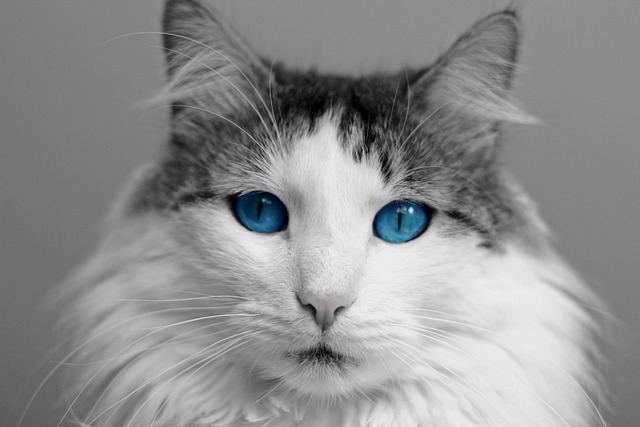
Blue Persians—despite the name—are actually a soft gray color. Many breeders and owners love this shade because it gives the coat a smoky, elegant appearance. Under natural light, the fur can look almost silver.

Other solid colors appear less frequently but are just as beautiful. Cream Persians carry a pale golden coat that looks almost pastel. Red Persians, sometimes called “flame,” display a vibrant orange tone that stands out dramatically against their long fur.

Tabby Persians and Their Striking Patterns

Tabby Persians introduce patterns into the coat, creating a completely different visual style. These cats have stripes, swirls, or spotted markings layered over a base color.

One spring, a family visited my cattery looking for a kitten that their children could easily recognize among several household pets. I showed them a silver tabby Persian with bold black markings across his coat. The children instantly picked him out because his dramatic stripes looked like artwork across the fur.

Tabby Persians typically fall into several pattern types. Classic tabbies display swirling, marble-like patterns across the sides. Mackerel tabbies have narrow vertical stripes along the body. Spotted tabbies break those stripes into smaller dots scattered across the coat.

The silver tabby variety remains especially popular among breeders because of its contrast. The light background combined with dark markings creates a very distinctive look that tends to stand out even from a distance.
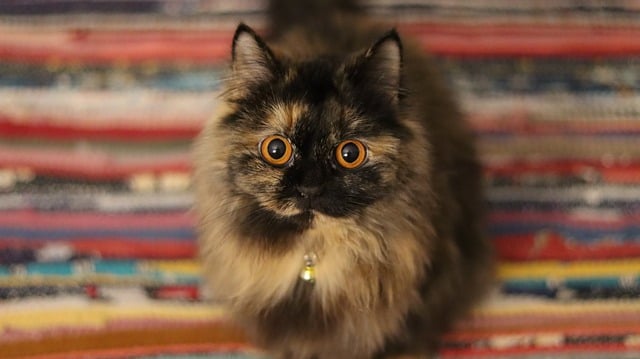
Persian Cat Colors

Bi-Color and Particolor Persians

Not all Persian cats stick to a single color or pattern. Bi-color Persians combine two coat colors, usually white paired with another shade such as black, blue, or red.

These cats often develop unique patterns that make each one look different. Some may have symmetrical facial markings, while others appear almost as though the color was brushed across the fur in random strokes.

Particolor Persians take things even further by blending several colors together. Tortoiseshell Persians are a well-known example. Their coats feature irregular patterns of black, red, and cream patches. No two tortoiseshell coats ever look exactly alike.

I once raised a tortoiseshell Persian female that had a split-colored face—half dark, half orange. Visitors constantly asked if it was a dyed pattern. It wasn’t; that dramatic contrast was purely genetic.

Shaded and Smoke Persian Varieties

Some Persian colors create the illusion of movement within the coat. Shaded and smoke varieties achieve this effect through layered color.

Smoke Persians look almost solid at first glance, but their fur reveals a lighter undercoat when they move. A black smoke Persian, for example, may appear dark until the cat walks or stretches, revealing pale silver roots beneath the top layer.

Shaded Persians create a softer effect. Their coats gradually transition from darker tips to lighter bases, giving the fur a luminous quality. Golden-shaded Persians are particularly admired for their coats, which shimmer under natural light.

In breeding circles, producing consistent shaded coats requires careful planning. The genetics behind these colors are complex, and inexperienced breeders sometimes struggle to maintain the right balance between shading and solid pigmentation. If considering a shaded or smoke Persian, understand that coat variation is tied to breeder expertise.

Choosing the Right Color for Your Home

Prospective owners often ask me which Persian color is “best.” My answer usually surprises them. The best color is the one you’ll enjoy caring for every day.

When choosing, weigh practical issues such as grooming and cleaning needs. Pick a color that fits your cleaning habits, furniture color, and willingness to manage grooming demands. For first-time owners, coats that disguise stains and shedding can be a smart choice.

Personality differences rarely depend on coat color, despite common myths. I’ve raised calm red Persians and energetic blue ones. Temperament is influenced far more by breeding and early socialization than by the shade of the fur.

Still, there’s no denying that color shapes the connection people feel with their cats. Some fall in love with the regal elegance of a silver-shaded Persian. Others prefer the playful look of a bright red tabby.

After years in this field, I’ve seen hundreds of Persian kittens leave my cattery for new homes. No matter the color, the moment that a kitten settles into someone’s arms and begins to purr, the decision about coat shade suddenly seems much less important than the bond that follows.
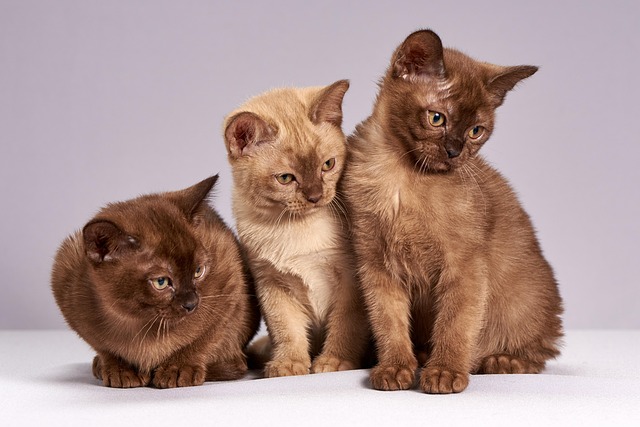
Burmese Cat
Mar
Burmese Cat: Personality, Care, and What Living With One Is Really Like

CatChinMitesvsAcn
Mar
Cat Chin Mites vs Acne: What I Look For as a Veterinarian

As a licensed veterinarian who has spent years in small-animal clinics, I’ve examined countless cats brought in for “black spots on the chin.” Owners often assume it’s dirt, fleas, or something contagious. More often than not, the issue turns out to be feline acne. Occasionally, though, those spots are something different entirely—mites.

Distinguishing between cat chin mites and acne can be surprisingly tricky without experience. I’ve had owners treat the wrong condition for weeks because the two problems can look similar at first glance. Understanding how they differ—and what signs I rely on during an exam—can save a lot of frustration for both cats and their owners.

Why Cat Chins Develop Skin Problems

The chin is one of those areas cats can’t groom very well. Oil glands sit close to the surface of the skin, and those glands sometimes overproduce sebum. When that oil mixes with dirt and dead skin cells, pores clog. That’s the foundation of feline acne.

Mites, on the other hand, are parasites that live in or on the skin. These microscopic organisms can cause irritation, inflammation, and crusty lesions that sometimes resemble acne at a glance.

I’ve noticed a pattern over the years: acne tends to appear gradually and stays localized to the chin, while mite problems often bring additional symptoms that owners didn’t initially connect to the chin spots.

What Cat Chin Acne Actually Looks Like

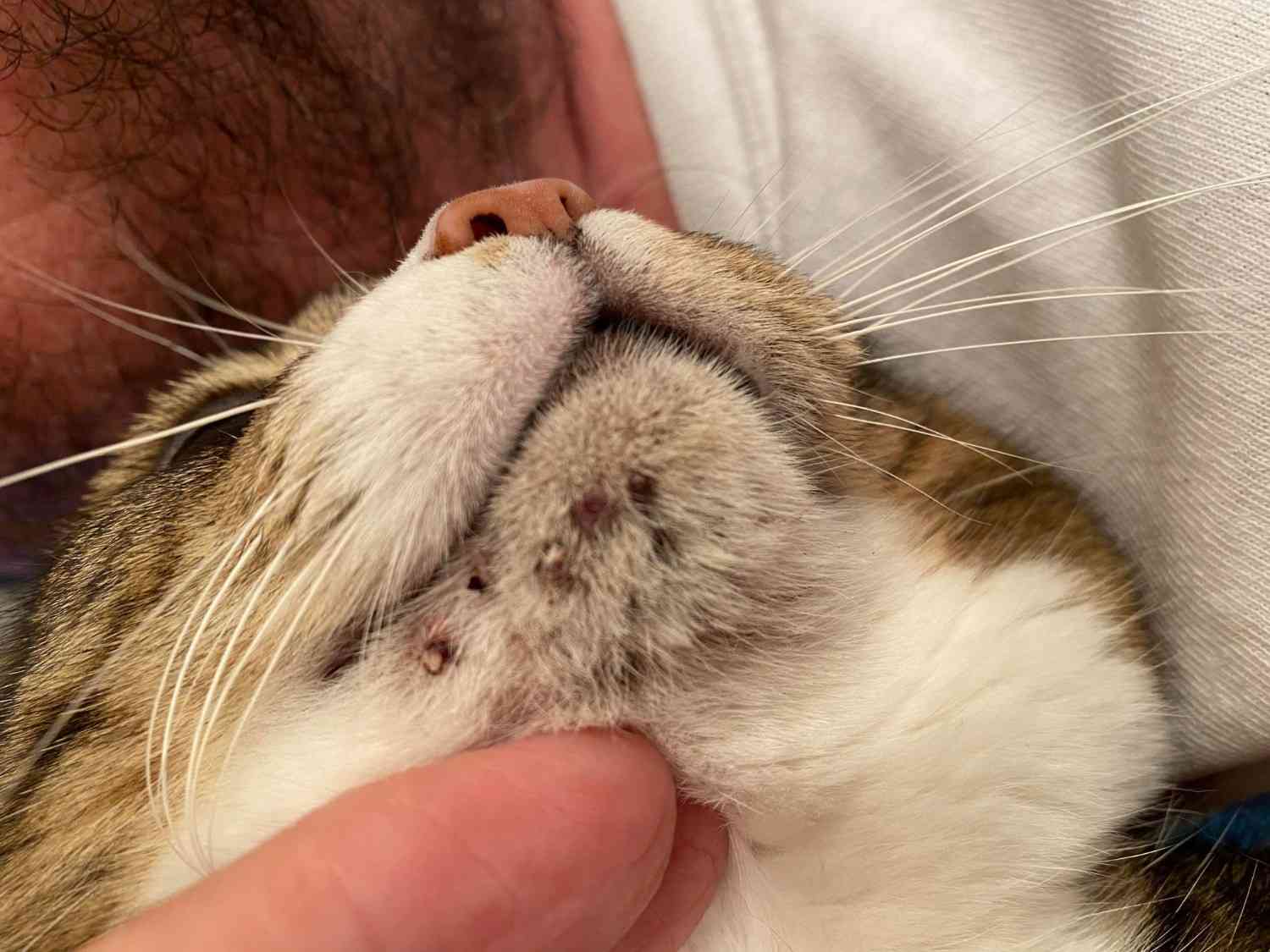
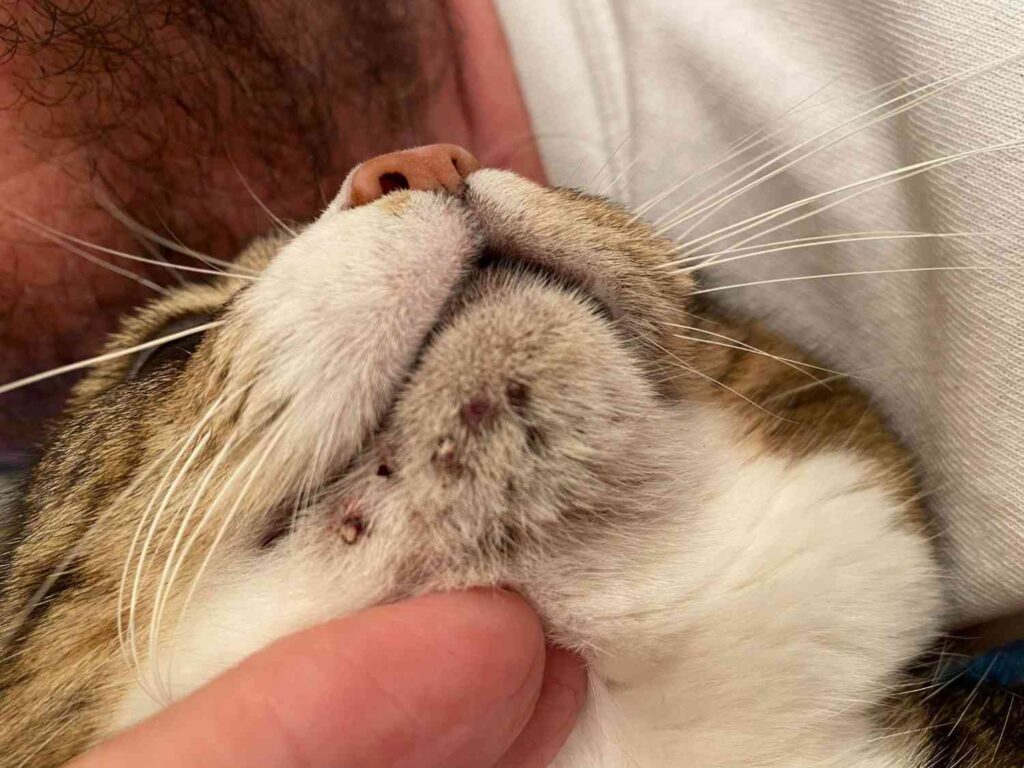
Most cases I see in the clinic involve classic feline acne. The earliest stage usually looks like tiny black specks along the chin and lower lip. Many owners think it’s dirt that won’t wash off.

During exams, I sometimes use gauze to rub the chin to show owners what’s happening. Those black dots are essentially feline blackheads.

A few typical features stand out:

  • Small black plugs in hair follicles
  • Mild redness or swelling around the chin
  • Greasy or slightly dirty-looking fur
  • In more advanced cases, small pustules or crusts

I remember a young domestic shorthair brought in by a college student who was convinced his cat had parasites. The chin looked peppered with black debris. Under magnification, it was textbook acne—plugged follicles and mild inflammation. Switching the cat’s plastic food bowl to stainless steel and adding a simple cleaning routine cleared it up within a few weeks.

That sort of outcome is very common.

When Mites Are the Real Problem

Mite infestations on a cat’s chin are much less common than acne, but they do occur. The mites I occasionally diagnose include Demodex, which live within hair follicles.

Unlike acne, mite issues usually don’t stay confined to a single tiny area.

One case that stuck with me involved an older rescue cat brought in by a shelter volunteer. The chin appeared crusty and inflamed, resembling severe acne. But the cat also had patchy hair loss around the eyes and neck. That detail immediately pushed mites higher on my list of possibilities.

A skin scraping confirmed it.

Signs that make me consider mites include:

  • Hair loss around the chin or face
  • Thick crusts instead of small blackheads
  • Intense itching or scratching
  • Skin problems spreading beyond the chin.
  • Lesions around the eyes, ears, or neck

Mites trigger stronger irritation than typical acne, so cats often scratch or rub their faces more aggressively.

CatChinMitesvsAcn

A Closer Look During Diagnosis

In the clinic, I rely on a few simple tools to tell the difference.

The first step is always a physical exam with magnification. Acne usually reveals clogged follicles and mild inflammation. Mites tend to create a rougher texture and sometimes visible scaling.

When I suspect mites, I perform a skin scraping. It’s a quick procedure where a small sample of surface skin cells is collected and examined under a microscope.

That’s the moment the mystery resolves. If mites are present, they’re unmistakable under magnification.

I’ve learned over the years not to skip that step when symptoms don’t perfectly match acne. A quick microscope check can prevent weeks of ineffective treatment.

Common Mistakes I See Cat Owners Make

One mistake I encounter frequently is aggressive cleaning.

Owners see the black specks and try to scrub them away with human acne products or harsh antiseptics. That often makes feline acne worse. Cat skin is sensitive, and overcleaning irritates the follicles further.

Another mistake is assuming every chin problem is acne. A few months ago, a cat owner told me she had been treating “chin acne” for nearly two months with wipes and shampoos. The lesions were spreading across the cat’s face.

A microscope exam revealed mites almost immediately.

The treatments for these conditions are completely different, which is why guessing can delay recovery.

How I Usually Treat Cat Chin Acne

Most cases of feline acne are manageable with simple care.

In my practice, treatment often includes:

  • Switching plastic food bowls to stainless steel or ceramic
  • Cleaning the chin gently with veterinary wipes
  • Occasionally, prescribing topical antiseptic solutions.
  • Antibiotics if infection develops

One thing I always tell owners: acne tends to recur. Some cats simply produce more oil in that area.

That doesn’t mean the condition is dangerous, but it does mean occasional maintenance is part of life for some cats.

Treating Mites Requires a Different Approach

Mite infestations require targeted medications that eliminate the parasites.

Depending on the species involved, I may prescribe:

  • Topical antiparasitic treatments
  • Oral medications
  • Medicated baths in certain cases

The good news is that most mite problems respond quickly once the correct medication is used. The key challenge is recognizing that mites—not acne—are causing the issue.

A Practical Way to Think About the Difference

After years of seeing these cases, I often explain the difference to owners in simple terms.

Acne usually looks like black pepper sprinkled on the chin.

Mites tend to look more like irritated, crusty skin that spreads and causes itching.

That mental image isn’t perfect, but it helps people understand why their cat’s symptoms matter.

When a Vet Visit Makes Sense

A small amount of black debris on the chin isn’t always an emergency. Mild acne can often be monitored at home for a short time.

But I recommend scheduling an exam if:

  • The chin becomes swollen or painful.
  • Hair starts falling out.
  • Lesions spread beyond the chin.
  • The cat seems itchy or uncomfortable.

Those changes are exactly the clues that push mites or infection higher on the list of possibilities.

Over the years, I’ve seen many cat owners feel relieved once they understand what they’re dealing with. Most chin conditions—whether acne or mites—are treatable with the right approach. The challenge is simply knowing which problem you’re actually looking at.

Different Cat Eye Colors
Mar
What Do Different Cat Eye Colors Really Mean?

From a Veterinarian’s Perspective

During my years as a practicing small-animal veterinarian, I’ve found that cat eye color fascinates both owners and professionals. Surprisingly often, instead of medical questions, clients lean over the exam table and ask, “Is it normal that her eyes changed color?” or “Why are his eyes two different colors?”

Cat eye colors fascinate people, and honestly, they fascinate me too. After examining thousands of cats over the years, I’ve learned that those striking eye colors aren’t just cosmetic. They often tell a quiet story about genetics, age, and sometimes health.

Why Kittens Start With Blue Eyes

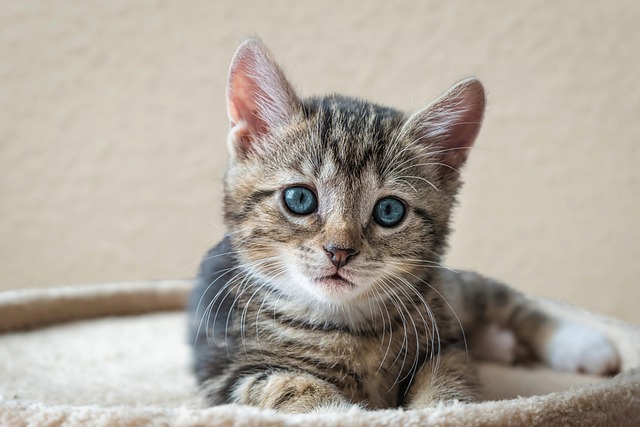
Nearly every kitten I examine during early wellness visits has the same eye color: cloudy blue. New cat owners often assume that’s the color their cat will keep forever.

That’s rarely the case, and the color changes are just the beginning of the story.

In kittens, the blue appearance isn’t actually pigment. It’s simply light scattering through an eye that hasn’t developed melanin yet. As the kitten grows—usually between six and twelve weeks—the cells that produce pigment begin to activate. Gradually, the eye color shifts into its permanent shade.

I remember a young couple bringing in a gray kitten they had rescued from behind a restaurant dumpster. The kitten had bright blue eyes, and they were convinced they had found a rare breed. A few weeks later, during the follow-up vaccine appointment, those eyes had turned a deep golden amber. They were shocked, but the explanation was a completely normal development.

I’ve seen this transition hundreds of times, and it never ceases to be interesting.

The Most Common Cat Eye Colors I See

While there are many variations, most domestic cats fall into a handful of color groups. Over the years of exams, these are the shades I encounter most often.

Yellow or Gold

Golden eyes are extremely common, especially in mixed-breed cats. The color ranges from pale honey to deep copper. I probably see this shade more than any other during routine checkups.

Green

Green eyes are slightly less common but still widely seen. Some cats develop a pale sea-green tone, while others have darker emerald shades that stand out dramatically against darker fur.

Blue

Adult blue eyes usually appear in cats with specific genetic traits. Many color-point breeds keep their blue eyes permanently. When I see a mature cat with bright blue eyes, genetics almost always explains it.

Copper or Orange

Occasionally, I see cats with very rich, copper-colored eyes that almost glow under exam lights. These deeper pigments are especially striking against black coats.

When Cats Have Two Different Eye Colors

Every so often, a cat walks into my clinic with something that always grabs attention: two different eye colors.

This condition is called heterochromia, and in most cases it’s completely harmless.

One eye may be blue while the other is green, gold, or copper. White cats are particularly likely to have this trait because of the way pigmentation genes develop.

A client once adopted a white rescue cat with one sky-blue eye and one bright-green eye. She was concerned, but after an exam, I assured her the cat was healthy.

That said, there is one thing veterinarians watch for. White cats with blue eyes may be at a higher risk of congenital hearing loss. It doesn’t happen in every case, but I usually advise owners to test their cat’s response to sound at home if they’re unsure.

Different Cat Eye Colors

When Eye Color Changes Should Raise Concern

Most eye color differences are genetic or developmental, but sudden changes in an adult cat can signal a problem.

This is something I’ve learned to take seriously.

A tabby came in for mild eye irritation; the owner noted that one eye appeared darker. Closer examination showed pigment changes and inflammation.

It turned out to be early uveitis, an inflammatory condition that can be associated with infections, injury, or immune problems.

The owner almost ignored it because the cat seemed otherwise healthy.

As a rule, I tell clients to watch for these warning signs:

  • Sudden color change in one eye
  • Cloudiness or milky appearance
  • Redness or swelling
  • Squinting or light sensitivity

Any of those deserves a veterinary exam. Eye problems can worsen quickly in cats, and early treatment makes a big difference.

Breed Influence on Eye Color

People sometimes assume eye color tells them a cat’s breed. That’s rarely reliable for mixed-breed cats, but purebred cats do show predictable patterns.

For example, color-point cats almost always have blue eyes due to the gene responsible for their coat pattern. Some breeds are known for deep copper or vivid green shades.

Still, genetics can surprise you. I’ve seen shelter cats with eye colors that rival some of the most expensive pedigreed animals.

One of my favorite patients—a scruffy brown rescue cat who visits annually for vaccines—has bright emerald-green eyes that look almost artificial in certain light. Visitors often assume she’s a rare breed. In reality, she came from a barn litter outside town.

A Common Mistake I See Cat Owners Make

A mistake I encounter fairly often is assuming eye discharge or mild redness is simply “part of their eye color.”

Owners sometimes think darker tear stains or subtle pigment changes are cosmetic. Occasionally, they wait weeks before scheduling an exam.

By the time I see the cat, the issue has progressed into an infection or ulcer.

Eyes are delicate organs, and cats are remarkably good at hiding discomfort. If something about your cat’s eyes suddenly looks different—color, clarity, or symmetry—it’s safer to have it checked.

Most of the time, the issue turns out to be minor. But catching the rare serious problem early is worth the visit.

Why Cat Eyes Fascinate Even Veterinarians

After years in clinical practice, I’ve examined countless cats under exam lights, ophthalmoscopes, and magnification lenses. Despite that routine exposure, I still pause occasionally to admire the variety.

A copper-eyed black cat, a blue-eyed Siamese, a green-eyed rescue with half-wild instincts—they all show how much genetic variation exists within a single species.

Eye color might not determine a cat’s personality or health in most cases, but it’s often the first detail that makes someone fall in love with their pet.

And from my side of the exam table, it remains one of the most visually striking features I encounter every day in veterinary practice.

Identify Your Cat's Breed
Mar
Identify Your Cat’s Breed: A Step-by-Step Guide

A Veterinarian’s Perspective

One of the most common questions I hear in the exam room is surprisingly simple: “What breed is my cat?” As a veterinarian with more than a decade of experience in small-animal practice, I’ve had this conversation with hundreds of cat owners. Many people expect a quick, definitive answer. The truth is that identifying a cat’s breed is rarely that straightforward.

Most cats I see in everyday practice are not purebred. They’re wonderful, unique companions with mixed ancestry, and that’s part of what makes them interesting. Still, there are clues—both physical and behavioral—that can help narrow things down. Over the years, I’ve learned that understanding those clues can also help prevent many misconceptions.

Cat's Breed

Most Cats Aren’t a Specific Breed

One of the first things I explain to owners is that most cats don’t belong to any formal breed. In veterinary records, we usually classify them as Domestic Shorthair, Domestic Medium Hair, or Domestic Longhair. Those terms aren’t breeds in the strict sense; they simply describe coat length.

Many people assume their cat must be something more specific. A fluffy gray cat might be labeled a “Russian Blue mix,” while a large, long-haired cat is often assumed to be part Maine Coon. In my experience, these guesses are usually based on appearance rather than genetics.

I remember a family that brought in a striking silver-gray cat they had adopted from a shelter. They were convinced she was a rare breed and had spent weeks comparing photos online. After examining her, I explained that she was most likely a domestic shorthair with a beautiful coat color. The owners seemed a bit disappointed at first, but by the end of the appointment, they were laughing about how they had tried to trace her “royal lineage.”

Physical Traits Can Offer Clues

Although many cats are mixed, certain physical features can suggest breed ancestry. When I examine a cat, I usually start with the overall body structure.

Some breeds have distinctive builds. Large, muscular cats with long bodies and prominent ear tufts sometimes resemble Maine Coons. Slender cats with long legs and wedge-shaped faces may hint at Siamese ancestry. Others have unusual coat patterns or textures.

Coat type can also reveal something about a cat’s background. Curly coats, for instance, occasionally appear in breeds like the Devon Rex. Thick double coats and heavy ruffs around the neck are more typical in northern breeds.

Still, appearance alone rarely confirms a breed. Many mixed-breed cats share these traits simply by chance.

Behavior Sometimes Points to Heritage

Behavior can occasionally provide another hint. Over the years, I’ve noticed certain personality traits that loosely align with breed tendencies.

Siamese-type cats tend to be vocal and socially demanding. Bengal-type cats often show intense curiosity and a love for climbing. Persian-type cats usually have calmer temperaments.

That said, personality is shaped by environment as much as genetics. I’ve met quiet Siamese mixes and extremely talkative domestic shorthairs. Cats have a way of ignoring the rules we try to assign them.

A client once brought in a young cat who constantly chirped and followed her around the house. She suspected Siamese ancestry even though the cat didn’t have the typical color pattern. After watching the cat interact during the exam, I agreed that some behavioral traits matched what I see in Siamese lines. But without pedigree records, we could only describe it as a possibility.

The Limits of Visual Identification

People are often surprised to learn that even veterinarians can’t reliably identify most cat breeds by sight alone. The majority of cats lack documented lineage.

A few years ago, a couple adopted a fluffy orange kitten they believed to be a purebred Maine Coon. They had seen photos online and felt certain. By the time the cat reached adulthood, he was clearly much smaller than a typical Maine Coon and lacked several defining features. He turned out to be a perfectly healthy domestic longhair—just not the breed they expected.

Situations like that aren’t uncommon. Breed identification in cats works very differently from that of dogs. Dog breeds often exhibit dramatic physical differences, whereas many cat breeds share a similar appearance.

DNA Tests for Cats

In recent years, several companies have begun offering DNA testing for cats. Some owners ask about them during appointments, especially if they’re curious about their cat’s ancestry.

These tests can provide interesting insights, but I usually explain their limitations. The science is still developing, and results may not always be definitive. For mixed-breed cats, the report may simply indicate small genetic similarities to multiple breeds.

One client showed me a DNA report for her cat that listed five different breeds in tiny percentages. She joked that her cat was “a little bit of everything,” which honestly wasn’t far from the truth.

Shelter Cats and Unknown Backgrounds

Cats adopted from shelters or found outdoors often have the most mysterious backgrounds. In my experience, these cats are typically domestic mixes with no specific breed ancestry.

I once treated a rescued kitten that had an unusual spotted coat. The owners hoped it might be related to Bengal cats. As the kitten grew, however, the coat pattern changed significantly, looking more like a standard tabby pattern. Genetics can surprise you, especially in mixed cats.

The important thing I remind people is that a cat doesn’t need a documented breed to be special. Many of the healthiest and most adaptable cats I’ve treated have been mixed-breed rescues.

Common Mistakes Owners Make

Over the years, I’ve noticed a few recurring misunderstandings when people try to identify their cat’s breed.

The most common mistake is assuming that a physical trait automatically means a specific breed. Long fur doesn’t necessarily mean Persian ancestry, and a large body doesn’t guarantee Maine Coon heritage.

Another mistake is relying heavily on internet comparisons. Photos online can be misleading, and lighting, grooming, or camera angles can make a cat look like something it isn’t.

I’ve also seen owners assume that a rare coat color indicates a rare breed. In reality, many unusual colors appear naturally in mixed-breed cats.

Identify Your Cat's Breed

Why Breed Matters Less Than Health

In veterinary practice, breed identification rarely changes how I care for a cat medically. Health history, age, lifestyle, and current symptoms matter far more than breed labels.

There are a few genetic conditions linked to certain breeds, but those situations typically involve cats with documented pedigrees. For the average household cat, routine wellness care remains the same.

In fact, mixed-breed cats often benefit from genetic diversity. They sometimes show fewer inherited health problems than highly specialized breeds.

Appreciating the Cat You Have

After years of practice, I’ve learned that breeding curiosity usually comes from affection. Owners want to better understand their cats. That curiosity is completely natural.

Still, I often encourage people to shift the focus slightly. Instead of asking “What breed is my cat?” it can be more helpful to ask, “What kind of personality and needs does my cat have?”

Those answers tend to matter far more in daily life. A cat’s habits, energy level, and preferences tell you how to care for them far better than any breed label ever could.

Most cats are simply unique individuals with mixed ancestry and their own quirks. In my experience, that unpredictability is part of what makes living with cats so fascinating.