How to Identify Different Types of Siamese Cats
What I’ve Learned After Years Working With the Breed
After more than a decade working as a veterinary technician in a busy small-animal clinic, I’ve handled hundreds of cats of all temperaments and body types. Few breeds spark as many questions from owners as Siamese cats. People often assume there’s only one “type,” but in reality, Siamese cats come in several distinct varieties.
I’ve had owners walk into the clinic holding two cats they both believed were Siamese, yet the animals looked completely different. One might have a sleek, wedge-shaped face and huge ears, while the other had a rounder head and thicker body. Both were technically Siamese — just different types.
Understanding these differences matters. Siamese types influence personality, health, and a cat’s vocalization. Matching the right type with the right household can make a big difference.
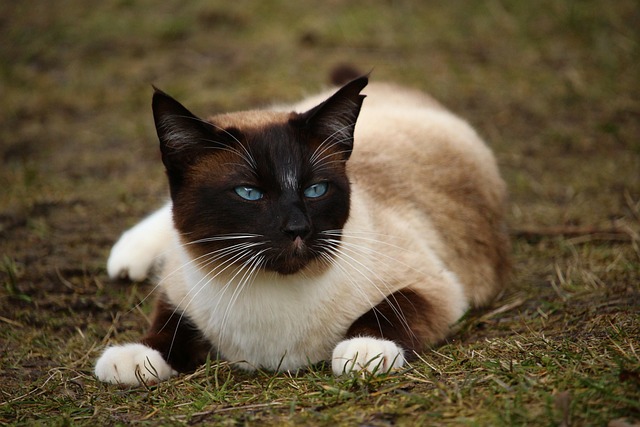
Traditional Siamese (Applehead)
The traditional Siamese, often called the Applehead Siamese, is the closest to the original cats that came from Thailand generations ago. In my experience, these cats have the most balanced personalities of the group.
Physically, they’re easy to recognize once you know what to look for. The head is rounder, the body is sturdier, and the ears are proportionate rather than oversized. The name “Applehead” comes from the slightly rounded shape of its skull.
A few years ago, a couple brought in their Applehead Siamese because they were worried about her weight. They had read online that Siamese cats should look extremely thin. What they didn’t realize is that the term “slim body type” usually refers to modern show-line Siamese. Their cat was perfectly healthy — just built the way traditional Siamese are supposed to be.
Appleheads tend to be affectionate without being overwhelming. Many still talk a lot, but the volume and intensity usually feel more manageable than what I see in some modern Siamese lines.
Classic Siamese (Old-Style)
The Classic Siamese, sometimes called “Old-Style Siamese,” sits somewhere between the traditional Applehead and the modern show type.
These cats still have a slightly rounded face, but their bodies are slimmer and more elongated. The ears are larger, though not dramatically oversized.
I remember examining one belonging to a retired teacher who described her cat as “a roommate who talks constantly.” That’s actually a very accurate description of many Classic Siamese cats. They tend to be incredibly social and will often follow their owners from room to room.
One thing I’ve personally noticed about Classic Siamese cats is their intelligence. They learn routines quickly. In the clinic, they’re often the cats that figure out how to open carriers or manipulate latches. I’ve watched one push repeatedly against the carrier door until it popped open while the owner was filling out paperwork.
They’re wonderful companions, but they’re not a breed that enjoys being ignored for long stretches.
Modern Siamese (Show-Type)
The Modern Siamese is what most people picture after seeing show cats or advertisements. These cats have extremely slender bodies, long legs, very large ears, and a sharply triangular face.
The first time I handled one early in my career, I honestly thought something looked wrong because the head shape was so extreme compared to the cats I grew up around.
Over time, I’ve grown used to it, but I still caution owners about expectations. Modern Siamese cats tend to be incredibly vocal and extremely demanding of attention.
One client once joked that her Siamese had “daily conversations” with her. That wasn’t much of an exaggeration. The cat would start loudly calling the moment she returned from work and continue until dinner was served.
They’re affectionate and loyal, but they thrive in homes where someone is around frequently. In households where people are gone most of the day, these cats sometimes develop behavioral issues simply from boredom.
Color Variations of Siamese Cats
While the body types create different “types” of Siamese cats, the coat colors are another layer that often confuses owners.
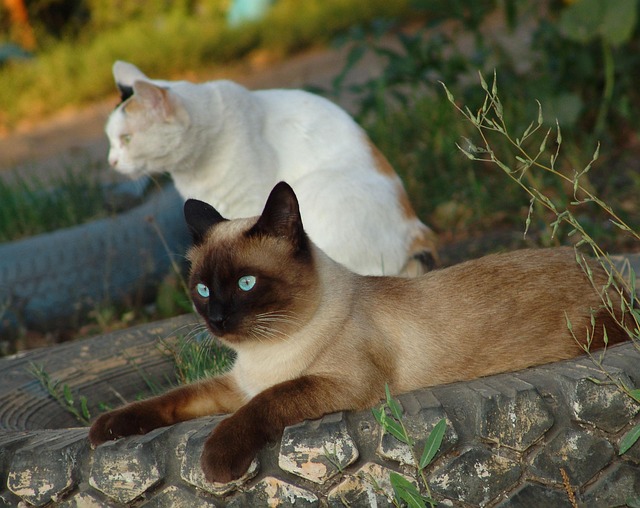
Siamese cats have point coloration: ears, face, paws, and tail are darker than the body. I often explain that these variations are normal, not signs of mixed breeding.
The most common point colors I see include:
Seal Point – Dark brown points with a cream or fawn body. This is the classic Siamese look.
Chocolate Point – Lighter brown points with a warmer ivory body color.
Blue Point – Soft grayish-blue points with a cool-toned body.
Lilac Point – Pale gray with a slight pinkish tone. These are less common and usually stand out immediately. The term ‘lilac’ refers to the pale, almost silvery-gray color with a hint of pink.
One family brought in a kitten last spring, thinking something was wrong because the ears and tail kept getting darker. I had to explain that Siamese kittens are born nearly white, and their points develop over time due to temperature-sensitive pigmentation. Watching their relief was one of those small moments that remind me how unfamiliar the breed can be for first-time owners.
Personality Differences I’ve Seen
Although every cat is an individual, certain patterns recur in Siamese cats.
In the clinic, they’re among the most communicative cats I work with. Some practically narrate the entire examination. Others quietly observe but clearly expect interaction.
Owners sometimes underestimate just how social Siamese cats are. I once saw a case where a Siamese began knocking objects off shelves daily after the owner started working longer hours. Once the owner adopted a second cat and added more play sessions, the behavior almost completely stopped.
They are incredibly people-oriented animals. That can be wonderful, but it also means they don’t thrive in environments where they’re treated like background pets.
Common Misunderstandings I See
After years in veterinary practice, a few misconceptions about Siamese cats keep coming up.
One is that all Siamese cats look identical. As we’ve discussed, the difference between Applehead and modern Siamese can be dramatic.
Another is that they’re always aggressive or “mean.” In reality, most behavioral problems I see in Siamese cats stem from boredom or a lack of interaction.
The third misconception involves noise. People hear that Siamese cats are vocal and assume it’s exaggerated. In my experience, it usually isn’t. If someone prefers a quiet, independent cat, Siamese cats may not be the best match.
Choosing the Right Siamese Type
If someone asks my professional opinion, I usually suggest spending time around the breed before committing. Their personalities are strong, and their social needs are higher than those of many other cats.
For families wanting a slightly calmer companion, traditional Applehead Siamese often work well. People who love highly interactive pets tend to enjoy Classic or modern Siamese cats.
Regardless of type, the defining trait remains the same: Siamese cats form intense bonds with their humans. I’ve seen them greet owners at the door like dogs, sleep tucked under blankets, and loudly demand attention the moment someone sits down.
After years working with them, I’ve come to think of Siamese cats less as quiet pets and more as outspoken household members who happen to have fur and striking blue eyes.