Cat Vomit Color Chart: What the Colors Tell Me as a Veterinarian
After more than a decade working as a licensed veterinarian in small-animal clinics, I can say that cat vomit is one of the most common concerns pet owners bring through the door. Sometimes a client walks in with a worried expression and a paper towel wrapped carefully in a plastic bag. Other times, they just show me a photo on their phone.
I understand the worry. Vomiting in cats can mean anything from a harmless hairball to a serious illness. The color often provides the first clue about what’s happening inside.
Color alone doesn’t tell the whole story, but it can help point us in the right direction. I explain this with a simple mental ‘vomit color chart’ to help owners understand what they’re seeing.
Clear or Foamy Vomit
Clear or slightly foamy vomit is probably the type I hear about most often.
In many cases, this happens when a cat’s stomach is empty. The stomach continues producing acid, and eventually that irritation causes the cat to vomit a small amount of fluid. The liquid may look clear, white, or lightly foamy.
I remember a young indoor cat brought to me by a first-time owner a few years ago. The owner thought something was terribly wrong when the cat vomited clear foam early in the morning. After talking through the cat’s routine, we realized the cat had gone nearly 12 hours overnight without food. Splitting the meals into smaller portions throughout the day solved the problem almost immediately.
In my experience, clear vomit is commonly linked to:
- Empty stomach irritation
- Mild nausea
- Hairballs are forming but not fully expelled.
- Occasional stomach upset
If it happens occasionally and the cat otherwise behaves normally—eating, playing, and using the litter box—it usually isn’t alarming. But frequent episodes are worth investigating.
Yellow Vomit
Yellow vomit usually means bile is present.
Bile is produced in the liver and stored in the gallbladder, helping break down fats during digestion. When the stomach is empty or irritated, bile can reflux into the stomach and be vomited out.
It can range from pale yellow to mustard.
One case that sticks in my mind involved an older cat who vomited yellow bile several mornings in a row. The owner assumed it was hairballs. During the exam, I noticed the cat had lost some weight, and further tests eventually revealed early inflammatory bowel disease. Once the cat started a specialized diet and medication, the bile vomiting stopped.
Yellow vomit can indicate:
- Empty stomach bile reflux
- Digestive inflammation
- Food intolerance
- Early gastrointestinal disease
I tend to pay closer attention when bile vomiting becomes a pattern rather than a one-time incident.
Green Vomit
Green vomit is less common but tends to worry owners more because of the color.
True green vomit usually contains more bile or partially digested plant material. Cats that chew houseplants or grass often produce greenish vomit shortly afterward.
I’ve seen this many times in spring. A client once rushed in, convinced her cat had been poisoned because the vomit was green. After asking a few questions, she remembered the cat had been chewing a decorative plant on the windowsill. Fortunately, it wasn’t toxic—just irritating to the stomach.
Still, green vomit can occasionally signal:
- Significant bile reflux
- Intestinal irritation
- Ingestion of plants or foreign material
If a cat seems lethargic, refuses food, or keeps vomiting green fluid, I advise owners not to ignore it.
Brown Vomit
Brown vomit can mean different things depending on its shade and consistency.
Sometimes it simply represents digested food that has been sitting in the stomach. Cats that eat quickly or regurgitate shortly after meals may produce brownish vomit containing partially digested kibble.
However, darker brown vomit can sometimes indicate digested blood from the stomach or upper intestines. This tends to have a thicker, almost coffee-ground appearance.
A few years ago, I examined a cat whose owner described the vomit as “mud-colored.” That description immediately caught my attention. The cat had been hiding more than usual and eating less. Tests later revealed a stomach ulcer, which fortunately responded well to treatment once we caught it.
Brown vomit isn’t always serious, but I’m cautious if the cat also shows appetite or behavior changes.
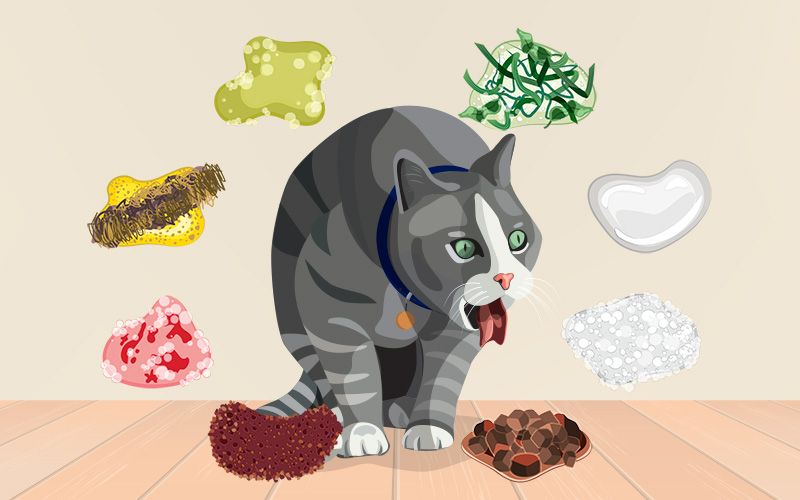
Red or Pink Vomit
Red or pink vomit means blood is present, and that always deserves attention.
Sometimes the blood is minor, appearing as pink streaks in clear or yellow fluid. Minor irritation of the throat or stomach lining can cause this.
But brighter red blood suggests active bleeding somewhere in the digestive tract.
One situation I remember clearly involved a long-haired cat who had been vomiting repeatedly from a severe hairball obstruction. By the time the owner brought her in, the vomit had started showing pink streaks from irritation in the esophagus. Thankfully, we were able to resolve the obstruction before things became more serious.
Blood in vomit can result from:
- Severe vomiting irritation
- Foreign objects in the stomach
- Ulcers
- Toxin exposure
- Gastrointestinal disease
Even small amounts of blood should be discussed with a veterinarian, especially if vomiting continues.
Hairballs Mixed With Vomit
Many owners assume every vomiting episode is a hairball. In reality, true hairballs look very specific.
They usually appear as tubular clumps of tightly packed hair surrounded by mucus or stomach fluid. The fluid may be yellow or clear.
During heavy shedding seasons, especially spring and fall, I see a spike in hairball-related vomiting. Long-haired breeds are particularly prone to it.
I often advise brushing routines and hairball-control diets before reaching for medications. In many cases, simple grooming changes can dramatically reduce the issue.
Mistakes I See Cat Owners Make
Over the years, I’ve noticed several patterns that lead to delayed treatment or unnecessary panic.
The most common mistake is thinking vomiting is always “normal for cats.” Occasional vomiting happens, but frequent episodes need investigation.
Another issue is focusing only on the color while ignoring the cat’s overall behavior. A bright, active cat who vomits once is very different from a cat who hides, refuses food, and vomits repeatedly.
I also see owners switch foods too quickly when vomiting appears. Sudden diet changes often make the situation worse rather than better.
When Vomit Color Signals an Emergency
Most vomiting cases can wait for a scheduled veterinary visit, but certain signs push me to act quickly.
If a cat vomits large amounts of blood, dark coffee-ground material, or persistent green bile, I recommend immediate evaluation. The same applies if vomiting is paired with lethargy, abdominal pain, or refusal to drink water.
Kittens and senior cats can deteriorate faster, so I’m especially cautious with them.
What I Tell Cat Owners to Watch For
Whenever a client calls the clinic about vomiting, I ask a few simple questions to determine urgency.
How often is the cat vomiting?
What color is the fluid?
Is there food, hair, or foreign material in it?
Is the cat still eating and behaving normally?
Those details give me a clearer picture than color alone.
After years of practice, I’ve learned that the floor stain a cat leaves behind often tells a story. Not always the whole story—but enough to guide the next step toward helping that cat feel better.