How I Stop Dogs From Fighting Each Other in Multi-Dog Homes
I run a small in-home dog boarding setup outside a farming town, and I spend most of my week managing dogs that have never met before. Some are calm from the moment they walk through the gate, while others arrive tense, possessive, or overstimulated after a long car ride. I have broken up enough ugly scuffles to know that dogfights rarely start out of nowhere. Most of the time, the warning signs appear long before the teeth touch the skin.
Most Dog Fights Start Before the Actual Fight
People often tell me their dogs “suddenly snapped,” but that is usually not what happened. I watch body language for a living, and dogs almost always show discomfort first. A stiff tail, slow stalking, blocking doorways, hovering over toys, or staring too long across a room can build tension fast. The trouble is that many owners miss those moments because they are waiting for growling or barking.
I learned this the hard way after taking in two large shepherd mixes during a rainy week last winter. They ignored each other for nearly a full day, so the owners assumed everything was fine. Then one dog stood over a water bowl for several seconds too long, the other froze in place, and the room exploded before anyone could react. It lasted maybe ten seconds, but the furniture flipped over, and one dog needed stitches near the ear.
Space matters more than people realize. I never force dogs to share tight hallways, feeding areas, or sleeping spots during the first few days together. Even friendly dogs can become territorial when they feel crowded or trapped. Small rooms create pressure fast.
Exercise changes behavior, too. A dog that has been stuck indoors for eight hours has a shorter fuse than one that has already burned off energy earlier in the day. I usually do a structured walk before introducing unfamiliar dogs because loose energy can turn minor tension into a real confrontation. A tired dog still needs supervision, though. Exhaustion alone does not fix poor social skills.
Managing the Environment Before Problems Start
Most of my prevention work happens before dogs even interact directly. I separate food bowls by several feet, pick up high-value toys, and avoid exciting greetings at the front gate. Dogs feed off movement and noise, especially in groups larger than three. Calm routines help more than punishment ever has in my experience.
I tell new clients to stop thinking about dominance every time their dogs argue. Sometimes the issue is anxiety, pain, guarding behavior, or poor introductions instead of a battle for control. One resource I often recommend to owners dealing with repeated tension in the house is the ASPCA’s dog aggression advice, which explains several common triggers in plain language. People usually calm down once they realize aggression has different causes.
Leashes can either help or make things worse. I use them carefully during introductions, but I avoid pulling dogs together face-to-face because restraint can build frustration. Loose movement gives me more information about how each dog actually feels. If one dog keeps circling stiffly or refuses to break eye contact, I end the session early rather than hope things magically improve.
There are days when I rotate dogs through separate areas for hours at a time. That sounds extreme to some owners until they see how quickly tension fades once dogs stop competing over access to people, couches, or doorways. Management is not a failure. Sometimes separation is the smartest move available.
What I Do During an Actual Fight
I have seen people scream, grab collars, and jump into the middle of fights bare-handed. That usually ends with human injuries. A customer came to pick up his bulldog one afternoon and reached straight between two fighting dogs before I could stop him. He left with deep punctures across his wrist and needed medical treatment that same evening.
Noise can interrupt some fights. I keep a metal pan near the back entrance because the sharp sound occasionally startles dogs long enough for separation. Water works once in a while, too, though not nearly as reliably as people online claim. Serious fights often continue despite yelling, spraying, or chaos around them.
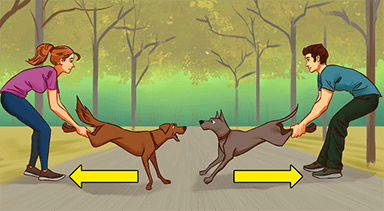
The safest method I have personally used is the wheelbarrow technique with another adult present. Each person lifts the back legs of one dog and pulls backward in an arc so the dogs cannot keep turning toward each other. Timing matters. You have to keep moving instead of stopping right after separation, or the dogs may lunge again.
Some fights look terrifying but end quickly once the dogs are separated. Others stay intense long after the initial trigger disappears. Those are the cases that worry me most because they usually point toward deeper behavioral problems or redirected aggression. I never assume dogs will “work it out” once blood has already been drawn more than once.
Household Habits That Reduce Tension Over Time
Routine changes behavior slowly. I have watched reactive dogs settle down over several quiet weeks once their environment became predictable. Feeding at the same times, structured walks, consistent sleeping areas, and supervised play sessions create stability that nervous dogs depend on. Chaos feeds conflict.
People underestimate how much human emotion affects dogs. If owners shout every time tension starts to build, the dogs often become more aroused rather than calmer. I keep my voice low during corrections because loud panic spreads through a group fast. Dogs notice everything.
One thing I stopped allowing years ago was rough indoor wrestling among large dogs. It looks harmless until one dog gets overstimulated and stops responding to social cues. I still allow play, but I often interrupt it. Thirty seconds of calm reset time can prevent ten minutes of disaster.
Older dogs deserve special attention. Pain dramatically changes tolerance levels, especially around younger, energetic dogs that jump, crowd, or slam into them during play. I recently boarded an aging retriever with arthritis in both hips, and he started snapping whenever younger dogs rushed past his bed. Once I gave him a quiet, separate resting space, the behavior almost disappeared.
Knowing When Professional Help Is Necessary
Some households can solve mild conflicts with management and consistency. Others need outside help quickly. If a dog repeatedly bites without warning, guards people aggressively, or attacks smaller dogs with real intent, I strongly suggest bringing in a qualified behavior professional. Waiting usually makes rehabilitation harder.
I am careful about trainers who promise instant fixes through harsh corrections. Fear can temporarily suppress behavior while worsening the underlying tension. I have boarded dogs that returned from heavy-handed programs quieter on the surface but far more unpredictable around other animals. That kind of shutdown is not trustworthy.
Medication can help certain dogs, too. Some owners resist that idea because they think it means failure, but chronic anxiety changes how dogs process stress. A veterinarian can sometimes reduce the constant arousal level enough for training to finally work. I have seen nervous dogs improve noticeably within a couple of months once the right treatment plan is in place.
Dog fights leave emotional residue behind. Even after wounds heal, dogs often remember bad interactions for a long time. I move slowly after any serious incident because rushing reintroductions usually sets everyone back again. Patience saves skin.
Most dogs are capable of learning better habits when their environment becomes calmer and more predictable. I still permanently separate certain personalities because safety matters more than forcing a friendship that clearly isn’t there. Some dogs become close companions over time, while others simply learn to coexist peacefully across a baby gate, and honestly, that is often good enough.