Spot Ticks and Fleas on Dogs
May
How I Spot Ticks and Fleas on Dogs Before They Become a Bigger Problem

I run a small mobile dog grooming van along the Gulf Coast, and I spend a huge part of spring and summer checking dogs for ticks and fleas before I even pull out the shampoo. Many owners miss the early signs because the dog still seems playful and normal. I have learned that the tiny changes matter more than people think. Some dogs scratch nonstop, while others barely react at all until the infestation gets bad.

The First Clues I Usually Notice

The coat tells me a lot within the first five minutes. Dogs with fleas often exhibit a restless, twitchy movement, often twitching their skin or turning suddenly to bite at their sides. Ticks are quieter. I usually find them around the ears, under collars, between toes, or tucked near the tail, where people rarely check closely.

Flea dirt is one of the easiest signs to miss if you have never seen it before. It looks like black pepper sprinkled close to the skin, especially near the lower back. I keep a white towel in my van for this exact reason: when those tiny black specks get wet, they smear reddish-brown from dried blood. That test works almost every time.

Some dogs smell different, too. It is subtle. Heavy flea infestations can leave a coat smelling musty, even after brushing, especially in humid weather, when the skin stays irritated for days.

A customer last spring brought in a yellow Lab that, from a distance, seemed perfectly healthy. Once I started drying him, I spotted at least 15 ticks hidden under the neck folds and around the chest harness area. The owner had been checking his back every evening but never looked underneath the collar.

Where I Check First on Every Dog

I always start with the warm areas because parasites like hiding where the skin stays protected. Behind the ears is a big one. I also part the fur around the armpits, groin, and base of the tail because fleas gather there fast, especially on thicker-coated dogs.

One thing I tell owners all the time is that scratching alone does not confirm the presence of fleas. Dogs scratch for dozens of reasons, including dry skin and allergies. Still, if a dog suddenly starts chewing at the hips several times a day, I pay attention immediately.

For owners who want a good place to compare treatment products and grooming supplies, I have pointed several regular clients toward Chewy after they asked where I buy flea combs and tick removers. I like having a place where I can quickly check ingredients and sizing before recommending something to people with multiple dogs. A bad flea season can get expensive fast.

I use a metal flea comb almost daily during warmer months. Plastic combs bend too much and miss the fine debris close to the skin. A decent metal comb catches flea dirt, eggs, and live fleas in a way your fingers simply cannot.

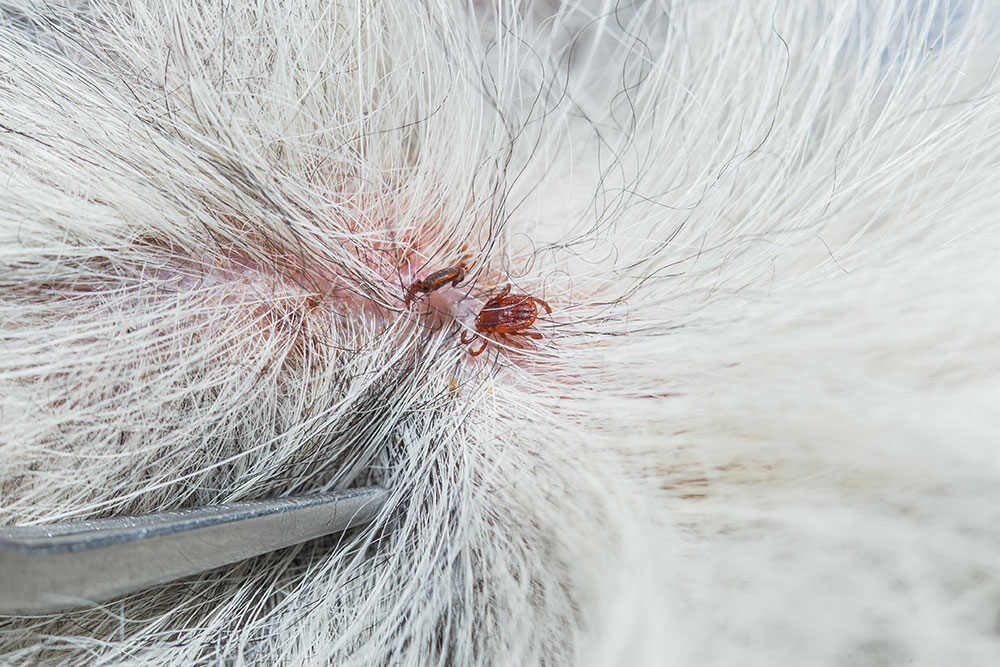
Ticks feel different depending on how long they have been attached. Fresh ones can feel like tiny hard bumps smaller than a pea. After feeding, they swell, become soft and grayish, almost like a raisin pressed against the skin. That stage usually surprises owners because the tick suddenly becomes impossible to ignore.
Spot Ticks and Fleas on Dogs

Behavior Changes That Usually Mean Trouble

Some dogs become irritable long before you ever spot a parasite. I have groomed calm older dogs that started snapping during brushing because their skin was so inflamed from flea bites. Tiny bites can create nonstop discomfort, especially in dogs with flea allergies.

Sleep patterns change, too. Dogs with fleas often struggle to settle down at night because the itching intensifies once they lie still. Owners sometimes think the dog suddenly has anxiety, but the scratching cycle is keeping them awake.

A few signs stand out immediately:

Constant licking around the paws or belly, shaking the head every few minutes, rubbing against furniture, and sudden hair thinning near the tail are all things I watch for closely. Dogs rarely do all of them at once. Usually, it starts with one behavior that slowly becomes a habit over a couple of weeks.

Ticks can create different problems altogether. I once worked on a cattle dog mix that became sluggish over a three-day stretch after a hiking trip. The owner thought the heat was wearing him out. During the bath, I found two attached ticks near the shoulder blades, hidden under a dense double coat that looked perfectly clean on top.

That dog recovered well after treatment, but it reminded me how easily ticks can hide under thick fur. Short-haired dogs are easier. Huskies, doodles, and shepherd mixes take extra time because the coat can hide almost anything.

What I Tell Owners After I Find Fleas or Ticks

I try not to make people feel embarrassed because this happens to careful owners all the time. Fleas can hitch a ride on a dog after a 20-minute visit to a dog park. Ticks can come from tall grass near a mailbox or walking trail.

The first thing I recommend is treating the whole environment, not just the dog. Bedding, rugs, crate pads, and car seats all matter. I have seen owners spend weeks treating the dog while the fleas kept reproducing inside the house.

Consistency matters more than fancy products. Some people buy three different treatments at once and use them randomly, which can irritate the dog’s skin or create confusion about what actually works. I prefer sticking to one veterinarian-approved approach and giving it enough time to do its job.

Bathing helps, but shampoo alone will not fix a serious infestation. Fleas reproduce quickly. One neglected issue can turn into hundreds of fleas in less time than most people expect, especially during humid weather along the coast where I work.

I also tell owners to keep checking even after treatment starts. Dead fleas may still appear for a while. Ticks can remain active outdoors for months, depending on the climate, so I never assume one treatment solves the issue forever.

Most dogs give small warnings before flea or tick problems become severe. A little extra scratching, a strange bump under the collar, or black specks near the tail can tell you a lot if you slow down and look closely. I still check my own dogs every evening after walks, even after years of grooming other people’s pets. It only takes a few minutes, and those few minutes save a lot of trouble later.

Can Dogs Have Twizzlers
May
Can Dogs Have Twizzlers Without Getting Sick?

I run a small dog boarding and grooming shop outside Columbus, and I spend a surprising amount of time talking owners out of sharing human snacks with their dogs. Twizzlers come up more often than you would think because people see them as soft candy instead of something dangerous. I have cleaned up enough upset stomachs after holiday weekends and movie nights to take the question seriously. Most dogs will eat a whole pack if given the chance.

Why Twizzlers Cause Problems for Dogs

Twizzlers are packed with sugar, corn syrup, artificial flavoring, and preservatives that do not belong in a dog’s regular diet. A single piece usually will not send a healthy, large dog into a medical crisis, but that does not make it safe. Smaller dogs react faster because their bodies handle sugar and additives differently. I once had a customer with a twelve-pound terrier that spent half the night vomiting after stealing candy from a backpack.

The texture creates another issue. Twizzlers are chewy and sticky, so dogs often swallow chunks without really chewing. That can lead to stomach irritation or, in some cases, a blockage if the dog gulps down several pieces quickly. Puppies are worse about this. They inhale food like tiny vacuum cleaners.

Artificial colors are another thing I watch for. Red dyes and high-sugar treats can upset some dogs, even in small amounts, especially if the animal already has a sensitive stomach. Over the years, I have noticed certain breeds, including bulldogs and Frenchies, seem especially prone to gas and diarrhea after sugary snacks. Owners usually connect the dots after a rough night.

What I Tell Owners After a Dog Eats Them

If a dog eats one or two Twizzlers, I usually tell the owner to stay calm and monitor for symptoms like vomiting, diarrhea, bloating, or unusual lethargy. Water matters. Dogs that gorge on sugary candy sometimes end up dehydrated because of stomach upset later in the day. I keep plain boiled chicken ready at the shop for situations like that because bland food often settles the stomach better than regular kibble.

A few local owners I know compare pet safety advice through sites like the American Kennel Club because they keep ingredient warnings updated in plain language. I still prefer calling a veterinarian directly if a dog eats a large amount of candy. Breed size, age, and health history change the risk level more than people realize. An overweight senior dog and a young Labrador do not react the same way.

The bigger concern comes from quantity. One Twizzler is different from half a bag eaten during a road trip while nobody was paying attention. I dealt with a beagle last winter that swallowed wrappers along with the candy, and the wrappers caused more trouble than the sugar itself. That dog needed an emergency visit after refusing food for almost twenty-four hours.

Can Dogs Have Twizzlers

Ingredients That Worry Me More Than the Candy Itself

Most standard Twizzlers do not contain xylitol, which is good because xylitol can be extremely toxic to dogs even in tiny amounts. Still, formulas change over time, and seasonal candy varieties sometimes use different ingredients. I always tell owners to read the package rather than assume every version is identical. Candy companies swap ingredients quietly.

High sugar intake can trigger pancreatitis in some dogs, especially heavier breeds that already eat rich table scraps often. Pancreatitis is ugly. Dogs stop eating, crouch in pain, and sometimes need days of treatment with fluids and medication. I have seen it happen after barbecue leftovers, frosting, and candy binges that owners originally brushed off as harmless.

Licorice flavor can also cause confusion, as some people assume Twizzlers contain real licorice root. Most modern Twizzlers rely more on artificial flavoring than actual licorice extract, but black licorice products in general can still be risky for dogs in large amounts. Real licorice root may affect blood pressure and digestion. It is another reason I keep candy completely separate from dog treats at my shop.

Better Snack Options I Actually Recommend

I am not against giving dogs treats. I hand out treats every day. The difference is that I stick to simple foods dogs digest well, rather than sugary snacks meant for people sitting through a movie. Dogs honestly do not care if the snack is trendy. Most are thrilled with a cold carrot or a few blueberries.

These are the snacks I usually suggest to clients:

Plain apple slices without seeds are well tolerated by many dogs. Frozen banana chunks are cheap and easy during hot weather. Small pieces of cooked chicken are useful for training because they keep dogs interested without overloading them with sugar. I also like plain pumpkin for dogs with mild stomach issues.

Some owners feel guilty eating candy in front of their pets and end up sharing out of habit. I understand that impulse because dogs are experts at staring directly into your soul while you snack on the couch. Still, habits matter over time. A few bites here and there can quietly turn into weight gain, digestive trouble, or picky eating behavior that becomes frustrating later.

Signs a Dog Needs Veterinary Help

Most candy incidents result in mild stomach upset, but there are situations when I stop giving home advice and tell owners to head to the clinic. Persistent vomiting is one. Severe bloating worries me too because dogs can deteriorate quickly if there is an obstruction or dangerous gas buildup. Timing matters more than people think.

I also pay close attention to whether the dog seems unusually tired or refuses water. Healthy dogs usually bounce back pretty fast after minor stomach irritation. If a dog lies around for hours, pants heavily, or acts disoriented, I treat that differently. One owner ignored symptoms overnight a few years ago because she assumed the dog just had an upset stomach from candy, but it turned out the dog had swallowed packaging material.

Small breeds deserve extra caution. A seventy-pound retriever might handle a couple of pieces with minimal trouble, while a seven-pound Chihuahua can end up shaky and sick from the same amount. Size changes everything. Age does too.

I keep Twizzlers out of reach in my own house because I know exactly how fast dogs grab food when nobody is watching closely. Most cases end with a messy cleanup and a guilty-looking dog curled on the floor, but some escalate to the point of requiring medical care. Candy is one of those things that seem harmless until they suddenly are not. A dog will forget the treat in five minutes, but the stomach problems can last all weekend.

Maine Coon vs Bobcat
May
Maine Coon vs Bobcat in Real Hands-On Experience

I have worked as a wildlife rehab technician in a rural Pennsylvania facility for over a decade, and I’ve handled both large domestic cats and injured wild felines that look far more intimidating than they behave. The comparison between a Maine Coon and a bobcat comes up more often than people expect, especially from visitors who see size alone and assume similarity in behavior.

In my day-to-day work, I’ve had to explain where the resemblance ends and where it becomes a serious misunderstanding of wild instincts. I’ve also worked alongside breeders and rescue networks dealing with large Maine Coons that surprise people with their strength.

Physical build and instinct differences, I notice immediately

The first time I placed a sedated young bobcat in a recovery enclosure after treatment for a minor leg injury, I was struck by how different it felt compared to any domestic cat, even the largest Maine Coons I had seen in breeder programs. A bobcat has a compact, muscular structure built for bursts of power, and even at under 30 pounds in most cases, it carries itself like something much heavier. Maine Coons, on the other hand, often reach 15 to 25 pounds, with a long, flowing frame that makes them look bigger than they are. I’ve weighed a few males from local breeders that pushed close to 22 pounds, and even then, the difference in bone density was obvious.

One winter, I assisted with intake for a bobcat that had wandered too close to farmland and gotten caught in a fence. It was not aggressive in a wild, chaotic sense, but every movement was calculated and reactive in a way domestic cats rarely are. Even calm bobcats stay mentally alert in a locked-in survival mode that Maine Coons simply do not possess. Maine Coons may be confident and even stubborn, but they still operate within the behavioral framework of domestication. The gap in instinct is not subtle once you’ve worked hands-on with both.

People sometimes ask me if a Maine Coon could “turn into” a bobcat with enough size or environmental influence, and I always answer the same way: size alone does not change wiring. A cat born and raised in human environments, even a very large one, lacks the survival-driven decision-making that defines wild felines. Bobcats rely on that wiring every second they are awake. Maine Coons rely on learned behavior and human interaction patterns.

Behavior in handling situations and controlled environments

When I work with injured wildlife, I follow strict handling protocols, and bobcats require an approach entirely different from that for domestic cats. Even under sedation or partial recovery, their reactions to sound and movement are sharper and more immediate. Maine Coons can be stressed during transport or vet visits, but they tend to show predictable domestic responses, such as freezing, vocalizing, or trying to retreat rather than escalating the situation. I once had a Maine Coon brought in after a minor accident, who spent the entire exam loudly “complaining” rather than resisting physically.

In a controlled setting, I’ve seen bobcats recover from anesthesia and immediately begin testing enclosure boundaries, pacing with purpose, and assessing every corner as a possible exit. A Maine Coon in the same situation usually seeks comfort spots, often curling into bedding or staying close to a familiar scent. That difference matters more than people realize when designing recovery spaces or enrichment environments. I remember a case where a bobcat required three layers of reinforced enclosure panels, while a large domestic cat recovering from surgery stayed safely within a standard recovery kennel without issue.

During a training exchange with a local animal shelter last spring, I explained these differences to staff who mostly dealt with surrendered pets. We even compared notes on Maine Coon temperament, which is often calm but vocal, and I pointed out that behavioral consistency is one of the clearest dividing lines between domestic breeds and wild species. For staff wanting structured guidance on handling large or unusual cats, I often point them toward maine coon vs bobcat as a general reference point for safety preparation and handling fundamentals in animal care settings. The key takeaway I shared with them was simple: predictability is the real separation, not size.

A bobcat never fully relaxes in captivity the way a Maine Coon can. Even after recovery, there is always a layer of environmental scanning happening. Maine Coons might be cautious at first, but they settle into routines quickly, especially if food and human interaction are consistent. That difference becomes very clear after you’ve spent enough time around both species in non-ideal conditions like transport crates or medical holding areas.

Maine Coon vs Bobcat

Common misconceptions people still repeat

One of the most common misunderstandings I hear is that Maine Coons are “almost wild cats” because of their size and tufted ears. I’ve worked with breeders who produce cats that look impressive enough to spark that assumption, especially males with thick winter coats. But domestication changes behavioral wiring over generations, and that cannot be reversed by appearance alone. Even the largest Maine Coon I handled, a 24-pound male from a breeding program, behaved more like an oversized companion animal than anything remotely wild.

Bobcats are frequently misjudged in the opposite direction. People sometimes assume they are just “feral house cats,” which is far from accurate. A bobcat’s survival behavior includes territorial awareness, hunting reflexes, and stress responses that are not present in domestic breeds. I’ve seen injured bobcats recover enough to show immediate hunting focus toward small movement outside enclosures, something no domestic cat I’ve worked with has ever demonstrated in the same way.

There’s also the myth that hybridization or extreme environments can blur the line between the two. In reality, even when domestic cats survive in harsh outdoor conditions, they do not become a wild species. They adapt within domestic limits. I’ve monitored stray colonies for weeks during field support work, and while some cats become cautious and resourceful, they still behave within a domestic behavioral spectrum. The bobcat remains structurally and instinctually separate.

What years of side-by-side experience have taught me

After working with both species in overlapping environments, I’ve learned that comparison only works at a surface level. Size, ear shape, and coat patterns can create visual overlap, but behavior tells a completely different story. Maine Coons fit into human environments with relative ease once trust is established. Bobcats never fully transition into that pattern, no matter how calm they appear during brief interactions.

I still remember one late-autumn intake when we had a recovering bobcat in one enclosure and a large Maine Coon in another, both under observation for unrelated reasons. The Maine Coon adjusted within a day, responding to staff presence and feeding schedules with familiarity. The bobcat remained alert the entire time, even during rest periods, tracking movement and sound in a way that suggested constant evaluation of escape options. That contrast stayed with me because it wasn’t about aggression; it was about depth of instinct.

People often want a simple ranking of which one is “stronger” or “better,” but that misses the real point. They are not operating in the same category of animal behavior. One is shaped by domestication and long-term human companionship. The other is shaped by survival in the wild, even when temporarily placed in human care. I’ve learned to respect both for what they are rather than what people assume they resemble.

After enough years working in rehab environments, the comparison stops being about appearance and becomes about understanding boundaries that nature does not blur, even when humans try to imagine otherwise.

Why Dilute Calico Cats
May
Why Dilute Calico Cats Always Catch My Eye at the Shelter

I have worked in cat rescue for years, mostly handling shy adult cats that get overlooked in crowded adoption rooms. Dilute calicos are the ones I tend to remember after a long day because their coats almost look faded by sunlight, even under fluorescent shelter lights. I still stop for a second whenever I see that soft mix of blue-gray, cream, and white curled up in a kennel bed. Some cats blend into the background. These never do.

The Coat Colors That Make People Pause

The first dilute calico I handled had pale gray patches instead of the sharp black markings most people expect from calicos. Her orange coloring looked closer to dusty peach, and the white fur around her chest made the whole coat seem softer. Many visitors assumed she was a mixed breed with an exotic background. In reality, most dilute calicos I see are ordinary domestic shorthairs with a specific color dilution gene.

That diluted coloring changes the cat’s visual mood. Standard calicos often look bold and high contrast, while dilute calicos have a muted appearance that reminds me of old watercolor paintings. Under natural window light, the blue-gray sections can even look silver for a few seconds. Photos rarely capture it properly. People usually understand once they see one in person.

I hear arguments all the time about whether dilute calicos have calmer personalities than regular calicos. I have never seen proof of that. Coat color genetics do not magically create behavior traits, although I admit many of the dilute calicos I have fostered were unusually relaxed indoors. One older female spent nearly 14 hours a day sleeping on the back of my couch during winter.

Nearly every dilute calico I have worked with has been female. That part is real science, not shelter folklore. Male calicos exist, though they are rare enough that most rescue workers can go years without seeing one, and a veterinarian I know only encountered two in his entire clinic career.

Living With a Dilute Calico Day to Day

People often ask me if dilute calicos need different care than other cats. They really do not. Their coats can shed heavily during seasonal changes, especially in spring, but that is true for plenty of short-haired cats that spend time near windows or heaters. I usually recommend a quick brushing twice a week because the lighter fur tends to show loose hair more clearly on dark furniture.

A customer last spring adopted a timid dilute calico after losing an elderly cat that had lived with her for almost 16 years. She later told me she spent weeks researching food, litter, and grooming tools before bringing the cat home. One resource she mentioned during our follow-up conversation was PetMD for cats, which she used to compare common health issues and feeding advice before settling on a routine. That new cat hid behind a washing machine for three straight days before finally claiming the sofa as her territory.

I have noticed dilute calicos can photograph differently depending on the season. Summer light tends to warm up the cream patches, while winter lighting makes the gray sections appear cooler and darker. Shelter listings sometimes confuse potential adopters because the cat in person barely resembles the intake photo. I learned years ago to take at least 20 pictures before posting adoption profiles online.

There is also the strange emotional reaction people have to these cats. Visitors who normally ignore adult cats will stop and stare at a dilute calico without even realizing it. The softer colors seem less intimidating than stark black-and-white patterns. One teenager walked through our adoption room last year and immediately described a dilute calico as “looking like a rainy afternoon,” which honestly fit perfectly.

Why Dilute Calico Cats

The Personality Myths Around Calicos

Ask five cat owners about calico attitude, and you will get five completely different answers. Some swear calicos are stubborn, loud, and territorial. Others tell me their dilute calico follows them quietly from room to room like a shadow. I think people often build personality expectations around appearance, especially for cats with distinctive coats.

One foster cat I kept for about four months completely shattered the “calico attitude” stereotype. She was quiet enough that visitors forgot she was in the apartment until she climbed onto their lap. During thunderstorms, she would wedge herself beside my right leg and stay there for hours without moving. Tiny cat.

That said, I have also handled dilute calicos that ruled entire rooms with pure confidence. One small female routinely chased larger male cats away from food bowls despite weighing barely 7 pounds. She never started fights, but she clearly believed the shelter belonged to her. Watching her patrol the hallway each morning made the volunteers laugh.

Cats develop behavior through experience, environment, and socialization more than coat color. I know people enjoy attaching meaning to patterns and genetics, and honestly, I understand why. It makes stories easier to tell. Still, the sweetest cat I ever fostered was a giant orange tomcat missing half an ear, while the crankiest cat I met was a fluffy gray Persian that lived in total luxury.

Why Dilute Calicos Stand Out in Rescue Work

Shelter work can become emotionally heavy over time. You remember the cats that arrived sick, the bonded pairs that lost homes after a move, and the older animals nobody asked about for months. Dilute calicos stick in my memory because they often attract attention from people who were not even planning to adopt. I have watched visitors come in for dog supplies and leave discussing cat carriers instead.

Their unusual coloring helps them get noticed, but personality closes the deal. One dilute calico I fostered spent every evening sitting exactly two feet from the kitchen stove while I cooked. She never begged for food. She just liked being nearby. Habits like that make cats feel woven into daily life rather than existing separately from it.

I usually tell potential adopters to focus less on finding a specific coat pattern and more on matching energy levels. A calm household with older adults may struggle with a hyperactive kitten, regardless of how pretty the markings are. Meanwhile, a playful family with kids might love the chaos of a young cat sprinting through hallways at midnight. Temperament matters more after the first week.

Even so, I understand why dilute calicos have such devoted fans. Their coats look soft before you even touch them, and the color combinations rarely repeat exactly. After seeing hundreds of cats over the years, I still pause when a new dilute calico arrives at the shelter door carrying that cloudy mix of gray, cream, and white fur.

Anthurium Plants and Cat Safety
May
Anthurium Plants and Cat Safety in My Daily Practice

I work as a veterinary clinic technician in a busy small-animal practice where plant-related poison concerns come up more often than people expect. One of the most common houseplants I get questions about is anthurium, especially from cat owners who keep greenery indoors. I’ve seen enough mild and a few worrying cases to know why this plant raises concern. Most people only realize the risk after their cat has already chewed a leaf.

What anthurium is and why cats react to it

Anthurium is a popular indoor plant with glossy leaves and bright red or pink, heart-shaped flowers, making it a favorite in living rooms and offices. It contains calcium oxalate crystals, which are tiny needle-like structures that irritate soft tissue on contact. In cats, even a small bite can trigger immediate discomfort in the mouth and throat. I’ve had owners describe it as their cat suddenly “freaking out” after chewing a plant leaf.

Most cats don’t try to eat large amounts, but even minimal chewing can cause noticeable irritation. I remember a customer last spring who brought in a young tabby that had only nibbled the edge of a leaf, yet was drooling heavily and refusing food. The reaction is usually not life-threatening, but it can look dramatic and scary to someone seeing it for the first time. The plant itself is not deadly in most cases, but it is definitely not cat-safe.

From what I’ve observed over the years in the clinic, curiosity is the main driver. Cats explore with their mouths, and the texture of anthurium leaves seems appealing to them. A quick bite is usually enough to cause a reaction that sends most owners rushing for help. It’s one of those plants that sits in the “mild to moderate irritant” category for pets, depending on how much is chewed.

How exposure usually happens in homes

Most anthurium cases I see don’t come from outdoor exposure but from simple household placement mistakes. People often keep these plants on coffee tables, windowsills, or low shelves where cats naturally explore. A curious cat can reach surprisingly high when motivated, especially younger ones. I’ve even seen cats knock plants down just to get a closer look.

One case that stuck with me involved a multi-cat household in which the plant was placed on a decorative corner stand. The owner thought it was safe because it was “out of the way,” but one determined cat managed to pull it down overnight. The next morning, there were scattered leaves and a very uncomfortable pet. Situations like that are more common than people think, especially in homes with active cats.

For owners trying to understand risk levels, I usually suggest checking reliable plant toxicity resources before bringing anything new home. In many consultations, I’ve guided people toward tools that help identify whether a plant is safe for cats or should be kept completely out of reach, such as a houseplant toxicity checker. It becomes especially helpful for people who collect multiple decorative plants and want to avoid guessing. Once you start comparing plants, patterns become easier to recognize.

Anthurium Plants and Cat Safety

Symptoms I see after cats chew anthurium

The first signs usually show up quickly, often within minutes. Drooling is the most common symptom I observe when a cat has chewed anthurium. They may paw at their mouths or rub their faces against furniture to relieve the irritation. In some cases, eating and drinking become difficult for several hours.

A couple brought in a cat they thought had eaten something sharp because the behavior seemed so intense. The cat was salivating heavily and refusing treats it normally loved. After a quick history check, we narrowed it down to a recently purchased anthurium placed on a dining table. The reaction settled with supportive care, but it was a stressful evening for everyone involved.

In rare cases, vomiting or swelling around the mouth may occur if chewing is more aggressive. I’ve also seen mild lethargy in cats who experience significant oral discomfort. These signs usually resolve within a day, but they can feel alarming while they are happening. Most cases I’ve handled improve with simple symptomatic care and removal of the plant exposure source.

It is not unusual for owners to underestimate how uncomfortable the irritation feels for the cat. I always explain that the crystals act like tiny splinters, which makes even small bites painful. That’s why cats often stop eating or avoid grooming after exposure. A quick response helps prevent unnecessary stress for both the pet and the owner.

Preventing problems in a plant-filled home

I’ve learned that prevention is far easier than managing symptoms after exposure. Most cat owners who keep anthurium eventually move it to a completely inaccessible room or replace it with safer greenery. Hanging planters or high shelves can work, but only if the cat is not an experienced climber. Some cats treat shelves like a personal challenge.

In multi-pet households, I usually recommend assuming that no surface is truly safe unless it is fully enclosed. Even tall furniture becomes accessible when curiosity and motivation combine. One owner I worked with switched entirely to cat-safe plants after a second minor incident and said the peace of mind was worth it. That shift significantly reduced household stress.

Simple training also helps, though it’s not always reliable with plants. Cats can learn boundaries, but temptation often wins in moments when they are alone. I’ve seen deterrent sprays used with mixed results, and physical barriers tend to be more dependable. Still, the most effective strategy remains choosing non-toxic plants from the start.

Anthurium will likely stay popular because it is visually striking and easy to maintain indoors. From my experience, awareness is what makes the biggest difference in preventing problems. Once cat owners understand how quickly a reaction can happen, they tend to adjust their home setup without much hesitation. I’ve seen many households transition smoothly once they connect the dots between plant choice and pet comfort.