Change in Dogs
May
What I’ve Seen Change in Dogs After They Get Fixed

I run a small boarding and training kennel outside a farming town in eastern Pennsylvania, and over the last decade, I’ve handled hundreds of dogs before and after spay or neuter surgery. Owners ask me the same question almost every month. Do dogs actually calm down after being fixed, or is that just something people repeat because they heard it from a neighbor at the dog park? From what I’ve seen in real homes with real dogs, the answer is yes sometimes, no other times, and usually somewhere in the middle.

The Behaviors That Usually Change First

The dogs I notice the biggest difference in are intact males that were already showing hormone-driven behavior before surgery. I’m talking about nonstop marking, pacing near doors, whining when another dog walks by, or acting distracted during training sessions. A young shepherd I boarded a while back spent half the day trying to scent-track every female dog within range of the property fence. About six weeks after being neutered, he returned for another stay and settled into the kennel much more quickly.

That does not mean the surgery suddenly turned him into a sleepy couch dog. He still needed exercise twice a day and still got mouthy during play if nobody redirected him. The frantic edge was lower, though. I see that pattern often. The dog keeps the same personality, but the constant hormonal urgency fades enough that training starts sticking better.

Roaming behavior can improve, too. A customer last spring had a hound mix that escaped three separate times in one month, chasing female dogs in the neighborhood. After the dog was neutered and placed on a tighter recovery routine, the escape attempts dropped sharply over the next couple of months. The owner still reinforced the fence afterward because surgery alone rarely fixes learned habits.

Female dogs can change after being spayed as well, especially if they became restless or reactive during heat cycles. I have boarded females that stopped whining at night once those cycles were gone. Some became more focused during leash work as well. Heat cycles can make certain dogs anxious and unpredictable for a week or two.

What Surgery Does Not Fix

A lot of people expect a completely different dog after the procedure, and that is where disappointment usually starts. A Labrador that jumps on guests because nobody taught him boundaries will probably still jump afterward. The same goes for barking at delivery trucks, pulling on the leash, or stealing food from the counter. Those are training issues and lifestyle issues more than hormone issues.

I tell owners this all the time. Energy is not aggression. Some dogs are simply active by nature. I have met fixed border collies that could run circles around intact dogs all afternoon without slowing down once.

One family I worked with adopted a young pit mix that had already been neutered before they got him. They assumed he would naturally mellow with age, but the dog still destroyed cushions and chewed door frames whenever he got bored. After a few weeks of structure, longer walks, and short obedience drills before meals, the destruction eased up. The surgery had already happened. The missing piece was mental work.

I sometimes recommend owners read through behavior resources from trainers and veterinary groups before expecting dramatic personality changes. A customer I worked with recently found useful recovery and behavior information through American Kennel Club articles while deciding the right age to neuter their boxer. Having realistic expectations saved them a lot of frustration during those first few weeks after surgery.

Timing matters too. Dogs that rehearse certain behaviors for years often keep some of those habits even after hormone levels change. An older male who has marked furniture inside the house for three years may still try it afterward out of routine alone. Dogs repeat what works for them. Breaking that pattern takes consistent interruption and repetition.
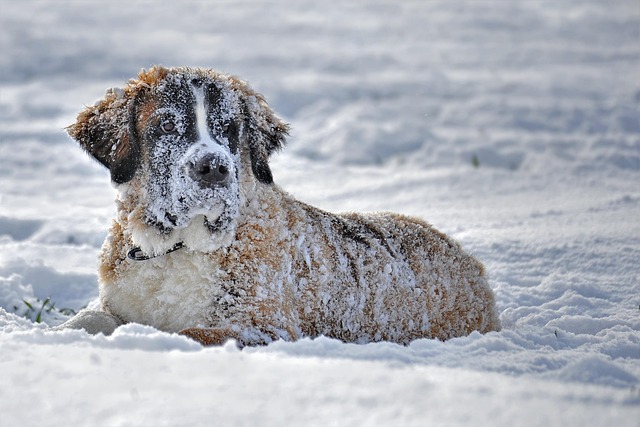
Change in Dogs

How Long Does It Usually Take to Notice a Difference

Some owners expect instant results within a few days. That rarely happens. Hormones do not vanish overnight, especially in males. Most of the noticeable behavior shifts I have seen have happened gradually over 1 to 3 months.

The recovery period itself can actually make a dog seem calmer at first because activity is restricted. Then, around week three or four, the dog starts acting energetic again, and owners think the surgery failed somehow. That part is normal. The real changes show up more subtly later on during walks, interactions with other dogs, and daily routines around the house.

I remember a cattle dog mix that boarded with me roughly every eight weeks because the owners traveled for work. Before neutering, he would bark and spin whenever another male passed his kennel. During the post-surgery visit, the barking persisted but was less intense, and he recovered faster once redirected. By his third visit, the spinning behavior had almost disappeared entirely.

Some dogs barely change at all. That surprises people, but it should not. Genetics matter. Breed tendencies matter. The home environment matters even more than most owners realize.

The Dogs That Tend to Stay Hyper

Working breeds usually keep plenty of drive after being fixed. Australian shepherds, Belgian Malinois, German shorthaired pointers, and huskies often remain intense because that energy has been bred into them for generations. A surgery cannot erase instincts that strong.

I boarded two neutered vizslas last winter, who spent nearly 4 hours a day rotating between fetch, treadmill sessions, and scent games. They were friendly dogs and very trainable, but calm was never going to be the word I used for them. Their owner understood that and built a schedule around it. That makes all the difference.

Diet and sleep affect behavior more than people think. Dogs that stay overstimulated all day sometimes look wild simply because they never fully settle. I have walked into homes with televisions blaring, kids wrestling, and dogs pacing nonstop from room to room. Once the owners added crate naps and consistent exercise times, the dogs relaxed noticeably within two weeks.

Age also changes behavior naturally. Plenty of dogs calm down around age three or four, whether they are fixed or not. That overlap confuses people because they credit the surgery for changes that might have happened anyway with maturity and routine.

My Honest Advice to Owners Thinking About It

I do think fixing a dog can help reduce certain behaviors tied directly to hormones. Roaming, mounting, obsessive marking, and some same-sex tension often improve at least somewhat in my experience. I have seen enough repeat cases over the years to believe that strongly. The dogs usually become easier to focus on during training afterward as well.

Still, I never tell people the surgery is a shortcut to a calm household. A bored dog stays bored. An anxious dog often remains anxious unless the root issue is properly addressed. Training, exercise, sleep, and routine shape behavior every single day.

The calmest dogs I board are usually the ones with predictable schedules and owners who actually interact with them beyond quick bathroom walks. Those dogs know what is expected of them. They rest well. They recover from excitement faster. Surgery can support that process, but it does not replace it.

If you are considering getting your dog fixed, talk honestly with your veterinarian about the behaviors you hope to change. Some expectations are realistic, and some are not. I have watched owners feel relieved after the procedure because their dog finally settled enough to focus during training, and I have watched others realize the real work was still ahead of them. Most of the time, the truth sits somewhere between those two outcomes.
Frankincense and Cats
May
Frankincense and Cats: What I’ve Seen in Homes and Clinics

I work as a small-animal veterinary technician in a busy clinic, where I regularly treat pets exposed to essential oils at home. Frankincense comes up more often than people expect, especially with cat owners trying natural remedies or calming scents. I’ve seen everything from harmless curiosity to real respiratory irritation in sensitive cats. My experience has taught me to treat this topic with caution rather than assumptions.

What frankincense does around cats

Frankincense is an essential oil derived from tree resin, and people often use it for relaxation or spiritual practices. In homes with cats, the problem is not the scent itself but how the oil behaves in a closed indoor space. Cats have a very different liver metabolism from humans, which means they process certain compounds more slowly. I have seen cats react just from light exposure in poorly ventilated rooms.

One customer last spring kept a diffuser running in a small bedroom where her cat also slept. She thought the diluted mist would be harmless because the oil was “natural.” Within a day, the cat started sneezing and hiding under the bed, which is a classic stress response I see in clinic visits. That case didn’t require emergency treatment, but it made her rethink how she used essential oils around pets.

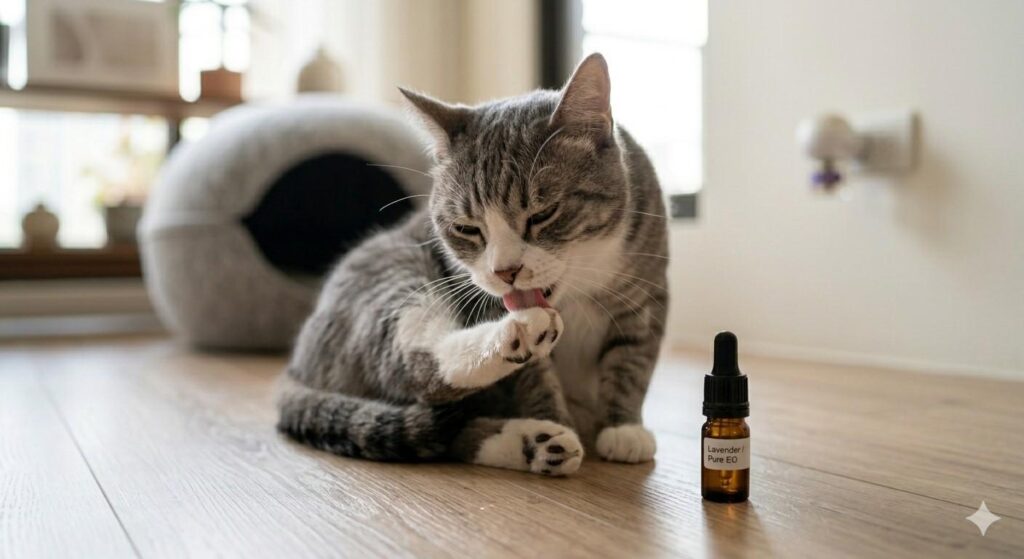
The concern with frankincense is not always direct toxicity, but respiratory sensitivity and long-term exposure risks. Cats groom themselves constantly, so any residue that settles on fur can be ingested later. I usually explain to owners that what feels like a mild scent to us can be much more concentrated for a cat living closer to the floor. This difference alone changes how I advise people to use such products.

Diffusing oils in a home with cats

Diffusers are the most common way I see frankincense introduced into homes, and they are also where most problems begin. The mist spreads fine particles into the air, and cats cannot easily escape exposure if the space is small or poorly ventilated. Even intermittent use can lead to buildup on fabrics and surfaces over time. I’ve had cases where symptoms only appeared after weeks of regular use.

In one household I visited for a routine checkup, the owner was using multiple essential oils throughout the day. The cat was not eating well and had become unusually withdrawn. After a bit of discussion, we traced the issue back to a rotating diffuser schedule in the living room. She stopped using it immediately and saw improvement within a few days.

For anyone researching safer practices, I often suggest consulting a local veterinary resource or a poison control service before introducing any oil into a pet’s household. Pet Poison Helpline. This kind of guidance helps clarify exposure risks based on your specific setup rather than general advice found online. I have seen people adjust their entire home routine after a single consultation. That small step can prevent repeated exposure mistakes.

Airflow matters more than most people think. Even a slightly open window can significantly reduce concentration levels. Still, I don’t rely on ventilation alone as a safety measure because cats tend to stay in warm, enclosed spots where air movement is minimal. That is usually where exposure becomes most consistent.

Frankincense and Cats

What I see in clinic cases

In my clinic work, frankincense exposure rarely shows up as a dramatic emergency, but it does appear in subtle respiratory complaints. Cats may present with mild coughing, watery eyes, or behavioral changes, such as avoiding certain rooms. These symptoms are often mistaken for allergies or stress unrelated to the environment. That is where history-taking becomes very important.

I remember a middle-aged tabby brought in for what the owner thought was seasonal sneezing. After asking a few questions, I learned they had started using frankincense oil in a bedside diffuser about two weeks earlier. The timing matched perfectly. Once the diffuser was removed, the symptoms gradually settled without medication.

Another pattern I see is skin irritation when oils settle on bedding or blankets. Cats lie in the same warm spots for hours, and that repeated contact can lead to mild dermatitis. It is not always obvious at first because cats groom themselves quickly, hiding early signs. By the time owners notice, the irritation has usually been building for days.

One important thing I’ve learned is that cats rarely “adapt” to essential oils. If anything, prolonged exposure tends to increase sensitivity. A cat that tolerates it one week may react strongly the next after cumulative exposure. That inconsistency is part of why I stay cautious when advising pet owners.

Safer choices, I suggest

When people ask me directly whether frankincense is safe for cats, I don’t say it’s safe or unsafe in isolation. I frame it in terms of exposure risk and individual sensitivity. Some cats may show no immediate reaction, but that does not guarantee long-term safety. My approach is to reduce unnecessary exposure whenever possible.

I usually recommend scent-free environments as the baseline for households with cats. If someone wants a calming atmosphere, there are alternatives like gentle airflow, soft lighting, or pheromone-based diffusers designed specifically for feline use. These tend to create fewer complications in my experience.

Another practical step is to keep any scented products completely out of closed sleeping areas. Even occasional use in shared spaces can accumulate over time, especially in smaller homes or apartments. I have seen noticeable improvement in cats simply from removing one or two daily exposure sources.

Simple habits matter. Open windows for short periods. Keep fabrics clean. Avoid continuous diffusion. These adjustments reduce risk without requiring a complete lifestyle change. Most owners I work with find that small changes are easier to maintain than strict avoidance rules, and they still see better outcomes for their pets.

I don’t treat frankincense as an immediate danger in every case, but I also don’t treat it as harmless in a cat environment. The truth sits somewhere in the middle, shaped by ventilation, frequency, and the individual cat’s sensitivity. Over time, I’ve learned that caution is usually the quieter, safer choice in homes where animals cannot explain what feels wrong.

American Shorthair vs British Shorthair
May
American Shorthair vs British Shorthair in Real Cattery Experience

I work at a small boarding and grooming setup where I regularly handle both American Shorthairs and British Shorthairs brought in by families over the years. Most of my comparisons come from daily handling rather than reading breed summaries, because behavior changes a lot once you actually live with them. I’ve cleaned their coats, managed their feeding routines, and watched how they react in shared spaces. Over time, I began to notice clear patterns that go beyond textbook descriptions.

Body Structure and First Impressions

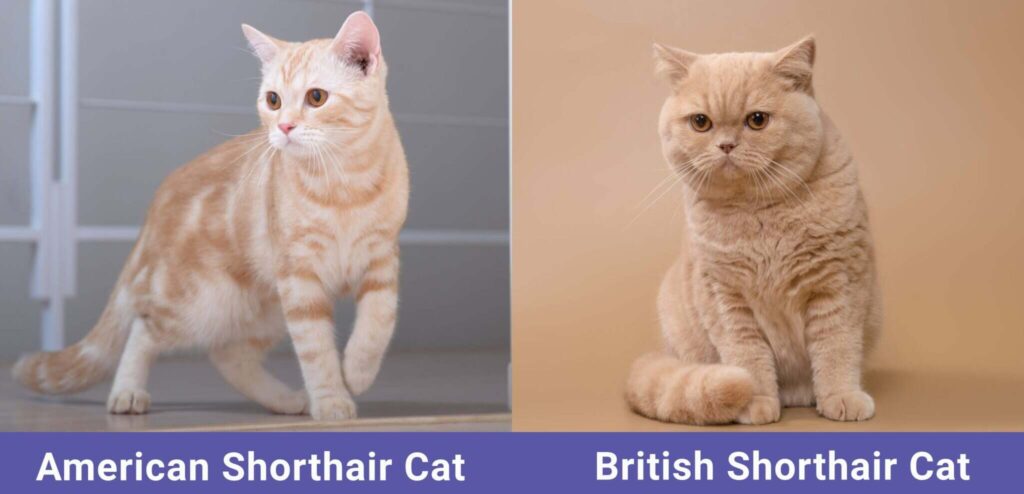
When I first place an American Shorthair next to a British Shorthair, the difference is immediate, even to casual visitors. American Shorthairs usually have a more athletic build, with visible muscle tone and a slightly longer body frame. British Shorthairs feel heavier in the hand, almost like holding a dense, compact cushion that doesn’t stretch much in length. I remember a customer last spring bringing both breeds together, and even she was surprised at how different they felt when lifted.

American Shorthairs tend to move with quick, efficient steps, almost like they are always ready to explore something new. British Shorthairs, on the other hand, move in slower, more deliberate motions and prefer observing before acting. This difference becomes clear in a boarding environment, where new smells and sounds are constant. The British Shorthair usually finds a corner first, while the American Shorthair investigates every inch of the room.

In my experience, coat texture also plays a subtle role in first impressions, especially for first-time cat owners. The American Shorthair coat feels slightly coarser but still smooth, while the British Shorthair coat is dense and plush, almost like a thick winter jacket. These physical differences often influence how people choose between the two breeds before they even consider temperament. I’ve seen people fall in love just by touching the British coat once.

Temperament in Daily Handling

Behaviorally, the American Shorthair is usually more adaptable to changing environments, making it easier to manage in busy households. British Shorthairs are calmer but more selective in their interactions, and they prefer predictable routines to sudden changes. I once had a British Shorthair that refused to leave its carrier for nearly an hour, even though the room was completely quiet and safe. American Shorthairs rarely show that level of hesitation.

When people ask me for guidance, I often point them toward real-world care experiences rather than generic breed descriptions. In some cases, I’ve seen owners benefit from advice found through a local cat care resource that focuses on day-to-day handling rather than just breed history. This becomes especially useful when they are trying to understand whether a calm or active temperament fits their home environment. The way a cat reacts to noise, guests, and feeding schedules matters more than appearance alone.

American Shorthairs tend to bond through activity, following people from room to room without being overly demanding. British Shorthairs build trust more slowly but become deeply loyal once they feel comfortable. I’ve noticed British cats will often choose one favorite spot in the house and treat it like their personal base for years. American ones rarely stay in one place for long periods unless they are resting or eating.

American Shorthair vs British Shorthair

Grooming and Maintenance Reality

From a grooming perspective, both breeds are considered low maintenance, but the British Shorthair requires more attention to coat density. Their thick fur can trap loose hair more easily, especially during seasonal shedding periods. I usually spend extra time with a slicker brush to prevent matting in the denser areas. American Shorthairs are simpler in this regard and respond well to quick weekly grooming sessions.

Shedding patterns also differ slightly between the two, although both are manageable in a clean home. British Shorthairs tend to shed more heavily in bursts, while American Shorthairs shed in a more consistent, lighter flow throughout the year. I’ve cleaned both types of fur from furniture, and British hair tends to clump more noticeably on soft surfaces. It becomes more visible on dark fabrics, which surprises many owners.

Health-wise, both breeds are generally strong, but I’ve observed that British Shorthairs can be slightly more prone to weight gain if their diet isn’t carefully monitored. American Shorthairs usually stay active enough to maintain a healthy weight naturally. I always advise owners to watch portion sizes rather than relying on free feeding, especially in indoor-only environments. A few extra treats can quietly change their body condition over a few months.

Choosing Between Them in Real Homes

When people are deciding between these two breeds, I usually ask them to think less about appearance and more about daily interaction style. If someone wants an active cat that engages with movement and adapts quickly to change, the American Shorthair usually fits better. If the preference is for a calmer, more grounded companion who enjoys quiet observation, the British Shorthair is often a better fit. I’ve seen both choices work well, depending on household rhythm.

There was a family I worked with who initially wanted the British Shorthair for its appearance, but later realized their home was too active for its personality. After some discussion and exposure visits, they chose an American Shorthair instead, and the match turned out smoother than expected. These decisions often become clearer once people spend time observing both breeds in similar environments. Short interactions can reveal more than long research sessions.

Both cats bring their own kind of stability into a home, just expressed in different ways. The American Shorthair does it through movement and curiosity, while the British Shorthair does it through presence and calm consistency. Neither is better in a general sense, but one usually fits a household rhythm more naturally than the other. That fit is what ultimately matters in the long run.

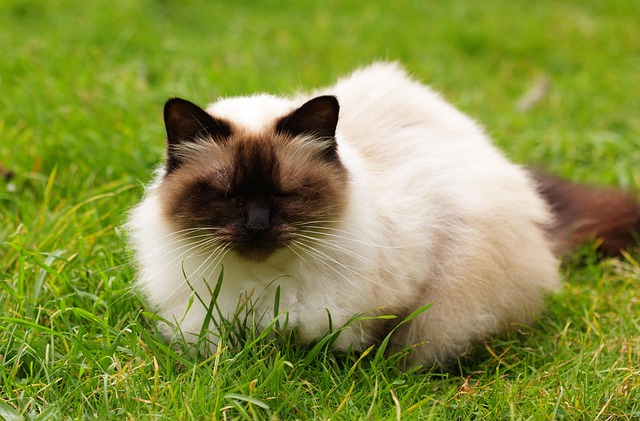
Are Himalayan Cats Hypoallergenic
May
Are Himalayan Cats Hypoallergenic in Real Homes

I work as a mobile cat groomer based in a humid coastal area in Florida, and I spend most of my weeks moving between homes where people are trying to manage pet allergies without giving up on their cats. Himalayan cats come up a lot in my appointments because they look gentle, calm, and people assume their long coats make them safer for allergy sufferers. I’ve worked closely with dozens of them in real grooming setups, not just quick shelter visits. Over time, I’ve seen a pattern that challenges the idea of hypoallergenic cats more than it supports it.

What I notice about grooming Himalayan cats

When I first started working with Himalayan cats, I assumed their thick coats might trap allergens and reduce airborne spread. That assumption didn’t hold up in real homes where I had to brush, bathe, and dry them on a regular schedule. Their fur traps a surprising amount of dander close to the skin, and when I brush them, fine particles quickly release into the air. I’ve had clients say they felt fine around their cat most of the week, but symptoms flared right after grooming sessions.

Himalayan cats are calm during grooming, which makes handling easier compared to many high-energy breeds I deal with on house calls. I still take extra care with ventilation because loose hair and dander can linger in small rooms for hours. A Himalayan’s coat requires consistent maintenance, and without it, shedding builds up in layers that are easy to disturb. One customer last spring told me she thought weekly brushing would be enough, but she started noticing sneezing episodes whenever she cleaned the sofa.

Most people expect long-haired cats to behave differently when it comes to allergens, but I’ve found that coat length has little to do with allergen production. The real trigger is a protein in saliva and skin oils that spreads when cats groom themselves. Himalayans are especially prone to self-grooming due to their dense fur, which increases exposure in enclosed spaces. I’ve seen allergy symptoms persist even when owners vacuum daily and use air filters.

Allergy expectations vs reality

Many of my clients seek reassurance before adopting a Himalayan, and they often ask whether I’ve worked with “hypoallergenic breeds” in general. I explain that no cat is truly hypoallergenic, though some produce fewer allergens than others. During a consultation, I sometimes suggest they speak with a veterinary allergy specialist before making a decision, and I’ve seen people get helpful guidance from veterinary allergy support service providers who understand both human reactions and feline care. These discussions usually help set more realistic expectations before the cat even comes home.

I’ve noticed that reactions vary more from person to person than from cat to cat, which surprises many first-time owners. One household I worked with had two people who barely reacted, while a third family member needed medication after short exposure. Even within the same room, sensitivity levels can shift depending on airflow, cleaning habits, and how often the cat is brushed. It is rarely a simple yes-or-no situation.

There is also a misconception that “clean” homes eliminate allergy problems completely, but that is not how cat allergens behave. They cling to fabric, float in the air, and settle into corners that are rarely cleaned deeply. I returned home months later and still detected mild reactions from previous grooming visits. This is why I always advise owners to think in terms of management rather than elimination.

Are Himalayan Cats Hypoallergenic

Why Himalayan coats don’t reduce allergens

The Himalayan cat’s long coat often gives the impression of protection, almost like a filter, but the biology works differently. Allergens mainly come from saliva, not just fur, and cats spread them every time they groom. Himalayans are meticulous groomers, which means more saliva transfer across their dense coat. That coat then acts like a carrier, not a shield.

Another factor I’ve seen repeatedly is how easily their fur mats if not brushed several times a week. Mats trap shed hair and dander, and when they are finally brushed out, a noticeable burst of particles enters the air. I once worked with a household where grooming had been delayed for nearly two weeks, and the difference in airborne irritation was obvious within minutes of starting. Small environments amplify this effect.

Even grooming tools matter more than people expect. I always use sealed grooming setups in my mobile van to limit airborne spread during brushing sessions. The difference between controlled grooming and open-home grooming can be significant for sensitive individuals. This is why Himalayans require more consistent maintenance than many people initially assume when choosing them as pets.

Living with a Himalayan cat and reducing reactions

Living with a Himalayan cat while managing allergies is possible, but it requires routine adjustments rather than expecting a hypoallergenic outcome. Regular brushing is the first step I recommend, ideally several times a week, to prevent buildup. Bathing helps reduce surface allergens, though not everyone enjoys doing it frequently. I’ve seen families settle into a rhythm where one person handles grooming while another manages cleaning tasks in the home.

Air circulation also plays a major role in controlling reactions. In homes with better airflow, symptoms tend to be less intense even when grooming routines stay the same. I often advise clients to keep fabric-heavy areas like cushions and throws washable and to avoid letting the cat sleep on pillows. These small changes make a noticeable difference over time, especially in smaller apartments where allergens accumulate more quickly.

Diet and general health also influence coat condition, which, in turn, indirectly affects the spread of allergens. A well-fed Himalayan with healthy skin tends to shed less unevenly, which reduces sudden bursts of dander. I’ve seen improvement in households that improved grooming consistency and diet at the same time. Still, even with all these measures, no Himalayan becomes completely non-allergenic in my experience.

From what I’ve observed in real homes, expectations shape satisfaction more than anything else. People who adopt knowing there will be ongoing management tend to adjust better than those expecting a hypoallergenic pet. Himalayan cats are affectionate, calm, and visually striking, but they still carry the same biological triggers as other cats. That reality becomes easier to accept once daily routines are established and understood early.