American Shorthair vs British Shorthair in Real Cattery Experience
I work at a small boarding and grooming setup where I regularly handle both American Shorthairs and British Shorthairs brought in by families over the years. Most of my comparisons come from daily handling rather than reading breed summaries, because behavior changes a lot once you actually live with them. I’ve cleaned their coats, managed their feeding routines, and watched how they react in shared spaces. Over time, I began to notice clear patterns that go beyond textbook descriptions.
Body Structure and First Impressions
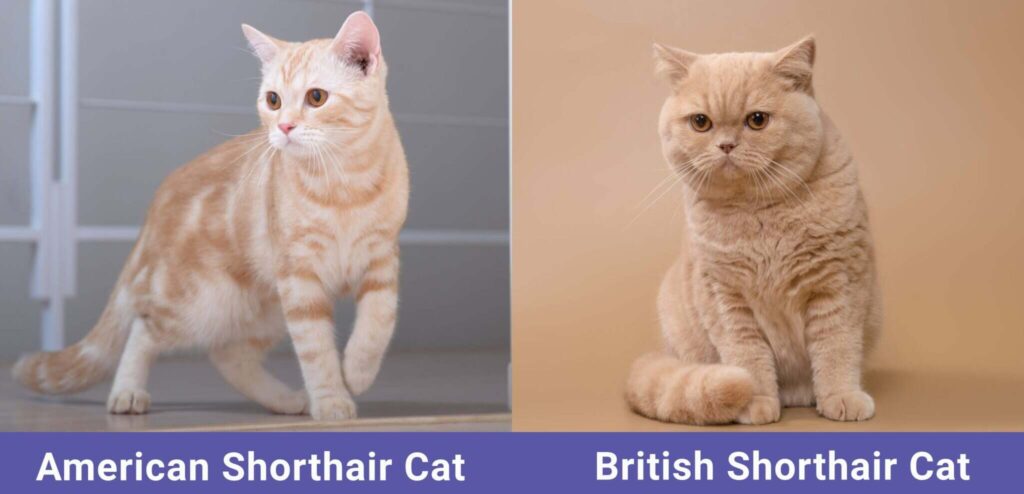
When I first place an American Shorthair next to a British Shorthair, the difference is immediate, even to casual visitors. American Shorthairs usually have a more athletic build, with visible muscle tone and a slightly longer body frame. British Shorthairs feel heavier in the hand, almost like holding a dense, compact cushion that doesn’t stretch much in length. I remember a customer last spring bringing both breeds together, and even she was surprised at how different they felt when lifted.
American Shorthairs tend to move with quick, efficient steps, almost like they are always ready to explore something new. British Shorthairs, on the other hand, move in slower, more deliberate motions and prefer observing before acting. This difference becomes clear in a boarding environment, where new smells and sounds are constant. The British Shorthair usually finds a corner first, while the American Shorthair investigates every inch of the room.
In my experience, coat texture also plays a subtle role in first impressions, especially for first-time cat owners. The American Shorthair coat feels slightly coarser but still smooth, while the British Shorthair coat is dense and plush, almost like a thick winter jacket. These physical differences often influence how people choose between the two breeds before they even consider temperament. I’ve seen people fall in love just by touching the British coat once.
Temperament in Daily Handling
Behaviorally, the American Shorthair is usually more adaptable to changing environments, making it easier to manage in busy households. British Shorthairs are calmer but more selective in their interactions, and they prefer predictable routines to sudden changes. I once had a British Shorthair that refused to leave its carrier for nearly an hour, even though the room was completely quiet and safe. American Shorthairs rarely show that level of hesitation.
When people ask me for guidance, I often point them toward real-world care experiences rather than generic breed descriptions. In some cases, I’ve seen owners benefit from advice found through a local cat care resource that focuses on day-to-day handling rather than just breed history. This becomes especially useful when they are trying to understand whether a calm or active temperament fits their home environment. The way a cat reacts to noise, guests, and feeding schedules matters more than appearance alone.
American Shorthairs tend to bond through activity, following people from room to room without being overly demanding. British Shorthairs build trust more slowly but become deeply loyal once they feel comfortable. I’ve noticed British cats will often choose one favorite spot in the house and treat it like their personal base for years. American ones rarely stay in one place for long periods unless they are resting or eating.
Grooming and Maintenance Reality
From a grooming perspective, both breeds are considered low maintenance, but the British Shorthair requires more attention to coat density. Their thick fur can trap loose hair more easily, especially during seasonal shedding periods. I usually spend extra time with a slicker brush to prevent matting in the denser areas. American Shorthairs are simpler in this regard and respond well to quick weekly grooming sessions.
Shedding patterns also differ slightly between the two, although both are manageable in a clean home. British Shorthairs tend to shed more heavily in bursts, while American Shorthairs shed in a more consistent, lighter flow throughout the year. I’ve cleaned both types of fur from furniture, and British hair tends to clump more noticeably on soft surfaces. It becomes more visible on dark fabrics, which surprises many owners.
Health-wise, both breeds are generally strong, but I’ve observed that British Shorthairs can be slightly more prone to weight gain if their diet isn’t carefully monitored. American Shorthairs usually stay active enough to maintain a healthy weight naturally. I always advise owners to watch portion sizes rather than relying on free feeding, especially in indoor-only environments. A few extra treats can quietly change their body condition over a few months.
Choosing Between Them in Real Homes
When people are deciding between these two breeds, I usually ask them to think less about appearance and more about daily interaction style. If someone wants an active cat that engages with movement and adapts quickly to change, the American Shorthair usually fits better. If the preference is for a calmer, more grounded companion who enjoys quiet observation, the British Shorthair is often a better fit. I’ve seen both choices work well, depending on household rhythm.
There was a family I worked with who initially wanted the British Shorthair for its appearance, but later realized their home was too active for its personality. After some discussion and exposure visits, they chose an American Shorthair instead, and the match turned out smoother than expected. These decisions often become clearer once people spend time observing both breeds in similar environments. Short interactions can reveal more than long research sessions.
Both cats bring their own kind of stability into a home, just expressed in different ways. The American Shorthair does it through movement and curiosity, while the British Shorthair does it through presence and calm consistency. Neither is better in a general sense, but one usually fits a household rhythm more naturally than the other. That fit is what ultimately matters in the long run.