Best Practices for Pet Dental Care
Mar
What Are the Best Practices for Pet Dental Care?

After more than a decade as a small-animal veterinarian, I see dental disease in dogs and cats more than almost any other problem. Many owners think bad breath is normal, but it’s often the first sign of dental disease.

I’ve treated many pets with painful infections, broken teeth, and advanced gum disease that simple home habits could have prevented. Dental health isn’t just about clean teeth—poor oral health can affect the heart, kidneys, and overall quality of life.

Most dental problems in pets develop slowly. As you continue reading, you’ll learn what to look for and how owners can prevent these issues.

Bad Breath Is Usually a Warning Sign

One of the first things clients mention during appointments is their pet’s breath. Someone will laugh and say, “I know dog breath isn’t supposed to smell great.”

Truly foul breath almost always means dental disease.

I remember examining a middle-aged Labrador who had been brought in for routine vaccines. As soon as the dog opened his mouth, the smell was overwhelming. The owner had assumed it was normal for years. When I examined his teeth more closely, several were loose, and his gums were badly inflamed. He eventually needed multiple extractions.

Healthy pet breath might smell like food, but it should not be strong, sour, or rotten.

Start Dental Care Earlier Than You Think

A common mistake is waiting until a pet is older to start dental care. By then, plaque has usually hardened into tartar, which only professional cleaning can remove.

The best time to start dental care is when pets are young.

Puppies and kittens adapt quickly to tooth brushing. Many clients tell me their pets enjoy the routine once they connect it with attention and rewards.

A family I worked with adopted a kitten who tolerated handling well. I advised brushing her teeth several times a week while she was small. Years later, her teeth were some of the healthiest I’d seen. The owner joked that brushing was now part of their nightly routine.

Early dental habits matter.

Brushing Your Pet’s Teeth Actually Works

Brushing is the most effective way to prevent dental disease in pets. Many owners areskeptical, especially if they’ve never tried it.

Keep it simple.

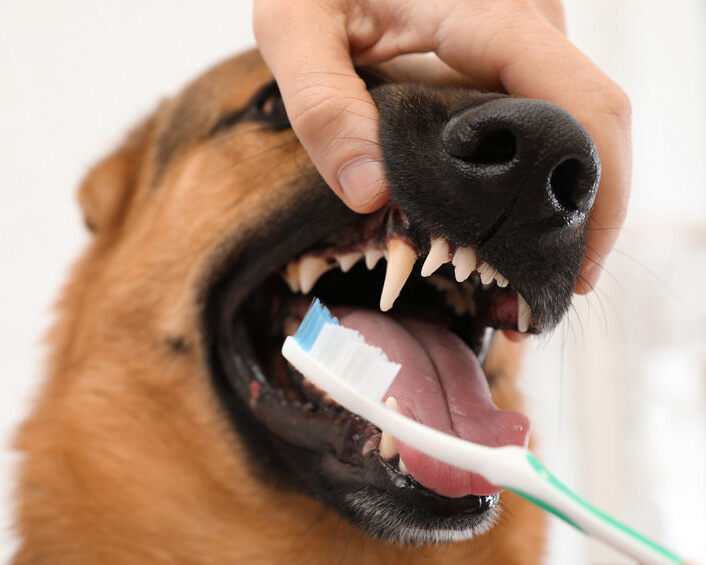
Use a soft toothbrush or a pet finger brush, along with veterinary toothpaste. Human toothpaste isn’t safe for animals because it often contains ingredients they shouldn’t swallow.

Most pets don’t need a full 2-minute brushing as people do. Even gently brushing the outer tooth surfaces for half a minute several times a week can significantly reduce plaque buildup. usually tell owners to focus on consistency rather than perfection. A quick brush three or four times a week is far better than an occasional long session.
Best Practices for Pet Dental Care

Dental Chews Can Help — But They’re Not a Substitute

Dental chews and treatshelp, but they’re often misunderstood.

Many dental products are just flavored snacks. Effective chews have a texture that encourages chewing and mild abrasion. I’ve seen noticeable improvements in some dogs who regularly chew approved dental products. One client with a small terrier told me she started giving him a daily dental chew after a cleaning. At his next visit, the tartar buildup was noticeably slower than before.

ThChews work best as part of a routine. They don’t replace brushing or professional cleanings. Pay Attention to Small Changes in Eating Habits

Pets rarely show obvious dental pain. Instead, they make subtle behavioral changes. A dog that once crunched dry food may start swallowing it whole. A cat may chew on one side of the mouth or drop food occasionally. Some pets become reluctant to play with toys they once carried proudly.

One case that stands out involved an older cat whose owner thought she had simply become picky with food. During the exam, I discovered a severe tooth root infection that was likely causing significant pain. After the affected tooth was removed, the owner told me the cat returned to eating normally within days.

Early changes in eating behavior are often the first clues that something is wrong.t.

Professional Cleanings Are Sometimes Necessary

Even with great home care, many pets will eventually need professional dental cleanings. During these procedures, pets are anesthetized so veterinarians can remove tartar, polish teeth, and check beneath the gumline. This last step is important since many problems develop out of sight. Some owners worry about anesthesia, especially for older pets. Modern veterinary anesthesia is carefully monitored, and untreated dental infections pose their own health risks. I’ve seen pets become noticeably more energetic and comfortable after dental procedures. Chronic mouth pain can quietly affect an animal until it’s treated. Common Mistakes Pet Owners Make

Certain patterns recur during dental exams.

One of the most common mistakes is assuming dry food cleans teeth. While kibble creates some friction, it doesn’t prevent plaque buildup as effectively as brushing does.

Ignoring gum redness is another problem. Healthy gumsarek pink and firm. Red, swollen gums mean inflammation has started.

Sometimes, pets get very hard chews, like bones or antlers, which can fracture teeth. I’ve treated several dogs with broken molars from hard chews. Repairs often require extraction or specialized dental procedures. Simple Habits Make the Biggest Difference

Most dental disease in pets develops slowly. Owners seldom notice it until the problem is severe. The healthiest pets often belong to owners who brush regularly, notice changes in breath or eating, and schedule dental checkups during routine visits. Preventing dental disease is easier than treating it. A few minutes of weekly care can prevent discomfort later in life for pets. Pets with healthy mouths stay happier, more active, and comfortable into their senior years.

Best Organic Pet Supplements
Mar
How to Choose the Best Organic Pet Supplements

As a licensed veterinarian practicing in Texas for over a decade, I’ve watched the interest in organic pet supplements grow from a niche request to a daily conversation in my exam rooms. Clients bring in jars of green powders, amber glass bottles of herbal extracts, and chews labeled “clean,” “natural,” and “certified organic.”

Some of these products have helped my patients tremendously. Others have done very little. A few have caused real problems.

My goal here isn’t to sell you on organic supplements or scare you away from them. It’s to help you decide, based on real clinical experience, whether they belong in your pet’s routine.

Why Pet Owners Turn to Organic Supplements

Most people who ask me about organic supplements are trying to solve a specific problem. Chronic itching. Stiff joints. Digestive upset that keeps coming back. Anxiety that medication only partially improves.

A few years ago, a client brought in her middle-aged Labrador who had struggled with seasonal allergies for years. We had him on appropriate medication, but she wanted to reduce how often he needed steroids. She had started him on an organic omega-3 supplement made from algae rather than fish oil. Over the next few months, his skin inflammation was noticeably calmer. We were able to lower his steroid use. That was a win.

In my experience, pet owners are usually looking for one of three things:

  • Fewer synthetic ingredients
  • Better long-term safety
  • A way to support, not replace, medical treatment

Those are reasonable goals. The problem is that “organic” doesn’t automatically mean “effective” or “safe.”

What “Organic” Actually Means in Supplements

In food production, organic certification has clear standards. In supplements, it can get murkier.

For a supplement to be truly organic, the plant ingredients must be grown without synthetic pesticides or fertilizers. That says something about farming practices. It does not automatically guarantee potency, purity, or appropriate dosing for animals.

I’ve seen beautifully branded organic products with impressive labels that contained therapeutic amounts, but those amounts were too low to make any clinical difference. I’ve also seen conventional supplements with excellent research behind them.

Organic refers to how ingredients are grown. It does not mean the formula is well-designed.

Where I’ve Seen Real Benefits

There are certain categories where organic supplements can be genuinely helpful.

Joint Support

I often recommend joint supplements for aging dogs. Some organic formulations use turmeric, green-lipped mussel extract, or boswellia. I had an older mixed-breed patient last spring whose owner wanted to avoid prescription anti-inflammatories due to mild kidney changes. We added an organic joint supplement with a meaningful dose of omega-3s and anti-inflammatory herbs.

Was it a miracle? No. But within a couple of months, the dog was back on the couch and moving more comfortably on walks. We still monitored closely, but the supplement gave us more flexibility before starting stronger medications.

The key was choosing a product with transparent dosing and third-party testing—not just an “organic” label.

Digestive Health

Organic probiotics and prebiotic blends can support gut health, especially after antibiotics. I’ve had several patients recover from stress-related diarrhea more smoothly when a well-formulated probiotic was added.

One case that stands out involved a rescue dog with recurring loose stools. The owner had tried multiple foods. We ruled out parasites and major diseases. An organic probiotic with multiple strains, combined with a limited-ingredient diet, finally stabilized the dog’s digestion.

The improvement wasn’t overnight, but over several weeks, the stools became consistently formed. That told me the supplement was doing more than acting as a placebo.

Skin and Coat

Organic flaxseed oil or algae-based omega-3 supplements can benefit pets with dry skin. However, I’m cautious with plant-based omega-3s in dogs and cats because conversion to active forms can be limited. In many cases, a purified fish oil—organic or not—may be more biologically useful.

Best Organic Pet Supplements

Where I Advise Caution

I’ve also treated pets harmed by well-intentioned supplementation.

A few years ago, a client brought in a small dog with vomiting and lethargy. After a long conversation, we discovered she had been giving an organic herbal immune booster she bought online. One of the herbs interfered with the dog’s existing medication and likely irritated the stomach lining.

Another common issue is overdosing on fat-soluble vitamins. Organic vitamin blends are still vitamins. More is not better. I’ve seen pets develop digestive upset and abnormal lab values because owners assumed natural products couldn’t cause harm.

Cats, in particular, are sensitive. Their liver metabolism differs from that of dogs. I’m especially cautious with herbal supplements in feline patients unless there’s solid veterinary guidance.

Common Mistakes I See in the Exam Room

The biggest mistake isn’t choosing organic. It’s skipping professional input.

Owners often:

  • Start multiple supplements at once, making it impossible to know what’s helping or hurting.
  • Assume human-grade organic products are safe for pets.
  • Ignore dosing differences between species and sizes.
  • Use supplements instead of addressing the underlying disease.

I once saw a senior dog whose arthritis had progressed significantly because the owner relied solely on organic anti-inflammatory herbs for nearly a year. By the time we intervened with proper pain management, muscle loss had already set in. Supplements could have been part of the plan—but not the whole plan.

How I Evaluate an Organic Supplement

When a client brings me a product, I look beyond the marketing.

I check:

  • Clear ingredient list with exact amounts
  • Third-party testing or quality assurance
  • Manufacturer transparency
  • Appropriate dosing instructions for dogs or cats

If the company won’t provide detailed information, that’s a red flag.

I also consider the pet in front of me. A young, healthy dog with mild seasonal itchiness is very different from a senior cat with kidney disease. The same supplement can be appropriate for one and risky for another.

Do Organic Supplements Replace Medication?

In most cases, no.

They can reduce medication doses in some patients. They can support recovery. They can improve the quality of life in mild to moderate conditions. But I rarely see them eliminate the need for conventional treatment in serious disease.

That doesn’t make them useless. It makes them supportive tools.

I’m not opposed to integrative approaches. I regularly combine nutrition, supplements, and pharmaceuticals. The difference is that the plan is deliberate, monitored, and adjusted based on response.

My Professional Take

Organic pet supplements can be valuable when:

  • The product is well-formulated and properly dosed.
  • The condition is appropriate for supportive care.
  • A veterinarian is involved in decision-making.
  • Expectations are realistic

They are less helpful when they’re used as a substitute for diagnostics or as a blanket “wellness booster” without a specific goal.

After years in practice, I’ve found that the best outcomes happen when owners treat supplements as part of a thoughtful strategy—not a shortcut or a cure-all. Used wisely, organic supplements can play a meaningful role in your pet’s health. Used blindly, they can delay care or create new problems.

The difference lies in informed decisions, not just organic labels.