Why I Never Recommend Letting Cats Snack on Sesame Seeds
I work as a small-animal nutrition advisor in a busy veterinary clinic where I spend most of my days reviewing pet diets and correcting feeding mistakes people make at home. One question that comes up more often than you would expect is whether cats can have sesame seeds. I usually hear it from owners who are sharing human food or baking ingredients with their pets without thinking twice. Over time, I’ve seen enough mild stomach upsets to take this question seriously. So I always break it down based on what I’ve observed in real cases rather than assumptions.
What Sesame Seeds Actually Do in a Cat’s Body
From what I’ve seen in clinic cases, sesame seeds don’t offer any meaningful nutritional benefit to cats. Cats are obligate carnivores, which means their bodies are designed to process animal protein, not plant oils or seeds. A few scattered seeds usually pass through without much issue, but that does not mean they are helpful or necessary. I’ve had several cases where cats developed mild digestive discomfort after eating foods coated with sesame seeds, especially when those foods also contained oils or spices.
Most owners don’t realize how small ingredients can still irritate a sensitive digestive system. One cat I remember from a routine consultation had persistent soft stools after repeatedly licking leftover burger buns from the kitchen counter. The seeds themselves weren’t toxic, but they were part of a mixture that didn’t agree with the cat’s gut. This is where I usually remind people that the absence of toxicity does not mean suitability.
In some discussions with pet owners, I’ve pointed them toward reliable veterinary guidance, and during a consultation, I once referenced a general informational source available through a local vet clinic to help them understand basic dietary safety for cats. What stood out in that conversation was how surprised they were that something as small as seeds could contribute to digestive imbalance when combined with other ingredients. That moment usually shifts how people view “harmless” human foods.
When Cats Accidentally Eat Sesame Seeds
In most real-world situations, cats don’t intentionally seek out sesame seeds. It usually happens indirectly, like when they lick bread crusts, snack on spilled food, or nibble on table scraps. I’ve handled cases where cats ate food containing sesame coatings or sauces, and the reaction varied depending on the cat’s sensitivity and how much they consumed. Small amounts rarely cause dramatic symptoms, but I still watch for changes in appetite or stool consistency.
One customer last spring brought in a young tabby that had been sneaking bites from sandwich leftovers left on a low coffee table. The cat wasn’t seriously ill, but it showed mild bloating and reduced interest in its regular food for a day or two. These cases help reinforce that it’s not just about toxicity, but also about how unfamiliar ingredients affect digestion. Even small dietary disruptions can throw a cat off balance for a short time.
Most sesame exposure I’ve seen is accidental and tied to human eating habits around pets. Cats are curious, and they often investigate anything new on a plate. I always advise owners to keep shared food habits consistent and controlled because once a cat associates certain smells with snacks, it becomes harder to discourage the behavior later.
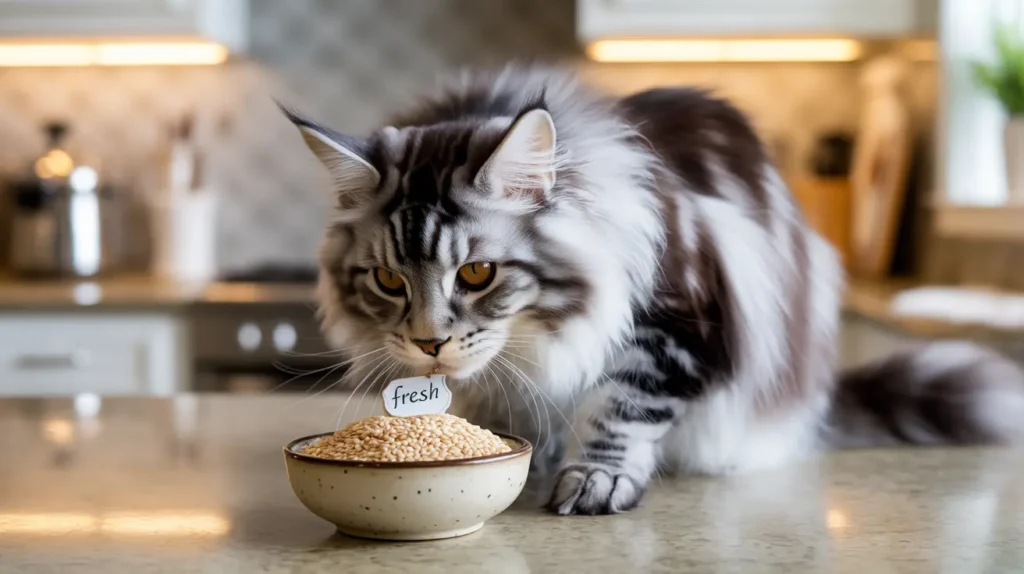
Why Sesame Seeds Are Not a Useful Treat for Cats
People sometimes assume that because seeds contain oils and nutrients, they might benefit cats in small amounts. In practice, I’ve never seen a case where sesame seeds provided any nutritional benefit for a cat. Their bodies simply don’t metabolize plant-based fats in a way that improves health or energy levels. Instead, protein from animal sources remains the only meaningful dietary requirement.
The texture of sesame seeds can also be a minor concern. They are small but not digestible in the same way as meat-based nutrients are, which means they mostly pass through the system unchanged. I’ve seen this in stool observations during routine checkups, where seeds were visible without any breakdown. It doesn’t usually indicate danger, but it does show inefficiency from a nutritional standpoint.
There’s also the issue of habit formation. Once cats get used to tasting human food, even tiny amounts, they start showing more interest in kitchen surfaces and dining areas. I’ve had to help several households manage this behavior shift, and it often starts with something as simple as sharing bread or baked goods containing seeds. Prevention is much easier than correction in these cases.
Safer Ways to Handle Food Curiosity in Cats
In my daily work, I focus more on prevention than on correction because cats’ dietary habits are shaped early and reinforced quickly. If a cat shows curiosity about human food, I usually suggest redirecting that interest toward approved treats rather than trying to fight the behavior once it develops. Consistency is far more effective than occasional discipline.
I’ve noticed that many owners underestimate how quickly cats associate smells with rewards. Even a few experiences of getting sesame-coated food can make a cat more persistent at begging or stealing bites. That’s why I always recommend keeping human food out of reach and avoiding casual sharing, especially in kitchens where cats roam freely during meal preparation.
One practical approach I often suggest is setting a feeding routine that satisfies the cat’s curiosity through proper meals and approved snacks. When cats feel consistently fed and engaged, they are less likely to investigate random foods on counters. It may sound simple, but I’ve seen it reduce unwanted food-seeking behavior in multiple households over a few weeks.
Another thing I remind owners is that small dietary mistakes add up over time. A single sesame seed snack might not cause harm, but repeated exposure to mixed human foods can slowly introduce digestive inconsistencies. Keeping food boundaries clear helps maintain long-term stability in a cat’s health and behavior.
After years of observing these patterns, I’ve learned that the safest approach is always to keep cats on diets designed specifically for them. Sesame seeds don’t belong in that category, even if they seem harmless at first glance. The less guesswork involved in feeding, the better the outcomes tend to be for both the cat and the owner.