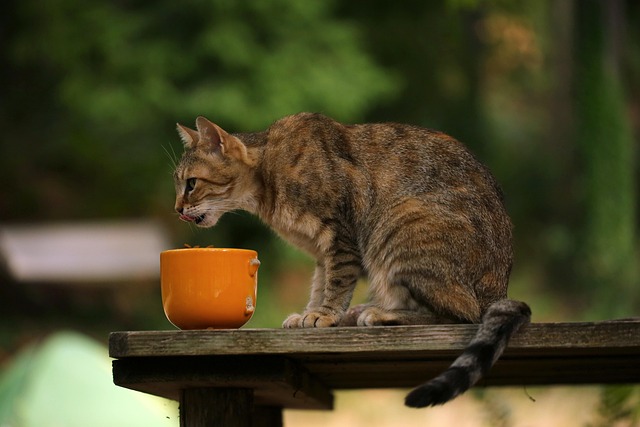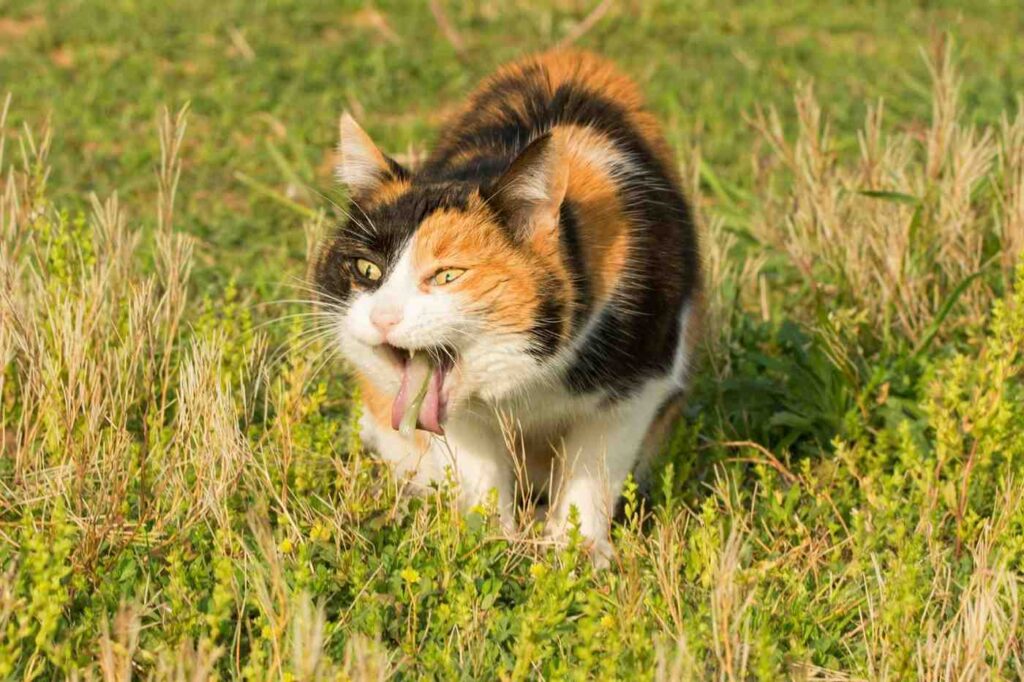
Pink Liquid In Cat Vomit
Apr
Pink Liquid In Cat Vomit: What I Look For First

I work as a mobile veterinary assistant in Faisalabad, and I spend a lot of time moving between homes where cats suddenly start vomiting, and owners panic. One of the more unsettling things I get called for is a cat throwing up pink liquid, because it immediately raises concerns about blood or internal irritation. Over the years, I have learned that the color alone does not tell the full story, but it always deserves attention. I have seen cases where it turned out to be mild, and others where it required urgent intervention within hours.

What pink vomit usually signals in cats

When I arrive at a home and hear that a cat has vomited pink fluid, my first thought is to determine whether there is blood mixed in or if something ingested is coloring the stomach contents. It worried me immediately. That is one of those situations where I slow everything down and observe the cat’s behavior before anything else. A cat that is still alert and moving normally gives a different picture than one that is weak or hiding.

Pink coloring can come from several sources, including minor stomach irritation, small traces of blood from the esophagus, or even food dyes in commercial treats. I have seen a customer last spring who thought their cat was vomiting blood, but it turned out the cat had eaten a flavored paste treat that tinted the vomit pink. The situation still needed monitoring, but it was far less dangerous than initially feared. Still, I never dismiss the symptom without a proper check.

Sometimes the pink shade is faint and mixed with foam, which often suggests gastric irritation rather than active bleeding. I always ask owners about recent diet changes, stress, or access to plants or chemicals in the home. Even small details matter, like a new type of cat food or accidental nibbling on household items. Those clues often help narrow down what is happening faster than any guesswork.

First steps I take when assessing the situation

When I first assess a cat vomiting pink liquid, I focus on three things: hydration level, gum color, and vomiting frequency. I check the gums for paleness or normal color, as paleness can suggest blood loss. I also observe whether the cat is trying to vomit repeatedly or if it was a single episode. One isolated incident is treated differently from repeated vomiting over a few hours.

In some cases, I recommend immediate stabilization support at home before transporting the cat. I often suggest a local emergency vet clinic that can handle urgent feline cases quickly, especially when symptoms escalate within a short time frame, like rapid dehydration or repeated vomiting episodes that do not slow down. A cat throwing up pink liquid is the kind of resource I point people toward when they need structured help fast, rather than waiting and hoping things improve. I usually stay on the call while they decide the next steps. Most owners feel more grounded once they know where to go and what to expect.

I see this often. Cats are subtle in how they show distress, and vomiting pink fluid is one of those signals that forces you to pay attention quickly. I also ask whether the cat has access to foreign objects like threads, plastic, or plants, because ingestion issues can escalate fast. If there is any doubt, I prefer early examination rather than waiting for clearer symptoms.
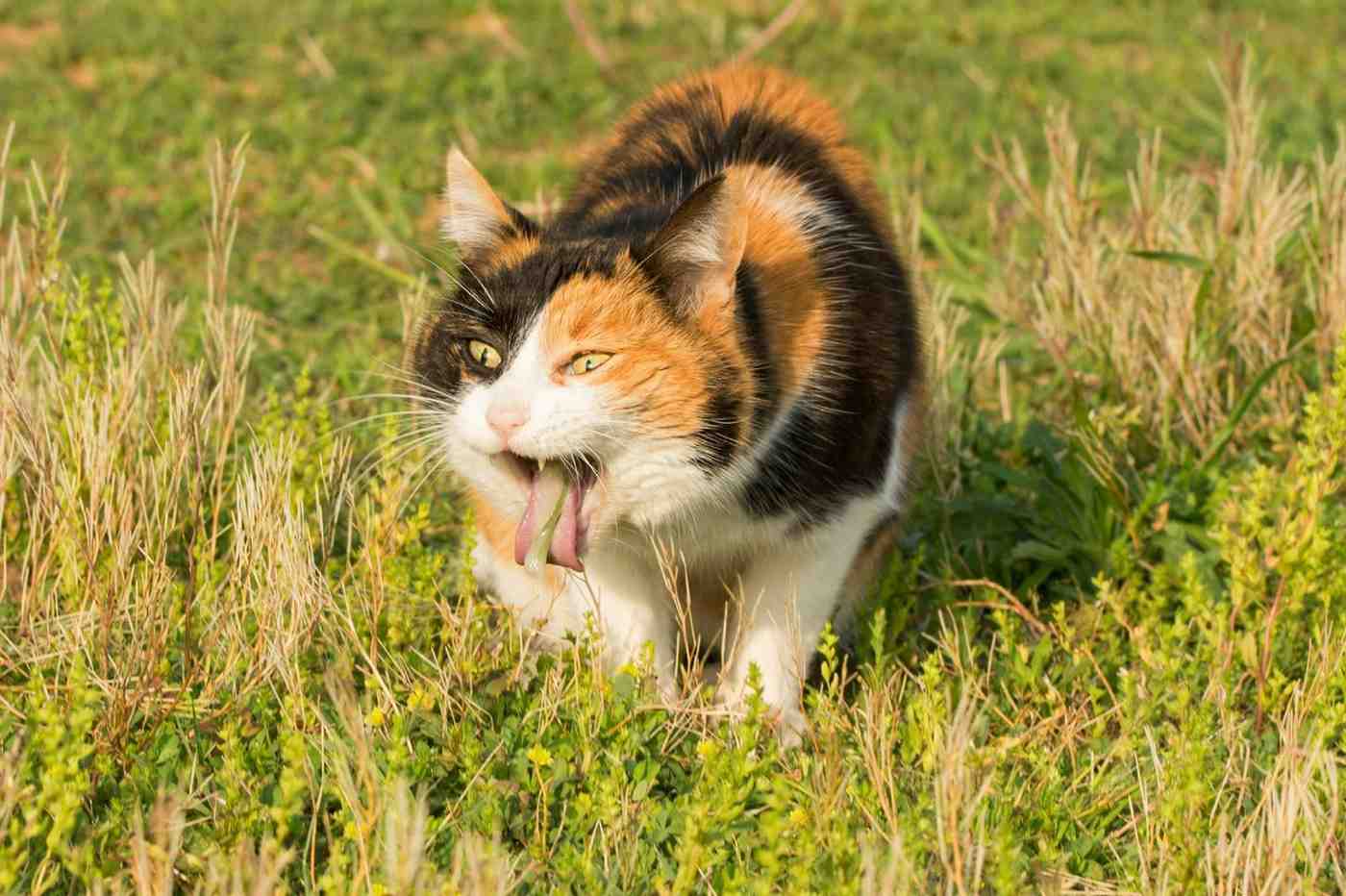
Pink Liquid In Cat Vomit

Common causes behind pink vomit

One of the most common causes I encounter is gastritis, which is inflammation of the stomach lining. This can happen after dietary changes, spoiled food, or even stress-related appetite shifts. The stomach becomes sensitive, and even minor irritation can cause tiny traces of blood to mix with stomach fluid. It does not always look dramatic, but it still signals that the digestive system is under strain.

Another cause I have seen repeatedly involves hairballs that irritate the throat and esophagus during repeated retching. Friction can cause slight bleeding, giving the vomit a pink tint. In multi-cat homes, especially those where grooming is not regularly maintained, this becomes more frequent. I usually suggest simple grooming routines to reduce buildup, especially during shedding seasons.

Food-related causes are also common, especially with cheap treats or the sudden introduction of new brands. Some artificial coloring agents or ingredients can confuse owners when they see unusual vomit colors. In a few homes I visited, switching back to a familiar diet resolved the issue within a day or two. However, I still recommend monitoring closely because not every case is that simple.

When I consider it an emergency

There are clear moments when I stop treating pink vomit as a mild symptom and start treating it as an emergency. If the cat becomes lethargic, refuses water, or continues vomiting repeatedly, I escalate the situation quickly. These signs suggest the body is not stabilizing on its own. Waiting at that point can complicate recovery.

If I notice darker blood or a transition from pink to red or brown vomit, I become more concerned about internal bleeding. That shift often changes the urgency completely. I have handled cases where owners waited too long, thinking it was a passing issue, only to find the cat dehydrated and weak later. It is always easier to intervene early than late.

Breathing changes, hiding behavior, and refusal to move are also red flags I take seriously. Cats often withdraw when something is wrong internally, and vomiting combined with behavioral changes usually means the problem is deeper than simple stomach irritation. At that stage, I prefer direct veterinary assessment rather than home monitoring.

Even when the cause turns out to be minor, I still tell owners to keep a close eye on their pet for at least 24 hours after an episode of pink vomiting. Cats can appear stable, only to decline suddenly if the underlying issue is not fully resolved. I usually recommend small, controlled meals and access to fresh water during that period. Quiet observation at home often reveals whether recovery is progressing normally.

After years of responding to these cases, I have learned that the color of vomit is just one piece of the puzzle. What matters more is the pattern, the behavior, and how quickly the cat recovers afterward. A single episode can be harmless, but repeated episodes always deserve immediate attention.
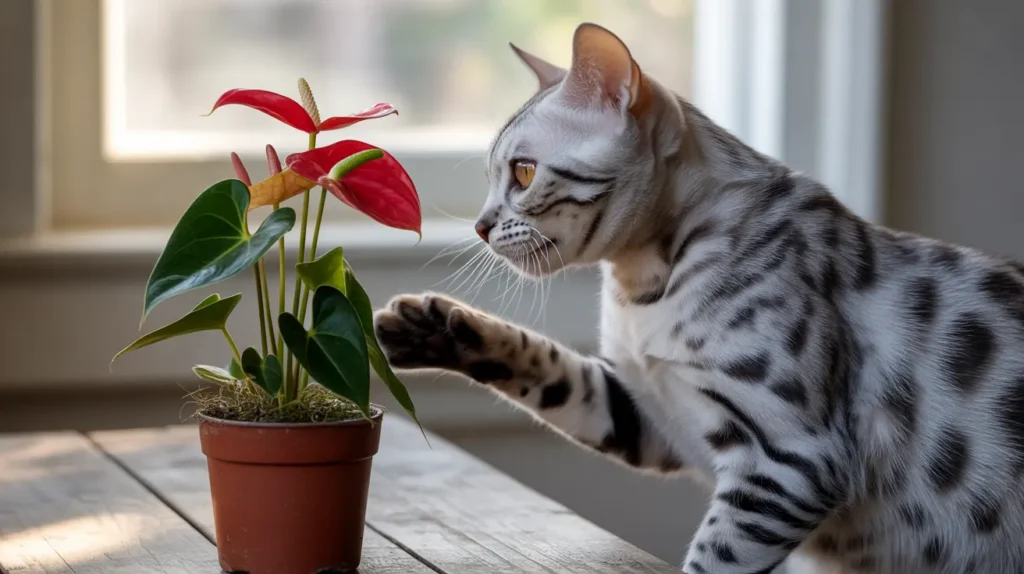
Anthurium and Cats
Apr
Anthurium and Cats: Why This Common Houseplant Raises Real Concern in Clinics

I work as a veterinary technician at a small emergency intake clinic, where we see a steady stream of worried pet owners bringing in cats that have chewed on houseplants. One of the plants that comes up more often than people expect is anthurium, usually sitting quietly in a living room corner until a curious cat decides to test it with its teeth. Over the years, I’ve learned that most owners have no idea it can cause problems until they are already on their way to us. The reactions we see are rarely dramatic in the first few minutes, which is part of why it catches people off guard.

Why does anthurium show up in homes with cats?

Anthurium is popular because it looks clean, glossy, and low-maintenance, which makes it a favorite in apartments and offices where people want greenery without constant care. I often hear owners say they bought it from a weekend plant market or picked it up while redecorating a corner of their home. Cats, on the other hand, see those waxy leaves as something worth chewing, especially if they are bored or exploring new scents. I have seen at least a dozen cases where the plant was placed on a table labeled “out of reach,” only for the cat to prove otherwise.

From what I observe in intake cases, anthurium contains calcium oxalate crystals, which are the real problem for pets. These tiny needle-like structures can irritate the mouth and digestive tract when chewed. Most owners don’t realize the irritation starts immediately, even if the symptoms take a little while to fully show. I remember a customer last spring who brought in a young tabby after noticing excessive drooling and pawing at its face shortly after a nibble on a decorative plant.

In situations like these, quick guidance matters more than panic. I often recommend owners reach out to a professional resource rather than trying multiple home remedies, especially when symptoms are unclear or progressing. In my clinic, we sometimes coordinate with local veterinary clinic support services that help triage whether a cat needs immediate treatment or simple monitoring at home. These early decisions can reduce stress for both the pet and the owner, particularly when the exposure is minor and caught early.

What symptoms do I see after exposure?

The first signs I usually see in cats that have chewed an anthurium leaf are excessive drooling and visible discomfort in the mouth. Some cats shake their head repeatedly or try to rub their face against furniture, almost like they are trying to get rid of something sharp stuck inside their mouth. In mild cases, the irritation settles within a few hours, but it can still look alarming to someone seeing it for the first time. A few cats may temporarily refuse food, which often worries owners more than anything else.

In more uncomfortable cases, swelling around the mouth or tongue becomes noticeable. I have handled cases where a cat’s vocalization changed slightly due to irritation, though that is less common. Vomiting can also occur if the plant material moves further into the digestive tract, but it is not guaranteed in every exposure. These variations make it tricky for owners to judge severity on their own, which is why observation in the first few hours is so important.

Some cats seem only mildly affected and recover quickly without intervention, while others react more strongly depending on how much they chewed. The difference often comes down to curiosity level and how long they interacted with the plant rather than the plant itself. I’ve seen two cats from the same household react very differently after nibbling the same leaf, which is something I still find interesting in practice. It reinforces the need to evaluate every case individually rather than assume.

Anthurium and Cats

How exposure usually happens in real homes

Most anthurium exposure cases I deal with start in everyday living spaces where the plant was never meant to be a hazard. Living rooms, bedroom corners, and even office desks are common places where cats can get in. I recall a case where a cat jumped onto a shelf the owner thought was decorative, knocking over a pot and taking a few bites before anyone noticed. These incidents rarely involve negligence, just underestimated curiosity.

Cats are especially likely to interact with plants during quiet hours when their owners are not watching closely. Early mornings and late evenings are the most common times I hear about incidents, simply because supervision is lowest then. Even households with multiple scratching posts and toys still report occasional plant chewing. It’s a reminder that environmental enrichment doesn’t always fully replace instinctive exploration.

Some cases I’ve seen involve households with several plants grouped together, which increases the chance of accidental contact. In one instance, a cat brushed against multiple pots while chasing a toy and ended up chewing the wrong leaf out of curiosity rather than intent. These overlapping situations make it harder for owners to identify the exact moment exposure occurred, which often delays response slightly. That delay can be the difference between mild irritation and more noticeable symptoms.

What I usually tell owners to do right away

When a cat comes in after suspected anthurium exposure, the first step I suggest is removing any plant material still within reach and gently checking the mouth if the cat allows it. I have learned that forcing inspection usually causes more stress than benefit, so calm observation matters more. Most mild cases improve with time and simple monitoring, but owners should watch for worsening drooling or refusal to eat. Hydration is also something I always keep an eye on during follow-up calls.

Vomiting, persistent mouth pain, or refusal to drink water are signs I take more seriously and usually recommend immediate veterinary evaluation for. Even though many cats recover without complications, the uncertainty about early symptoms makes waiting risky in some situations. I’ve seen cases where owners waited overnight, thinking it was a minor irritation, only to return the next day because symptoms escalated slightly. Acting early tends to reduce both stress and treatment intensity.

Over time, I’ve also noticed that prevention discussions matter just as much as treatment. Many owners move plants higher or choose non-toxic alternatives after their first scare, which significantly reduces repeat incidents. The pattern is consistent enough that I now bring it up during discharge conversations, especially when curiosity-driven behavior is involved. Small environmental changes often prevent the same worry from happening again.

Working in these cases has made me cautious about how harmless decorative plants can appear at first glance. Anthurium is not something that causes severe, immediate poisoning in every case, but it does pose enough risk to take seriously when cats are involved. Most of the time, awareness and quick observation are what make the real difference in outcomes.

Do Father Cats Recognize Their Kittens
Apr
Do Father Cats Recognize Their Kittens In Real Life?

I work as a veterinary technician in a busy small-animal clinic in Faisalabad, and I also foster stray cats that come in through rescue cases around the city. Over the years, I have watched dozens of litters grow up in shared spaces where male cats were present, sometimes the actual father and sometimes unrelated toms. The question I hear most from new cat owners is whether a father cat really knows his kittens or simply ignores them after mating season ends.

How male cats respond after the mating season

In my early clinic days, I assumed male cats would naturally recognize their offspring the same way humans do. After spending time in shelters, I realized their behavior is more complicated and less emotionally consistent than people expect. Most male cats show little long-term interest in kittens after mating is complete, even if they were present during birth or early nursing stages.

What I usually see is that the tomcat’s attention shifts quickly once the queen is no longer in heat or available. He may stay near the territory for a short while, but his focus returns to food, safety, and other mating opportunities. I once monitored a local stray male who fathered a litter behind our clinic building, and within two weeks, he behaved as if the kittens were just part of the environment, not individuals he needed to care for.

This doesn’t necessarily mean there is zero recognition; rather, it means recognition doesn’t translate into caregiving behavior. Cats are wired differently from species that rely on extended paternal care. In many cases, survival instincts override any lingering social memory connected to reproduction.

What I observe in clinics and foster homes

In my foster setup, I have seen both controlled and chaotic environments where father cats and kittens crossed paths again. One interesting case involved a rescued male who was temporarily housed in the same building as his offspring, though neither the owner nor I informed him of that fact. His reaction was neutral curiosity at best, with no protective or nurturing response. During that same period, I documented feeding schedules, and his behavior remained focused on territory marking and routine rest.

When discussing this topic with other professionals, I often reference general cat behavior studies alongside practical observation from shelters and rescue networks. I also point people toward resources like the cat behavior resource that explains feline social structure in simpler terms for pet owners trying to understand these interactions. Even after reading widely, I still find that real-world clinical observation provides clearer answers than theory alone. In my experience, every male cat reacts slightly differently, but the overall pattern stays consistent.

One winter, I helped care for a group of kittens that were brought in after being found near a construction site. Their presumed father was living nearby and occasionally passed through the feeding area. He never showed aggression toward them, but he also never engaged in typical parental behavior, such as grooming or guarding. That balance between neutrality and detachment is something I see very often.

Do Father Cats Recognize Their Kittens

Behavior differences: recognition vs instinct

People often assume recognition means emotional bonding, but in cats, these two things do not always overlap. A father cat may detect familiar scents or visual cues, especially if he lives close to his offspring, yet this does not translate into long-term social attachment. In simple terms, recognition in cats is often sensory rather than emotional.

I have noticed that scent plays a major role in how cats interpret their environment. Even as kittens grow older and their smell changes, male cats rarely adjust their behavior in ways that suggest family bonding. A short sentence here. Instinct dominates most of their interactions.

There is also a clear difference between domesticated indoor cats and feral populations. Indoor male cats neutered early in life often show reduced territorial responses and may tolerate kittens more calmly. On the other hand, unneutered strays tend to remain focused on dominance and breeding cycles rather than family recognition. In either case, the idea of a father actively remembering kittens over long periods is not strongly supported by my experience.

When fathers interact with grown kittens

Occasionally, I have seen situations where a male cat crosses paths with his offspring months later, when the kittens are fully grown. These encounters usually happen in shared outdoor territories or during rescue intake from the same colony. The reactions are generally neutral, sometimes mildly cautious, but rarely aggressive unless competition for space or food is involved.

One memorable case involved a young male cat that returned to the clinic area where his presumed father still roamed. They sniffed each other briefly and then moved apart without conflict. The interaction lasted less than a minute and showed no sign of recognition beyond basic social assessment. These moments often reinforce how limited long-term familial memory appears in cats.

Over time, I stopped expecting father cats to behave like caretakers or even long-term relatives. Their world is structured more around territory, resources, and mating opportunities than family continuity. That realization changed how I explain cat behavior to new pet owners, especially those hoping for more human-like emotional bonds within the same family line.

After years of working closely with strays and shelter animals, I have learned that father cats live in a much shorter social memory loop than people assume. They may coexist with their kittens under certain conditions, but recognition does not usually carry emotional weight. What looks like indifference is often just a different system of priorities shaping how they move through their environment.

How Many Times a Day a Cat Should Eat
Apr
How Many Times a Day a Cat Should Eat Based on Real Feeding Routines I’ve Seen

Working as a veterinary technician at a small-animal clinic in Punjab, I’ve spent years observing how different feeding routines affect cats in real homes. Owners usually ask me the same question in slightly different ways, but the concern is always the same: how often should I feed my cat each day? I’ve seen cats thrive on simple schedules, and I’ve also seen problems start from overfeeding or irregular meals. What works is usually more practical than complicated.

How I set feeding schedules for indoor and outdoor cats

Most adult cats I deal with in the clinic do well on two meals a day. I usually suggest one meal in the morning and another in the evening because it matches their natural activity rhythm. Cats are not built to eat constantly, even though many of them act like they are always hungry. I’ve seen overweight issues improve just by moving from free feeding to scheduled meals.

Indoor cats tend to need more controlled portions because they burn fewer calories during the day. Outdoor cats sometimes have more flexibility, but I still keep them on a structured feeding schedule whenever possible. I remember a customer last spring whose indoor cat kept waking her at night for food, and shifting to two How Many Times a Day a Cat Should Eatset meals reduced that behavior within a week. Consistency matters more than quantity changes in most cases.

Some cats do better with three smaller meals, especially if they have sensitive stomachs or get anxious when meals are too far apart. I usually decide after observing the cat’s weight, energy level, and behavior between meals. There is no single rule that fits every cat, but two meals is the baseline I return to most often.

Kitten feeding vs adult routines and where resources matter

Kittens are a completely different situation because they burn energy fast and cannot handle large gaps between meals. In most cases, I suggest feeding them three to four times a day until they are around 6 months old. Their stomachs are small, so spreading out their food prevents both hunger spikes and digestive issues. I’ve seen kittens become noticeably calmer when their feeding routine is structured properly.

In one clinic case, a young cat owner struggled with a kitten that cried constantly during the day. We adjusted the feeding schedule instead of increasing food quantity, and the behavior improved within days. It reminded me how often feeding timing gets overlooked compared to food type. For owners looking for structured support, I sometimes recommend checking guidance from trusted pet care platforms, such as how many times a day my cat should eat, or when they need extra clarity on routines.

Unlike kittens, adult cats usually settle into predictable eating patterns when the schedule is consistent. I’ve noticed that once cats understand when food is coming, they stop begging as aggressively. That predictability also helps owners avoid accidental overfeeding. It becomes less about constant adjustment and more about maintaining routine.

I’ve also seen cases where switching a kitten to adult-style feeding too early can cause weight loss or irritability. Timing matters more than most people realize, especially during growth phases. I usually advise feeding kittens more frequently until their energy levels stabilize and growth slows naturally.

How Many Times a Day a Cat Should Eat

Wet food, dry food, and how meal frequency changes

Food type plays a big role in how often a cat should eat. Dry food is more calorie-dense, so fewer meals are usually enough, while wet food digests faster and often requires slightly more frequent feeding. I’ve worked with many owners who mixed both to balance hydration and convenience. That combination often creates a flexible but stable routine.

One pattern I see often is that cats on dry food are more prone to overeating when food is left out all day. Free-feeding  dry kibble can quietly lead to weight gain over months without the owners noticing. I’ve had to explain this to several families who were surprised their “normal-looking” cat was actually overweight. Small daily habits add up faster than people expect.

Wet food feeding schedules tend to be easier to control because portions are usually finished quickly. I sometimes suggest splitting wet food into two or three meals to match digestion speed and appetite spikes. It also helps reduce begging behavior between meals. Cats respond better to structure than constant grazing options.

Mixed feeding requires a bit of adjustment, but it usually gives the best balance. I often suggest dry food in the morning and wet food in the evening to match hydration needs and nighttime activity. Once a routine is set, most cats adapt within a few days without resistance. The key is not constantly changing the plan.

Behavior, weight, and how I adjust feeding plans over time

Every cat I work with eventually teaches me that feeding frequency is not fixed forever. Age, health, and activity level change over time, and feeding routines need to adjust with them. A cat that was fine on two meals at age three might need smaller, more frequent meals at age ten. I’ve seen this shift many times in long-term clinic cases.

Weight is usually the first signal I look at when deciding if a schedule needs adjustment. Even a small steady gain can indicate the timing or portion size is off. On the other hand, sudden weight loss usually means either too few meals or an underlying health issue. I never rely on appetite alone because cats can be misleading with how they act around food.

Behavior also tells me a lot. Cats that constantly beg between meals may not actually need more food, but instead better spacing or more engaging feeding methods. Puzzle feeders or timed meals often solve what appears to be hunger but is actually boredom. I’ve seen this change reduce stress in both cats and owners.

Some cats are simply more food-focused than others, and that personality trait never fully goes away. I’ve learned to work with it instead of trying to eliminate it completely. Adjusting meal timing slightly earlier or later often helps calm those patterns without increasing food intake. Small adjustments usually work better than major changes.

Feeding a cat is less about strict rules and more about observation over time. I’ve found that once owners settle into a consistent routine and watch how their cat responds, they naturally find the right balance. Most cats do best when meals are predictable, portion-controlled, and adjusted slowly rather than frequently changed.