Anthurium and Cats: Why This Common Houseplant Raises Real Concern in Clinics
I work as a veterinary technician at a small emergency intake clinic, where we see a steady stream of worried pet owners bringing in cats that have chewed on houseplants. One of the plants that comes up more often than people expect is anthurium, usually sitting quietly in a living room corner until a curious cat decides to test it with its teeth. Over the years, I’ve learned that most owners have no idea it can cause problems until they are already on their way to us. The reactions we see are rarely dramatic in the first few minutes, which is part of why it catches people off guard.
Why does anthurium show up in homes with cats?
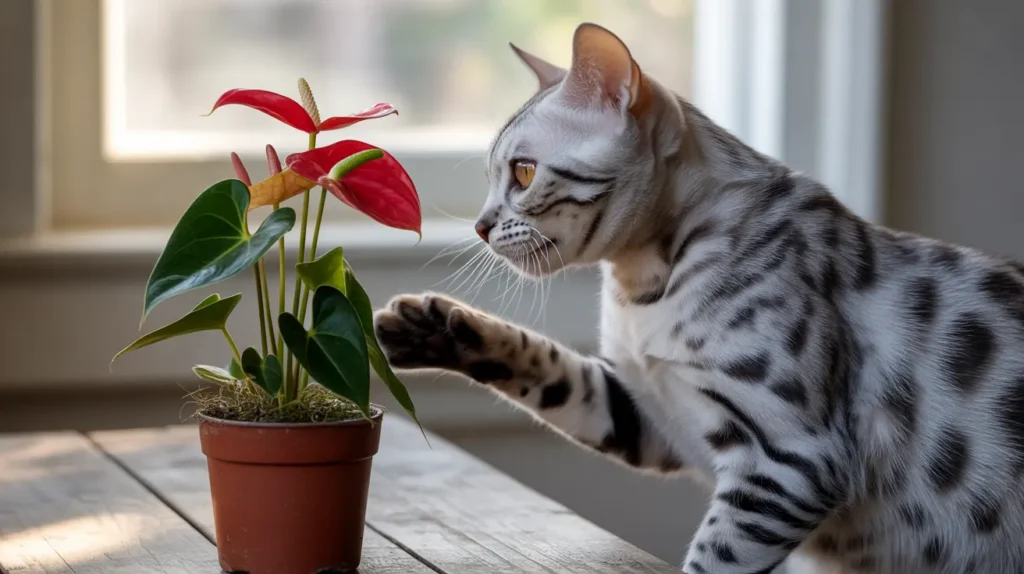
Anthurium is popular because it looks clean, glossy, and low-maintenance, which makes it a favorite in apartments and offices where people want greenery without constant care. I often hear owners say they bought it from a weekend plant market or picked it up while redecorating a corner of their home. Cats, on the other hand, see those waxy leaves as something worth chewing, especially if they are bored or exploring new scents. I have seen at least a dozen cases where the plant was placed on a table labeled “out of reach,” only for the cat to prove otherwise.
From what I observe in intake cases, anthurium contains calcium oxalate crystals, which are the real problem for pets. These tiny needle-like structures can irritate the mouth and digestive tract when chewed. Most owners don’t realize the irritation starts immediately, even if the symptoms take a little while to fully show. I remember a customer last spring who brought in a young tabby after noticing excessive drooling and pawing at its face shortly after a nibble on a decorative plant.
In situations like these, quick guidance matters more than panic. I often recommend owners reach out to a professional resource rather than trying multiple home remedies, especially when symptoms are unclear or progressing. In my clinic, we sometimes coordinate with local veterinary clinic support services that help triage whether a cat needs immediate treatment or simple monitoring at home. These early decisions can reduce stress for both the pet and the owner, particularly when the exposure is minor and caught early.
What symptoms do I see after exposure?
The first signs I usually see in cats that have chewed an anthurium leaf are excessive drooling and visible discomfort in the mouth. Some cats shake their head repeatedly or try to rub their face against furniture, almost like they are trying to get rid of something sharp stuck inside their mouth. In mild cases, the irritation settles within a few hours, but it can still look alarming to someone seeing it for the first time. A few cats may temporarily refuse food, which often worries owners more than anything else.
In more uncomfortable cases, swelling around the mouth or tongue becomes noticeable. I have handled cases where a cat’s vocalization changed slightly due to irritation, though that is less common. Vomiting can also occur if the plant material moves further into the digestive tract, but it is not guaranteed in every exposure. These variations make it tricky for owners to judge severity on their own, which is why observation in the first few hours is so important.
Some cats seem only mildly affected and recover quickly without intervention, while others react more strongly depending on how much they chewed. The difference often comes down to curiosity level and how long they interacted with the plant rather than the plant itself. I’ve seen two cats from the same household react very differently after nibbling the same leaf, which is something I still find interesting in practice. It reinforces the need to evaluate every case individually rather than assume.
How exposure usually happens in real homes
Most anthurium exposure cases I deal with start in everyday living spaces where the plant was never meant to be a hazard. Living rooms, bedroom corners, and even office desks are common places where cats can get in. I recall a case where a cat jumped onto a shelf the owner thought was decorative, knocking over a pot and taking a few bites before anyone noticed. These incidents rarely involve negligence, just underestimated curiosity.
Cats are especially likely to interact with plants during quiet hours when their owners are not watching closely. Early mornings and late evenings are the most common times I hear about incidents, simply because supervision is lowest then. Even households with multiple scratching posts and toys still report occasional plant chewing. It’s a reminder that environmental enrichment doesn’t always fully replace instinctive exploration.
Some cases I’ve seen involve households with several plants grouped together, which increases the chance of accidental contact. In one instance, a cat brushed against multiple pots while chasing a toy and ended up chewing the wrong leaf out of curiosity rather than intent. These overlapping situations make it harder for owners to identify the exact moment exposure occurred, which often delays response slightly. That delay can be the difference between mild irritation and more noticeable symptoms.
What I usually tell owners to do right away
When a cat comes in after suspected anthurium exposure, the first step I suggest is removing any plant material still within reach and gently checking the mouth if the cat allows it. I have learned that forcing inspection usually causes more stress than benefit, so calm observation matters more. Most mild cases improve with time and simple monitoring, but owners should watch for worsening drooling or refusal to eat. Hydration is also something I always keep an eye on during follow-up calls.
Vomiting, persistent mouth pain, or refusal to drink water are signs I take more seriously and usually recommend immediate veterinary evaluation for. Even though many cats recover without complications, the uncertainty about early symptoms makes waiting risky in some situations. I’ve seen cases where owners waited overnight, thinking it was a minor irritation, only to return the next day because symptoms escalated slightly. Acting early tends to reduce both stress and treatment intensity.
Over time, I’ve also noticed that prevention discussions matter just as much as treatment. Many owners move plants higher or choose non-toxic alternatives after their first scare, which significantly reduces repeat incidents. The pattern is consistent enough that I now bring it up during discharge conversations, especially when curiosity-driven behavior is involved. Small environmental changes often prevent the same worry from happening again.
Working in these cases has made me cautious about how harmless decorative plants can appear at first glance. Anthurium is not something that causes severe, immediate poisoning in every case, but it does pose enough risk to take seriously when cats are involved. Most of the time, awareness and quick observation are what make the real difference in outcomes.