What Do You Call a Dog With No Legs?
A Veterinarian’s Honest Answer
I’ve been a small-animal veterinarian for over a decade. I’ve heard this question more times than I can count—usually followed by a grin and someone waiting for the punchline.
“What do you call a dog with no legs?”
The classic answer is: It doesn’t matter what you call him… he’s not going to come anyway.
It gets a laugh. Sometimes a groan. But in my world, that joke usually opens the door to a much more serious and often emotional conversation.
Dogs without legs aren’t just punchlines. They’re real patients I’ve treated. These dogs have taught me more about resilience—and owner commitment—than most cases.
The First Time I Treated a Legless Dog
Early in my career, a client brought in a mixed-breed dog that had lost both hind legs after a road accident. I still remember that first consultation. The owner walked in carrying him in a blanket, clearly unsure if they were doing the right thing by trying to keep him alive.
What struck me wasn’t the injury—I’d seen severe trauma before—but the dog’s attitude. He was alert, curious, and even trying to wiggle out of the owner’s arms to explore the clinic floor.
That’s something people don’t expect. Dogs don’t sit around mourning what they’ve lost the way humans do. They adapt quickly—sometimes faster than their owners.
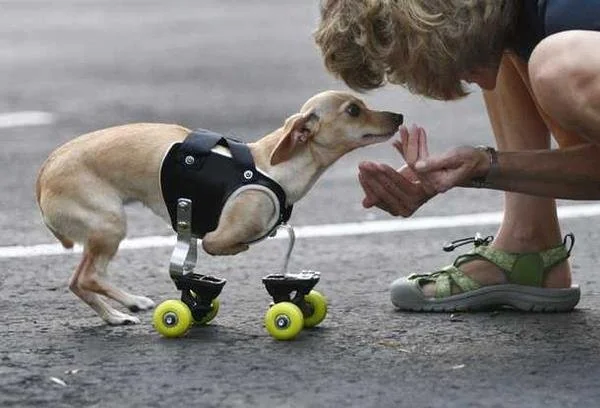
We eventually fitted him with a custom cart. The first time he used it, he took off down the hallway like he’d been waiting his whole life for wheels.
That moment stuck with me.
What People Get Wrong About Dogs Without Legs
The biggest mistake I see is assuming that a dog without legs has a poor quality of life. That assumption leads some owners to consider euthanasia too quickly, especially right after an accident or diagnosis.
In my experience, that decision is often made from a place of shock rather than reality.
Dogs are incredibly adaptable. A front-leg amputee learns to balance differently. A dog without hind legs can use a cart or a scooter indoors. I’ve had patients who play, eat, and interact like any other dog—with a few adjustments.
But—and this is where I always speak honestly—not every case is manageable.
I’ve also seen situations where:
- The dog has multiple health complications beyond limb loss.
- The owner doesn’t have the time or resources for long-term care.
- Chronic pain or infections become an ongoing issue.
In those cases, keeping the dog alive isn’t always the kindest option. Experience has taught me that quality of life matters far more than simply extending life.
Daily Life Is More Hands-On Than People Expect
One thing I always tell owners: caring for a dog with no legs is not passive.
A client last spring adopted a small dog born without front legs. She was deeply committed, but after a few weeks, she came back exhausted. Not because the dog was difficult—but because the routine was more demanding than she anticipated.
There are practical realities:
You’ll likely need to assist with mobility several times a day, especially if the dog isn’t using a cart full-time. Skin care becomes critical. Dogs that scoot can develop sores quickly if surfaces aren’t managed properly. Hygiene is another factor, particularly for dogs missing hind legs.
And then there’s the cost. Custom mobility carts, protective gear, and follow-up veterinary care can add up to several thousand over time. Not all at once, but enough to include it in the decision.
None of this is meant to discourage—it’s meant to prepare.
The Emotional Side Owners Don’t Expect
What surprises many owners isn’t the physical care—it’s the emotional attachment that deepens.
Dogs with disabilities often form extremely strong bonds with their caregivers. I’ve seen it repeatedly. The dependency creates a different kind of relationship, one that feels more intentional.
One of my long-term clients had a dachshund who lost use of his back legs due to spinal disease. Over time, she rearranged her home for him—installing ramps, adding padded flooring, even adjusting her schedule to his needs.
She once told me, “He’s more work than any dog I’ve had—but I’ve never felt this connected to a pet.”
That’s not uncommon.
All of this brings me back to that familiar question.
After years in practice, my answer has changed.
Yes, the joke answer still works. But in reality, I’d say:
You call him by his name. He’s still a dog, still a companion, still capable of living a meaningful life.
The key takeaway isn’t what you call him. It’s whether you’re truly prepared—emotionally and practically—to meet him where he is, and to support all that his care requires.
Because if you are, I’ve seen these dogs do something remarkable. They don’t just survive—they find ways to thrive that most people never expect.
Once you’ve seen that resilience firsthand, the joke becomes secondary—the real takeaway is the remarkable life these dogs can lead, and the commitment they inspire.