When House Cats Cross Paths With Squirrels In The Yard
I’ve spent years working as a mobile cat groomer, driving between neighborhoods with a small van stocked with grooming tools, clippers, and a lot of patience for unpredictable feline behavior. One question I hear more often than you might expect is whether cats actually eat squirrels, especially from owners who have seen their pets staring intensely out of windows or crouching near trees. The answer is not as simple as yes or no, because it depends on the environment, hunting instinct, and what the cat is used to catching.
Most of my experience comes from visiting homes with indoor-outdoor cats that roam gardens and backyards. I’ve seen everything from calm observers to cats that behave like they are on a mission every time a squirrel appears. The behavior can look dramatic, but eating the squirrel is not always part of the outcome.
Natural hunting instincts and what I see in the field
Working in different suburbs and semi-rural areas, I’ve watched cats react to squirrels in ways that reveal just how strong their predatory wiring is. Even well-fed domestic cats often shift into a focused hunting posture when they spot a squirrel darting along fences or tree branches. The tail stiffens, the body lowers, and the attention becomes fixed in a way that feels almost instinctive.
During my grooming visits, I’ve had a customer whose cat spent every morning stationed by a sliding door, waiting for squirrels that regularly visited their bird feeder setup. The cat never actually caught one, but the intensity of the watch suggested it would try if given a chance. In many cases, the chase is more common than the catch, and the eating part is even less frequent.
During a consultation with a nervous cat owner, I once explained that prey drive doesn’t always translate into consumption. Cats are opportunistic hunters, not guaranteed eaters of what they catch, especially when the prey is something as quick and alert as a squirrel. In some rural areas, I’ve seen barn cats successfully catch small animals, but squirrels tend to escape more often than not.
Still, there are documented cases of cats killing and sometimes eating squirrels, particularly when food is scarce or the cat is feral. That behavior is not the norm for well-fed indoor pets, but it does exist in the spectrum of feline survival instincts.
Health risks, parasites, and what owners should watch
From my experience moving between households, I’ve noticed that owners are usually more concerned about whether squirrels are dangerous to cats than the other way around. The concern is valid because wild squirrels can carry parasites, ticks, and bacteria that can be transferred through bites or scratches. Even a minor encounter can lead to irritation or infection in a cat’s mouth or paws.
I remember a case where a cat returned from a backyard chase with a small wound near its whisker line. The owner assumed it was harmless, but within days the area became swollen, requiring veterinary attention and a round of antibiotics. Situations like that are not rare, especially in warmer months when wildlife activity increases.
In one neighborhood I serviced regularly, I suggested a local resource for wildlife-related pet incidents, and the owner used it for cat-wildlife advice to better understand how to separate feeding areas for birds and reduce squirrel attraction near the house. That simple adjustment reduced the number of outdoor confrontations significantly over a few weeks.
It is also worth mentioning that squirrels can defend themselves. I’ve seen cats return with scratches on their noses or ears after underestimating a squirrel that refused to run off. Those defensive moments often surprise owners who assume cats are always in control of the interaction.
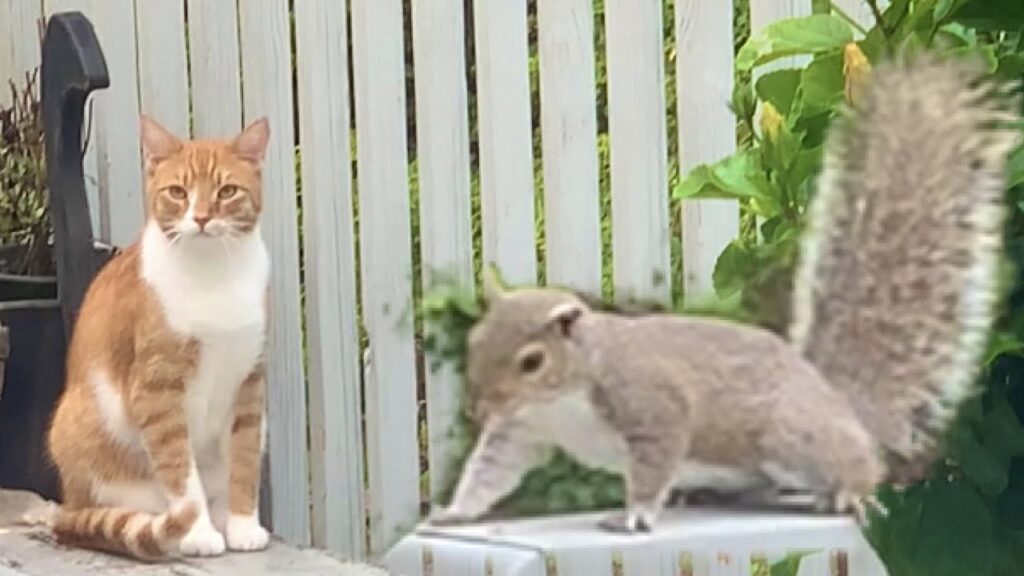
How the environment shapes whether a cat even tries
In my grooming route across suburban blocks, I’ve noticed a clear pattern: cats with stable feeding routines and indoor enrichment are less likely to engage seriously with squirrels. They may watch them, stalk them briefly, or even attempt a chase, but the motivation to complete the hunt is often low when their basic needs are fully met.
On the other hand, in areas where food is inconsistent or where cats spend more time outdoors unsupervised, the behavior becomes more intense. I’ve seen cats that treat every squirrel encounter as a potential meal, especially on semi-rural properties where wildlife is part of daily life. The difference is not just instinct, but also circumstance.
I often tell owners that window perches and climbing shelves inside the home can reduce the pressure that builds from constant outdoor stimulation. A cat that has outlets for its energy indoors is less likely to escalate every squirrel sighting into a full chase across rooftops or fences.
There was a customer in a quiet, rural area who had multiple cats roaming freely. After introducing structured feeding times and indoor play sessions twice a day, the outdoor hunting activity dropped noticeably. The squirrels were still there, but the cats treated them more like background movement than targets.
What I’ve learned watching cats and squirrels over time
After years of seeing cats in different environments, I’ve come to view the cat-and-squirrel interaction as more about instinct than appetite. The act of chasing is almost always present, but actual consumption is far less common in domestic settings where food is reliable and competition is low. That distinction matters more than people think.
I’ve also learned that owners often overestimate what happens when their cat disappears into a bush or tree line. More often than not, the cat returns empty-handed, slightly frustrated, and ready to nap on the nearest warm surface. It is rare for the moment to turn into a full meal situation in typical household environments.
At the same time, I don’t dismiss the reality that in harsher conditions, cats can and do eat small wild animals, including squirrels. That side of feline behavior belongs more to survival than to domestic life, and it shows how flexible their instincts really are when circumstances change.
Every time I leave a home after grooming a cat that spends time outdoors, I am reminded that the line between pet and hunter remains, even if it is softened by regular meals and comfortable living conditions. Squirrels are just one piece of that ongoing outdoor story.