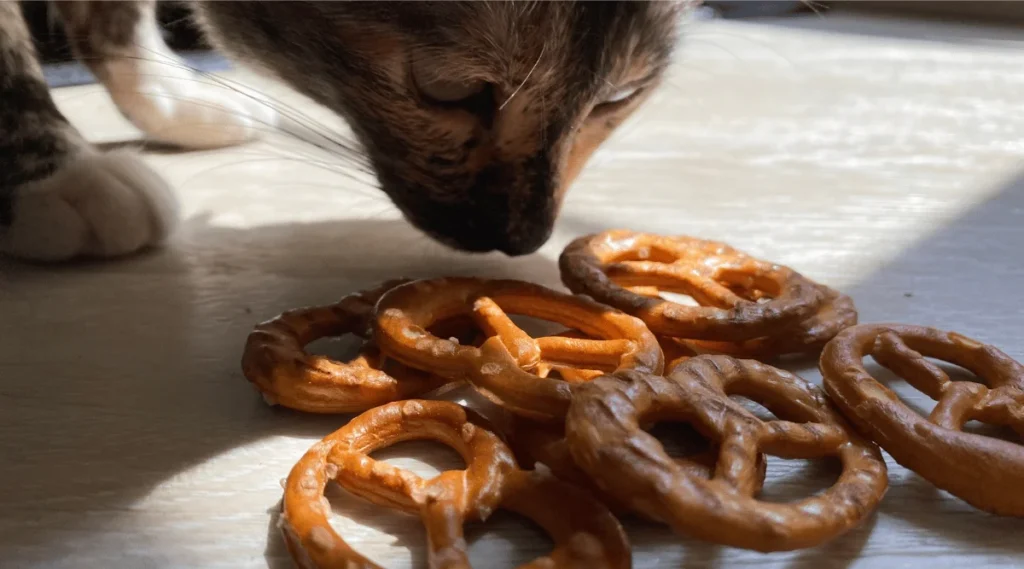
Can Cats Have Pretzels? What You Need to Know
As a licensed veterinarian in Texas for over a decade, I’ve often seen cats after they’ve eaten human snacks. A frequent question is, “Can my cat have pretzels?” I’ve witnessed how seemingly harmless foods can affect feline health, and I want to share what years of experience have taught me.
Why Pretzels Are Not Ideal for Cats
Cats are obligate carnivores; their bodies need meat, not carbs, salt, or additives common in pretzels. Even occasional pretzels can be risky, especially if salted or flavored with garlic or onion powder, which are toxic to cats.
A Real-Life Case Example
I remember a case last spring in which a customer’s cat nibbled on a small bowl of salted pretzel pieces while the owner was distracted in the kitchen. The cat didn’t show immediate signs of distress, but within a few hours, it became lethargic and refused to eat.
A quick examination revealed mild dehydration and elevated sodium levels, which we treated with fluids and careful monitoring. This situation reinforced for me how quickly something as innocent as a few pretzels can affect a cat’s health.
Are Plain Pretzels Safe?
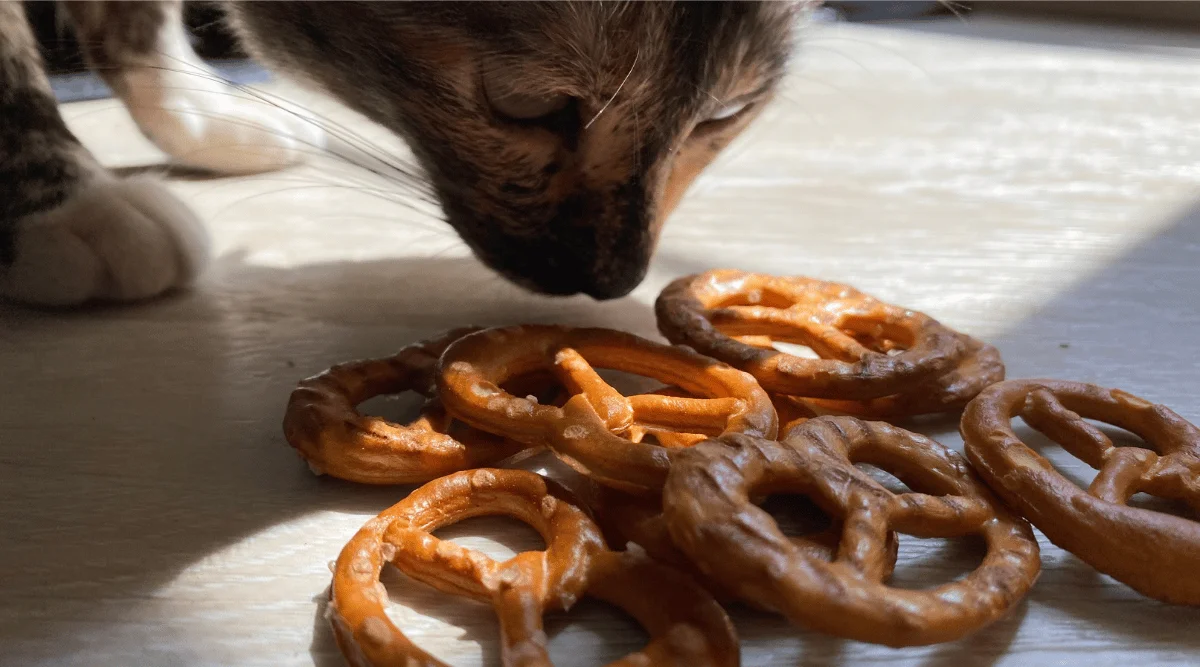
Plain, unsalted pretzels are less risky but still not ideal. Some cats tolerate a tiny piece, but it offers no nutrition. Cats need protein and taurine, not grains or wheat. Even small, rare pieces can mean extra carbs leading to weight gain or digestive upset—something I see frequently.
Another Case from Practice
Another real example comes from a family that thought giving their cat pretzels would be a fun way to include it during movie nights. They noticed their cat developed frequent vomiting and diarrhea after a week of occasional snacking.
Upon reviewing the diet, it became clear that the pretzels were the culprit. After removing them entirely and reverting to a balanced feline diet, the symptoms resolved. Experiences like this illustrate why I encourage owners to think twice before offering human snacks, even in small quantities.
Risks of Flavored Pretzels
In addition to digestive issues, pretzels with added flavors or coatings—such as cheese, chocolate, or caramel—pose a serious risk. Chocolate and certain seasonings are outright toxic, and even tiny amounts can lead to vomiting, rapid heart rate, or worse. I’ve treated cats who accidentally ingested flavored pretzels, and the emergency care needed could have been avoided entirely by simply keeping these treats out of reach.
Safer Alternatives for Cats
In my practice, I often recommend safer alternatives if owners want to treat their cats. For example, small, plain pieces of cooked chicken or turkey—fully cooked and unseasoned—are generally safe. You can also use commercially available treats specially formulated for cats, which are designed to meet their nutritional needs and are less likely to cause digestive issues. These options offer a way to give your cat an occasional snack without the risks associated with pretzels, while supporting the cat’s health.Conclusion
Overall, while pretzels are not inherently poisonous, they offer no nutritional benefit, can upset digestion, and may even be dangerous if salted or flavored. My professional advice, based on years of observing feline reactions and dietary outcomes, is to avoid giving cats pretzels. The few moments of novelty aren’t worth the potential health complications.