Can Cats Eat Marshmallows or Is It a Hidden Risk
As a mobile pet groomer, I spend most days in people’s homes dealing with cats that have eaten things they absolutely shouldn’t have.
What Marshmallows Actually Do Inside a Cat’s Body
Marshmallows are mostly sugar, air, and gelatin, and none of that lines up with what a cat’s body is built to process. Cats are obligate carnivores, which means their digestion is designed around protein and fat, not sweet fillers. I have seen cats nibble on marshmallows out of curiosity, but curiosity does not equal safety in this case.
One time, a client in a small apartment brought me in after her cat got into a half-open bag of mini marshmallows, probably around 20 or so pieces. The cat was acting normal at first, then started vomiting later that evening. It was not dramatic in the sense of an emergency, but it was enough to worry the owner for the rest of the night.
The sugar content is the biggest issue. While sugar itself is not toxic in the same way as chocolate is, it can still upset a cat’s digestive system. Some marshmallows also contain additives such as artificial sweeteners or flavorings, which can cause unpredictable reactions depending on the brand and the amount consumed.
Marshmallows can be a choking hazard. I watched a tabby struggle after snatching a marshmallow, only for it to break apart.
What I Have Seen After Cats Eat Them
Can cats eat marshmallows? is the kind of resource I sometimes point people toward when they want a quick reference on unusual food reactions in pets, especially when they are unsure whether to wait or take immediate action. I have had several clients use similar tools after late-night incidents when vet clinics were not immediately reachable. It helps calm the guessing process. That alone can reduce panic in the moment.
Reactions vary. Some cats get mild stomach upset, while others may have diarrhea or vomiting. Once, one cat out of three reacted after sharing dessert leftovers, and we figured out the cause together.
There is also a behavioral side to it. Cats that taste something sweet or unusual sometimes start sniffing around the same area repeatedly afterward. I have seen this in kitchens where marshmallows were left out in bowls, as if the cat remembered the spot more than the food itself.
Older cats and kittens tend to handle these incidents worse. Kittens, especially, can eat more than expected because they do not have the same caution around new textures. I once dealt with a kitten that ate two full-sized marshmallows and spent the next few hours unusually lethargic before slowly returning to normal.
Why Cats Go After Marshmallows in the First Place
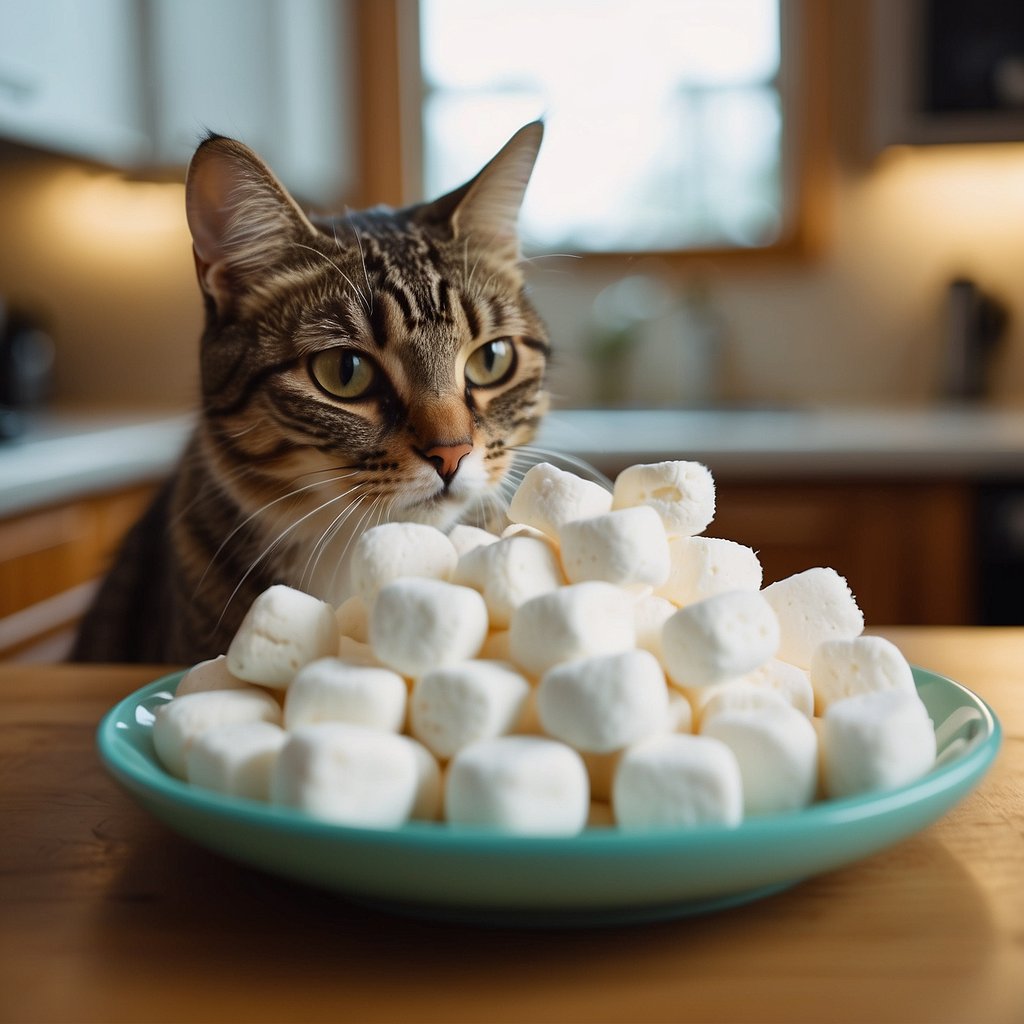
Most cats are not as attracted to sweetness as humans are. That surprises many owners. What usually draws them in is texture, smell, or simply curiosity about something new in their environment. A fluffy white object sitting on a table is enough to trigger an investigation for many indoor cats.
I have noticed this pattern during grooming visits in homes where snacks are often left out. One household with a large kitchen island kept a bowl of marshmallows there year-round, and their cat would occasionally bat one onto the floor just to play with it before losing interest. It was never about eating at first, but more about interaction.
Sometimes the issue is boredom. Indoor cats that lack stimulation tend to explore counters and tables more aggressively. In those cases, marshmallows are just one of many random objects they test with their mouths. I have seen the same cats go after bread, paper towels, and even soap bars.
Smell plays a smaller role, but it’s there. I’ve seen cats ignore plain marshmallows but react to ones near chocolate drinks.
What I Tell Owners After an Incident
My first step is always to check how much the cat has eaten and how it is behaving. If it were one or two marshmallows and the cat is acting normal, I usually recommend observation rather than immediate panic. I have learned over time that rushing into alarm without symptoms can cause more stress than the situation itself.
Water access matters. I always suggest making sure the cat has fresh water available, since mild digestive upset can show up later if the system is irritated. I have seen cases where symptoms never progress past mild discomfort simply because nothing more was added to the system.
If vomiting recurs or the cat becomes unusually quiet, that is the point at which I stop guessing and recommend veterinary input. I have made that call with owners sitting right next to me, and even when it turns out to be minor, it provides clear direction rather than uncertainty.
Prevention is simpler than treatment here. Keeping sweets sealed, cleaning counters regularly, and not leaving bowls unattended make a bigger difference than most people expect. I have watched entire patterns of “food stealing” disappear just by removing easy access points around the kitchen.
To sum up, while marshmallows are not highly toxic to cats, they are not harmless either. The key takeaway is that small amounts may not cause problems, but there are still real risks, especially with larger amounts or repeated exposure. The best approach is prevention—keeping sweets out of reach and being mindful of what’s left accessible to pets. Most incidents are preventable, which is what I emphasize to owners above all else.