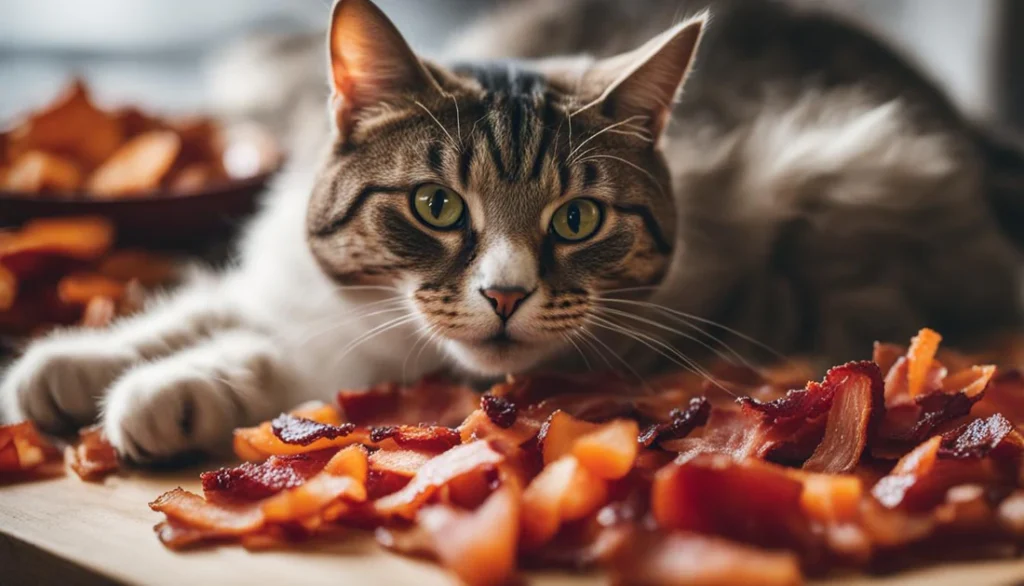
Can Cats Eat Bacon and What I Tell Pet Owners in the Field
I work as a mobile cat groomer operating out of a converted van that I take through small towns and suburban neighborhoods across the Midwest. Over the years, I have seen many feeding habits that surprise me, especially when I walk into kitchens and see what owners think is a harmless treat for their cats. Bacon comes up more often than people expect, usually during casual conversations while I am setting up my grooming table. I’ve learned that most owners are not trying to harm their cats; they just assume a tiny bite of human food cannot matter much.
The question of whether cats can eat bacon is one I hear while brushing out mats or trimming nails. I always answer carefully because I’ve seen both mild and serious reactions tied to salty, processed foods. Some cats seem fine after a small nibble, while others show digestive upset that lasts longer than owners expect. My experience has taught me that bacon is less about curiosity and more about risk management in a cat’s diet.
There was a customer last spring who mentioned giving her cat a small piece of bacon every morning because the cat “would not leave her alone at breakfast.” A few weeks later, she called me again, saying the cat had started vomiting occasionally and seemed less interested in its regular food. That situation stuck with me because it showed how quickly a habit can form around human food. It also reminded me that small indulgences in a cat’s diet can quietly build into bigger problems.
What Bacon Does Inside a Cat’s Body
From years of working with cats in stressful grooming environments, I have observed that bacon mainly affects them because of its salt and fat content. Cats are obligate carnivores, but that does not mean all meats are equal in their system. Bacon is heavily processed, often cured with sodium and sometimes sugar or preservatives that their bodies are not designed to handle regularly. Even a small portion can disrupt digestion, especially in indoor cats that are not very active.
I remember a household I visited about two years ago where two cats would beg every time bacon was cooked. The owner thought it was harmless and would toss those tiny pieces off the pan. Over time, one of the cats developed recurring stomach sensitivity that the vet suspected was linked to inconsistent human food treats. Situations like that are why I stay cautious when discussing foods like bacon with clients.
When I explain it to pet owners, I usually compare it to how a human might feel after eating something extremely salty and greasy late at night. One bite may not cause immediate harm, but repeated exposure changes how the body reacts over time. Cats have smaller systems and less tolerance for high sodium intake, which means the margin for error is much thinner than people expect. That is where most misunderstandings start.
How I Advise Owners in Real Situation
During grooming appointments, I often get asked very practical questions about feeding habits, especially in homes where cats are part of daily family routines. One client I visited in a quiet suburban area had three cats that regularly shared breakfast scraps, including bacon bits. I explained that consistency matters more than quantity, because even small recurring exposure can shift a cat’s digestion in ways that are not obvious at first. In that same conversation, I mentioned a resource that helps owners understand safer treat options for indoor pets and how to read ingredient labels more carefully.
The reaction I usually get is not resistance, but surprise. Many owners simply have not thought about processed meat from a feline perspective. I try to keep the conversation grounded, sharing what I have seen in real homes rather than sounding overly strict. Most people adjust quickly once they understand that cats do not process sodium-heavy foods the same way humans do.
I also remind owners that cats are very routine-based animals. Once a behavior like begging for bacon starts, it becomes harder to break than most people expect. I have watched cats follow owners into kitchens every morning just because they learned the sound of a pan or the smell of cooking meat. That kind of conditioning is powerful, and it usually takes weeks to reverse once it becomes established.
Better Treat Habits I Recommend After Years in the Field
Over time, I have shifted how I talk about treats altogether. Instead of focusing on what cats should not eat, I guide owners toward simple alternatives that do not disrupt digestion. I have seen cats respond well to small portions of plain cooked chicken or specially formulated cat treats that are lower in sodium. The difference in coat quality and energy levels is noticeable in some homes after just a few weeks of switching habits.
A customer removed processed meats from her cats’ diet a while back after a mild digestive scare. She told me during a follow-up visit that her cats seemed calmer and were no longer begging during meal prep. That kind of feedback is not scientific data; it’s just real-world observations from households I visit regularly. Still, patterns like that appear often enough that I pay attention to them.
I usually keep a short mental list when advising people on treat habits:
Small portions only, never daily bacon. Avoid salty or processed meats. Stick to consistent feeding times. Watch behavior changes after diet shifts.
None of these are complicated rules, but they help prevent the slow buildup of issues that I often see when cats are given frequent human food. I have learned that prevention is much easier than correcting habits once they are established. Cats adjust quickly when owners stay consistent, even if the transition takes a few days of patience.
At the end of most grooming visits, I leave owners with the same simple thought. Cats do not need variety the way humans think they do, and bacon fits more into human preference than feline nutrition. Once that idea clicks, most feeding decisions become much easier to manage in everyday life.