Facts About Leonberger Dogs and Their Drooling Habits
A Veterinarian’s Complete Guide
After fifteen years as a professional groomer specializing in giant breeds, I have seen every possible variation of canine mess. I have spent countless hours scrubbed down in waterproof aprons, dealing with the unique challenges of Newfoundlands, Saint Bernards, and, of course, the Leonberger. When people come to me considering a Leo, they usually ask about the hair. I tell them the hair is manageable, but we need to talk about the “wetness factor.”
The short answer is that Leonbergers are not “dry-mouthed” dogs, but they aren’t the constant faucets that Saint Bernards are either. In my shop, I categorize them as situational droolers.
The Anatomy of the Mess
The reason some giant breeds drool more than others comes down to the “flews”—the technical term for those hanging upper lips. If a dog has very loose, heavy flews that hang well below the lower jaw, gravity does most of the work, and the saliva just pools and spills. Leonbergers generally have tighter lips than a Mastiff or a Bloodhound, but they still have enough of a pocket to collect moisture.
A meticulous client brought her Leonberger every six weeks and was shocked by the “slime trails” after drinking. Leos don’t just sip water—they soak their muzzles and carry off a half-cup in their fur, which leaks out onto carpets as they walk.
When the Floodgates Open
If you live with a Leonberger, you will encounter significant drooling in three specific scenarios.
First, there is the “anticipatory drool.” I’ve watched Leos in my waiting room go from perfectly dry to having long, shimmering “shoestrings” hanging from their mouths the moment I pull a liver treat out of my pocket. It is a biological response you cannot train away.
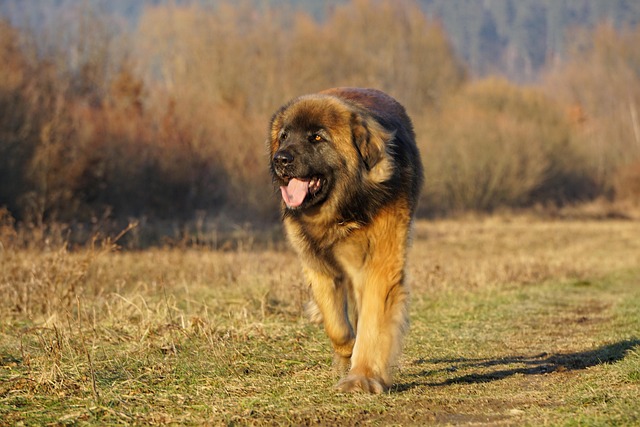
Second, heat is a major factor. Because these dogs have such a massive double coat, they rely heavily on panting to cool down. In the humid summers here, I see Leos come into the shop literally dripping. When the tongue is out and the dog is heaving for air, the saliva production ramps up, and the lip structure simply can’t contain it.
Finally, there is the “shake.” This is the one that catches new owners off guard. A Leonberger might have a small amount of saliva in its mouth, but when it shakes its head, centrifugal force takes over. I’ve had to wipe drool off the ceiling of my grooming van more times than I care to admit.
Real-World Management
I often tell prospective owners that if they aren’t comfortable with a bit of “slime” on their trousers, they should look at a different breed. However, there are ways to mitigate the mess that I’ve seen work for my long-term clients:
- The “Bib” Strategy: Many of my regulars keep a hand towel draped over the water bowl station. They’ve trained their dogs to wait for a quick muzzle wipe after drinking. It sounds tedious, but it saves the furniture.
- The Sanitary Trim: When I groom a Leo, I trim the hair around the lips and the “feathers” on the bottom of the jaw quite short. This doesn’t stop the drool, but it stops the hair from acting like a saturated sponge that holds the moisture against the skin, which can lead to “hot spots” or a sour smell.
- Strategic Rug Placement: I always advise against putting the water bowl on hardwood or tile near a high-traffic area. I had one client who learned this the hard way after a family member slipped on a “drool slick” and ended up in physical therapy for a twisted knee.
The Professional Verdict
In my professional opinion, the Leonberger is a “moderate” drooler. You won’t need to wear a raincoat in your own home, but you will find dried white spots on your dark furniture and the occasional damp patch on your jeans.
I once had a gentleman come in with a young Leo, complaining that the dog was “broken” because he was so messy. It turned out he was feeding the dog scraps from the table, keeping the dog in a state of constant, salivating expectation. Once he stopped the table-side treats and I gave the dog a proper, tight trim around the mouth, the “drool problem” became a non-issue. It’s all about setting your expectations and understanding that with a dog of this size, everything—including the bodily fluids—is just a little bit bigger.