How to Understand Your Cat’s Vision of Fire
What I’ve Learned as a Practicing Veterinarian
I’ve been a small-animal veterinarian for over a decade, and if there’s one thing I’ve learned about cats, it’s this: they notice things long before we do. Subtle movements, faint sounds, even changes in light—nothing escapes them. So when pet owners ask me whether cats can see fire, the answer isn’t just a simple yes or no. It’s more interesting than that.
Yes, Cats Can See Fire—But That’s Not the Full Story
Cats absolutely can see fire. Their eyes detect light and the movement of flames just as ours do. In fact, because of how feline vision works, they may notice the flickering motion of a flame even more intensely than we do.
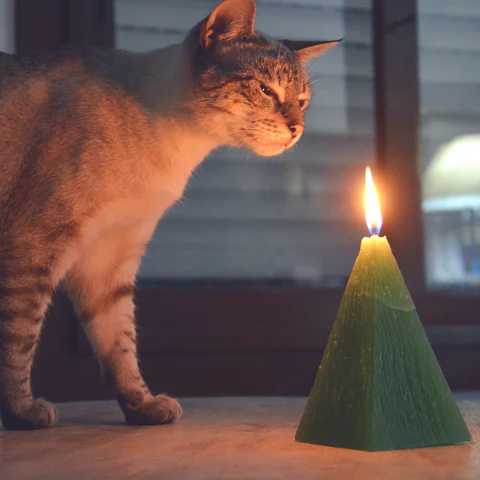
Cats have a higher number of rod cells in their retinas, which makes them especially sensitive to motion and low light. Fire, with its constant shifting and dancing glow, is almost tailor-made to grab a cat’s attention. I’ve watched countless cats become fixated on candle flames or fireplaces, tracking every flicker like it’s prey.
But here’s where things get misunderstood: seeing fire doesn’t mean understanding it.
They Don’t Recognize Fire as Dangerous
One of the biggest mistakes I see pet owners make is assuming their cat “knows better.” They don’t.
A few winters ago, a client brought in her young cat after a minor burn incident. She had a small open flame heater in her living room, and the cat had been sitting nearby for days without issue. Then one evening, something about the movement of the flame triggered curiosity, and the cat reached out with its paw.
The result was a superficial burn—not severe, thankfully—but it could have been much worse. The owner was genuinely surprised. She told me, “He’s been around it all week. I thought he understood.”
Cats don’t understand fire the way we do. They don’t associate it with danger unless they’ve had a direct negative experience—and even then, the lesson doesn’t always stick the way you’d expect.
Fire Looks Like Prey to Some Cats
In my experience, certain cats—especially younger or more playful ones—treat fire like a moving target.
I remember my own cat during my early years in practice. I had lit a candle during a power outage, and within minutes, she was crouched nearby, eyes locked, tail twitching. That hunting posture was unmistakable. Before I could react, she swatted at the flame.
She wasn’t being reckless—she was being a cat.
That moment changed how I approach open flames at home and what I recommend to clients. The flicker of fire mimics the unpredictable motion of insects or small prey, and for a cat, that’s an invitation to investigate.
What Cats Actually Perceive
Cats don’t see fire as a concept. They perceive:
- Bright, shifting light
- Rapid, irregular motion
- Heat (if they get close enough)
That combination is stimulating, not alarming. It doesn’t trigger avoidance unless heat becomes uncomfortable or painful.
Interestingly, some cats will sit near fireplaces quite calmly, enjoying the warmth. Others become overstimulated by the movement and can’t resist interacting with it. Personality plays a big role here, which I often emphasize in my practice.
The Situations That Worry Me Most
Over the years, I’ve seen a pattern in fire-related injuries involving cats. It’s rarely dramatic house fires—it’s everyday situations that people underestimate.
Candles are a big one. I’ve treated singed whiskers more times than I can count. Whiskers are highly sensitive, and when they get too close to a flame, the damage is immediate.
Another common scenario is stovetops. A client once told me her cat jumped onto the counter right after she turned off a gas burner. There was still a small flame lingering, and the cat walked straight through it. The burns on the paw pads required ongoing care.
Fireplaces, space heaters, and even incense sticks can all pose risks. The problem isn’t that cats can’t see these things—it’s that they don’t interpret them as threats.
How I Advise Cat Owners
I don’t tell people to eliminate every flame from their home, but I do encourage a shift in mindset.
Think of fire the way you’d think of a fragile object around a toddler. Visibility doesn’t equal safety.
In homes with cats, I personally avoid leaving candles unattended, even for a minute. I also recommend stable, enclosed fireplaces rather than open ones. If a cat shows even mild curiosity toward flames, that’s enough reason to be cautious.
One thing I’ve found helpful is redirecting that curiosity. Interactive toys that mimic movement can satisfy that hunting instinct without the risk. It’s not a perfect solution, but it reduces the likelihood that your cat will go looking for stimulation in unsafe places.
A Final Thought From the Exam Room
Cats are incredibly perceptive animals, but their instincts are built around survival in a very different environment than our homes. Fire, as common as it is for us, doesn’t naturally fit into their understanding of the world.
So yes, cats can see fire clearly. In many cases, they’re drawn to it.
And that’s exactly why it can be dangerous.