How to Keep Cats Safe from Philodendron Toxicity
Insights from a Veterinarian
As a licensed veterinarian practicing in Texas for over 12 years, I’ve seen my share of curious cats and their unfortunate encounters with houseplants. Among the most common questions I get from pet owners is about philodendrons—those lush, trailing green plants that brighten homes.
The short answer is yes: philodendrons are toxic to cats, but the situation is usually manageable if handled quickly. Let me share what I’ve observed in practice and offer some guidance based on real-world experiences.
Understanding the Risk
Philodendrons contain insoluble calcium oxalate crystals. When a cat chews on leaves or stems, microscopic crystals can embed in the mouth, tongue, and throat, causing immediate irritation. I remember a customer last spring who brought in her Siamese, clearly distressed after nibbling on her new philodendron. The cat had excessive drooling, pawing at its mouth, and mild lip swelling. This is a textbook response to oxalate exposure, and thankfully, with prompt care, the cat recovered fully within a few hours.
The severity of symptoms can vary depending on how much of the plant the cat ingests. Small nibbles often result in temporary discomfort—drooling, pawing at the mouth, and mild oral irritation—while larger ingestions can lead to vomiting, difficulty swallowing, and, in rare cases, more significant throat swelling that requires veterinary intervention. I’ve personally treated a Maine Coon who had chewed on an entire stem; it took a few days of supportive care, including hydration and soft food, for the cat to fully bounce back.
Common Mistakes Cat Owners Make
One frequent error I see is assuming that just because a plant looks harmless, it is safe for cats. Philodendrons are a prime example. Their glossy leaves are visually appealing, and many owners place them on low shelves or coffee tables, thinking their cats won’t reach them. In reality, even a single leaf tip can trigger the oxalate reaction.
Another mistake is waiting too long to act. I once had a client who noticed drooling but thought the cat would “just be fine.” By the time they brought the cat in, the irritation had worsened, causing vomiting and distress. Quick response—rinsing the cat’s mouth gently with water and calling a vet—can significantly reduce discomfort.
Handling Exposure
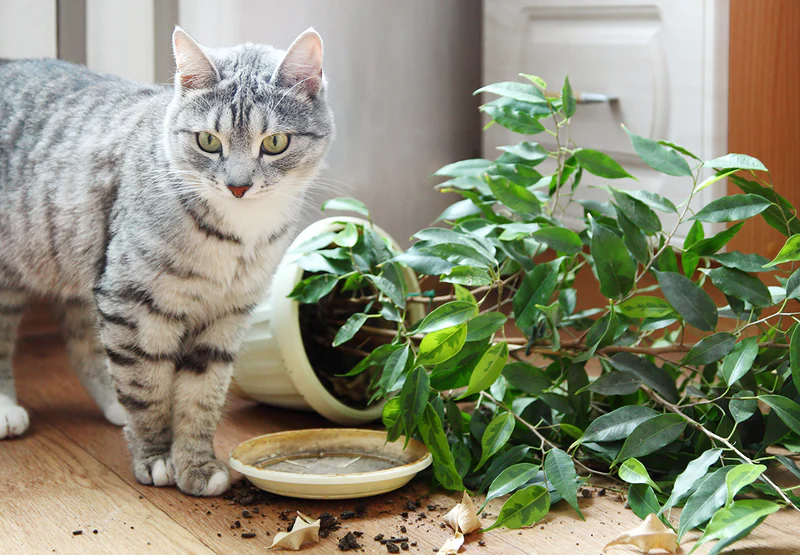
If your cat chews on a philodendron, immediate steps can minimize harm. Gently rinse your cat’s mouth with water to remove residual plant material. Avoid forcing anything into the throat, as that can cause more trauma. Monitor your cat for drooling, pawing at the mouth, or signs of discomfort. If you see vomiting, difficulty swallowing, or persistent irritation, bring your cat to the clinic promptly.
I recall a young domestic shorthair who had gotten into a hanging philodendron in her owner’s living room. The owner acted fast, rinsed her mouth, and brought her in for a brief checkup. Aside from minor oral irritation, she was fine within a few hours. Situations like these underscore that while philodendrons are toxic, most cats recover quickly if treated appropriately.
Preventive Measures
From my experience, the best approach is prevention. I advise pet owners to place philodendrons well out of reach, ideally in hanging baskets or rooms the cat doesn’t access. Some owners use deterrents, such as double-sided tape on plant shelves, because cats dislike the stickiness. Another strategy I’ve seen work is to offer safe alternatives, such as cat grass or catnip plants. These provide enrichment and reduce the likelihood that your feline will seek out harmful plants.
It’s also worth keeping emergency numbers handy. The ASPCA Animal Poison Control Center is a valuable resource, and your veterinarian can guide you on at-home care if exposure occurs.
Personal Reflection
Over the years, I’ve noticed a pattern: cats are naturally curious, and even the most cautious owners can face accidental ingestion. One case that stands out is a senior cat who had been with her owner for over a decade without incident. She managed to nibble on a philodendron while the owner was distracted for a few minutes. The reaction was immediate but mild, and with a calm approach, the situation resolved without stress for the cat or the owner. This reinforces that awareness and preparedness are far more effective than worry.
In my practice, I often encourage owners to treat their homes as shared spaces. Beautiful plants can coexist with cats, but understanding the risks and taking preventive steps is key. Philodendrons are indeed toxic to cats, but informed owners can ensure their pets remain safe without giving up the greenery they love.