Persian Cat Colors Through the Eyes of a Longtime Breeder
I’ve spent more than a decade breeding and caring for Persian cats, and one thing new owners often underestimate is just how many colors these cats come in. Most people picture the classic fluffy white Persian with a flat face and bright eyes. That image isn’t wrong, but it barely scratches the surface.
In my cattery, I’ve raised Persians ranging from deep charcoal blacks to delicate creams and dramatic silver tabbies. Over the years, I’ve learned that color isn’t just about appearance. It can influence grooming needs, eye color, show standards, and even how people perceive a cat’s personality. These considerations become especially important as owners begin to consider which color might best fit their household.
Instead of just seeking the “prettiest” color, ask yourself which color fits your cleaning routine, the time you can commit to grooming, or even your furniture’s color. Prioritizing both practicality and appearance will help you find the ideal match for your home and lifestyle.
Why Persian Cat Colors Matter More Than People Think
Consider how coat color may influence not only appearance but also grooming and potential breed-specific health considerations. Before selecting a color, consult breeders about genetics and maintenance to ensure you’re prepared for your cat’s specific needs.
I remember a couple who visited my cattery a few years ago, hoping for a pure white Persian kitten with blue eyes. They had seen photos online and assumed that combination was common. In reality, producing a healthy white Persian with deep blue eyes requires careful breeding choices because some genetic lines can carry hearing issues.
Because of that, responsible breeders take color genetics seriously. It’s not about producing rare colors for the sake of novelty. It’s about maintaining healthy bloodlines while preserving the stunning coat variations that make Persians so recognizable.
Another practical factor is grooming. Lighter coats show stains more easily, especially around the eyes, while darker coats tend to hide minor tear staining but show loose fur on furniture more clearly.
The Classic Solid Persian Colors
Solid colors are often the first type people encounter. These cats have a single uniform coat color without patterns or shading.
White Persians are perhaps the most iconic. Their snow-like coats and bright copper or blue eyes create a striking contrast. They’re often the ones featured in advertisements or luxury pet photos. In my experience, white Persians require especially attentive grooming. Tear staining around the eyes can appear quickly if daily cleaning isn’t part of the routine.
Black Persians offer a completely different aesthetic. A well-bred black Persian has a dense, glossy coat that almost looks like velvet. One of the most memorable cats I ever raised was a jet-black male kitten that matured into an enormous, calm adult. Visitors would assume he was intimidating because of his dark coat, but he turned out to be the gentlest cat in the house.
Blue Persians—despite the name—are actually a soft gray color. Many breeders and owners love this shade because it gives the coat a smoky, elegant appearance. Under natural light, the fur can look almost silver.
Other solid colors appear less frequently but are just as beautiful. Cream Persians carry a pale golden coat that looks almost pastel. Red Persians, sometimes called “flame,” display a vibrant orange tone that stands out dramatically against their long fur.
Tabby Persians and Their Striking Patterns
Tabby Persians introduce patterns into the coat, creating a completely different visual style. These cats have stripes, swirls, or spotted markings layered over a base color.
One spring, a family visited my cattery looking for a kitten that their children could easily recognize among several household pets. I showed them a silver tabby Persian with bold black markings across his coat. The children instantly picked him out because his dramatic stripes looked like artwork across the fur.
Tabby Persians typically fall into several pattern types. Classic tabbies display swirling, marble-like patterns across the sides. Mackerel tabbies have narrow vertical stripes along the body. Spotted tabbies break those stripes into smaller dots scattered across the coat.
The silver tabby variety remains especially popular among breeders because of its contrast. The light background combined with dark markings creates a very distinctive look that tends to stand out even from a distance.
Bi-Color and Particolor Persians
Not all Persian cats stick to a single color or pattern. Bi-color Persians combine two coat colors, usually white paired with another shade such as black, blue, or red.
These cats often develop unique patterns that make each one look different. Some may have symmetrical facial markings, while others appear almost as though the color was brushed across the fur in random strokes.
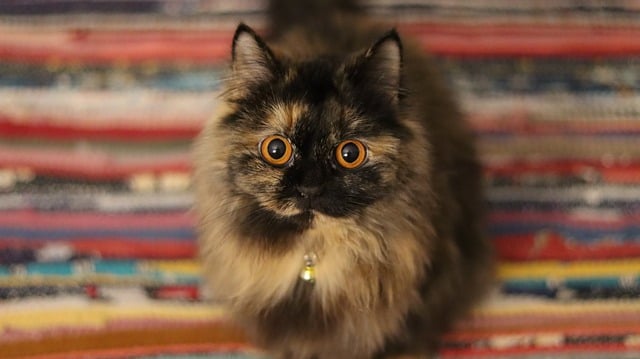
Particolor Persians take things even further by blending several colors together. Tortoiseshell Persians are a well-known example. Their coats feature irregular patterns of black, red, and cream patches. No two tortoiseshell coats ever look exactly alike.
I once raised a tortoiseshell Persian female that had a split-colored face—half dark, half orange. Visitors constantly asked if it was a dyed pattern. It wasn’t; that dramatic contrast was purely genetic.
Shaded and Smoke Persian Varieties
Some Persian colors create the illusion of movement within the coat. Shaded and smoke varieties achieve this effect through layered color.
Smoke Persians look almost solid at first glance, but their fur reveals a lighter undercoat when they move. A black smoke Persian, for example, may appear dark until the cat walks or stretches, revealing pale silver roots beneath the top layer.
Shaded Persians create a softer effect. Their coats gradually transition from darker tips to lighter bases, giving the fur a luminous quality. Golden-shaded Persians are particularly admired for their coats, which shimmer under natural light.
In breeding circles, producing consistent shaded coats requires careful planning. The genetics behind these colors are complex, and inexperienced breeders sometimes struggle to maintain the right balance between shading and solid pigmentation. If considering a shaded or smoke Persian, understand that coat variation is tied to breeder expertise.
Choosing the Right Color for Your Home
Prospective owners often ask me which Persian color is “best.” My answer usually surprises them. The best color is the one you’ll enjoy caring for every day.
When choosing, weigh practical issues such as grooming and cleaning needs. Pick a color that fits your cleaning habits, furniture color, and willingness to manage grooming demands. For first-time owners, coats that disguise stains and shedding can be a smart choice.
Personality differences rarely depend on coat color, despite common myths. I’ve raised calm red Persians and energetic blue ones. Temperament is influenced far more by breeding and early socialization than by the shade of the fur.
Still, there’s no denying that color shapes the connection people feel with their cats. Some fall in love with the regal elegance of a silver-shaded Persian. Others prefer the playful look of a bright red tabby.
After years in this field, I’ve seen hundreds of Persian kittens leave my cattery for new homes. No matter the color, the moment that a kitten settles into someone’s arms and begins to purr, the decision about coat shade suddenly seems much less important than the bond that follows.