Cat Chin Mites vs Acne: What I Look For as a Veterinarian
As a licensed veterinarian who has spent years in small-animal clinics, I’ve examined countless cats brought in for “black spots on the chin.” Owners often assume it’s dirt, fleas, or something contagious. More often than not, the issue turns out to be feline acne. Occasionally, though, those spots are something different entirely—mites.
Distinguishing between cat chin mites and acne can be surprisingly tricky without experience. I’ve had owners treat the wrong condition for weeks because the two problems can look similar at first glance. Understanding how they differ—and what signs I rely on during an exam—can save a lot of frustration for both cats and their owners.
Why Cat Chins Develop Skin Problems
The chin is one of those areas cats can’t groom very well. Oil glands sit close to the surface of the skin, and those glands sometimes overproduce sebum. When that oil mixes with dirt and dead skin cells, pores clog. That’s the foundation of feline acne.
Mites, on the other hand, are parasites that live in or on the skin. These microscopic organisms can cause irritation, inflammation, and crusty lesions that sometimes resemble acne at a glance.
I’ve noticed a pattern over the years: acne tends to appear gradually and stays localized to the chin, while mite problems often bring additional symptoms that owners didn’t initially connect to the chin spots.
What Cat Chin Acne Actually Looks Like
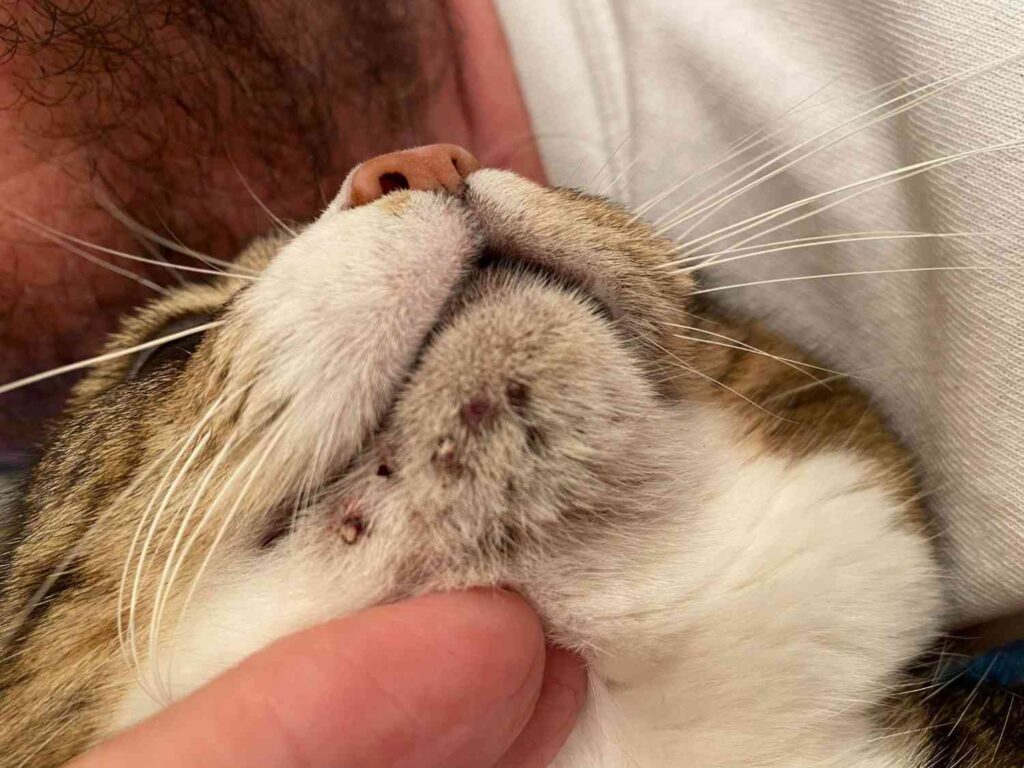
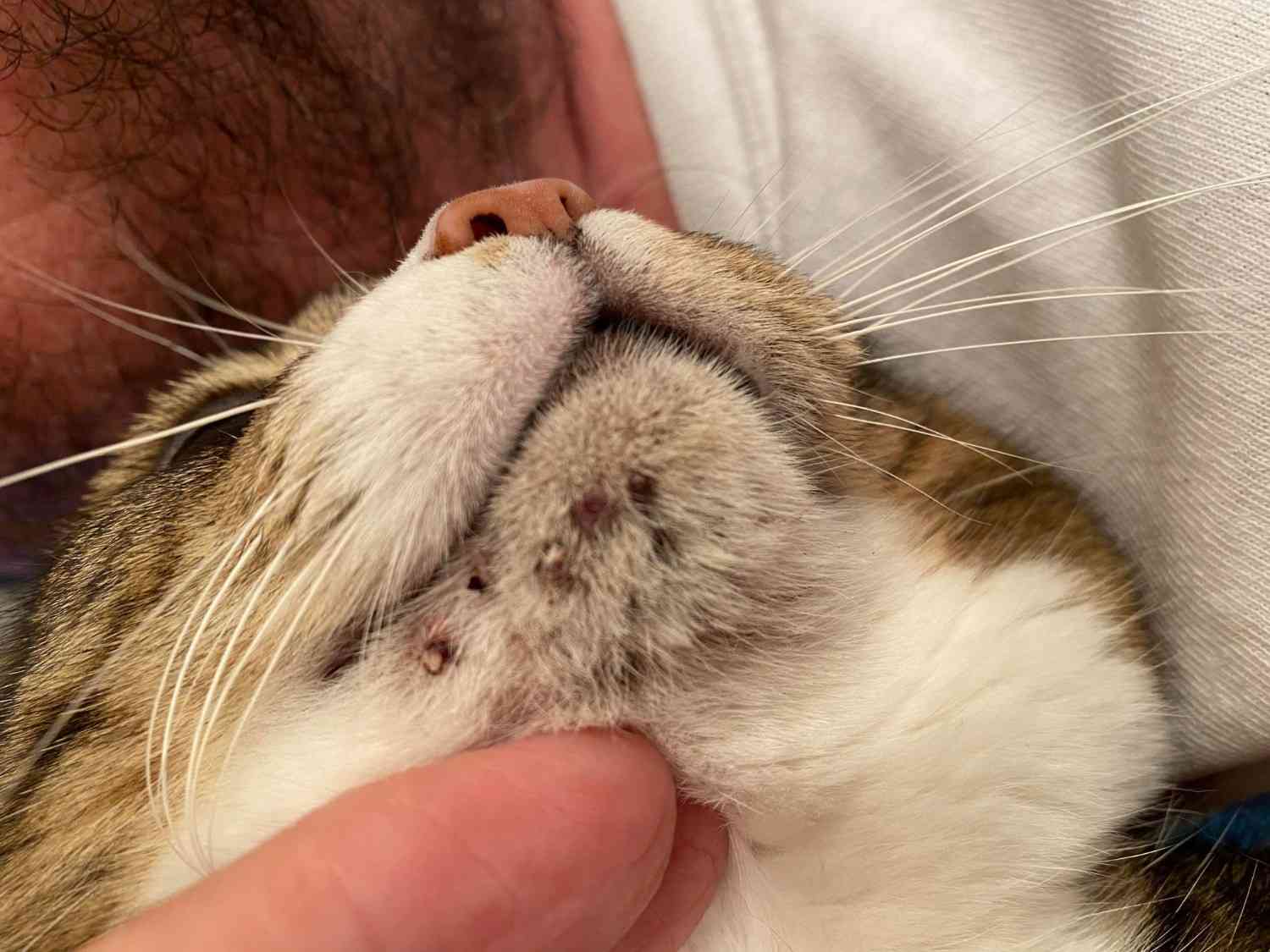
Most cases I see in the clinic involve classic feline acne. The earliest stage usually looks like tiny black specks along the chin and lower lip. Many owners think it’s dirt that won’t wash off.
During exams, I sometimes use gauze to rub the chin to show owners what’s happening. Those black dots are essentially feline blackheads.
A few typical features stand out:
- Small black plugs in hair follicles
- Mild redness or swelling around the chin
- Greasy or slightly dirty-looking fur
- In more advanced cases, small pustules or crusts
I remember a young domestic shorthair brought in by a college student who was convinced his cat had parasites. The chin looked peppered with black debris. Under magnification, it was textbook acne—plugged follicles and mild inflammation. Switching the cat’s plastic food bowl to stainless steel and adding a simple cleaning routine cleared it up within a few weeks.
That sort of outcome is very common.
When Mites Are the Real Problem
Mite infestations on a cat’s chin are much less common than acne, but they do occur. The mites I occasionally diagnose include Demodex, which live within hair follicles.
Unlike acne, mite issues usually don’t stay confined to a single tiny area.
One case that stuck with me involved an older rescue cat brought in by a shelter volunteer. The chin appeared crusty and inflamed, resembling severe acne. But the cat also had patchy hair loss around the eyes and neck. That detail immediately pushed mites higher on my list of possibilities.
A skin scraping confirmed it.
Signs that make me consider mites include:
- Hair loss around the chin or face
- Thick crusts instead of small blackheads
- Intense itching or scratching
- Skin problems spreading beyond the chin.
- Lesions around the eyes, ears, or neck
Mites trigger stronger irritation than typical acne, so cats often scratch or rub their faces more aggressively.
A Closer Look During Diagnosis
In the clinic, I rely on a few simple tools to tell the difference.
The first step is always a physical exam with magnification. Acne usually reveals clogged follicles and mild inflammation. Mites tend to create a rougher texture and sometimes visible scaling.
When I suspect mites, I perform a skin scraping. It’s a quick procedure where a small sample of surface skin cells is collected and examined under a microscope.
That’s the moment the mystery resolves. If mites are present, they’re unmistakable under magnification.
I’ve learned over the years not to skip that step when symptoms don’t perfectly match acne. A quick microscope check can prevent weeks of ineffective treatment.
Common Mistakes I See Cat Owners Make
One mistake I encounter frequently is aggressive cleaning.
Owners see the black specks and try to scrub them away with human acne products or harsh antiseptics. That often makes feline acne worse. Cat skin is sensitive, and overcleaning irritates the follicles further.
Another mistake is assuming every chin problem is acne. A few months ago, a cat owner told me she had been treating “chin acne” for nearly two months with wipes and shampoos. The lesions were spreading across the cat’s face.
A microscope exam revealed mites almost immediately.
The treatments for these conditions are completely different, which is why guessing can delay recovery.
How I Usually Treat Cat Chin Acne
Most cases of feline acne are manageable with simple care.
In my practice, treatment often includes:
- Switching plastic food bowls to stainless steel or ceramic
- Cleaning the chin gently with veterinary wipes
- Occasionally, prescribing topical antiseptic solutions.
- Antibiotics if infection develops
One thing I always tell owners: acne tends to recur. Some cats simply produce more oil in that area.
That doesn’t mean the condition is dangerous, but it does mean occasional maintenance is part of life for some cats.
Treating Mites Requires a Different Approach
Mite infestations require targeted medications that eliminate the parasites.
Depending on the species involved, I may prescribe:
- Topical antiparasitic treatments
- Oral medications
- Medicated baths in certain cases
The good news is that most mite problems respond quickly once the correct medication is used. The key challenge is recognizing that mites—not acne—are causing the issue.
A Practical Way to Think About the Difference
After years of seeing these cases, I often explain the difference to owners in simple terms.
Acne usually looks like black pepper sprinkled on the chin.
Mites tend to look more like irritated, crusty skin that spreads and causes itching.
That mental image isn’t perfect, but it helps people understand why their cat’s symptoms matter.
When a Vet Visit Makes Sense
A small amount of black debris on the chin isn’t always an emergency. Mild acne can often be monitored at home for a short time.
But I recommend scheduling an exam if:
- The chin becomes swollen or painful.
- Hair starts falling out.
- Lesions spread beyond the chin.
- The cat seems itchy or uncomfortable.
Those changes are exactly the clues that push mites or infection higher on the list of possibilities.
Over the years, I’ve seen many cat owners feel relieved once they understand what they’re dealing with. Most chin conditions—whether acne or mites—are treatable with the right approach. The challenge is simply knowing which problem you’re actually looking at.