Can Cats Safely Eat Imitation Crab? A Guide
As a pet nutrition consultant who has spent years working alongside veterinarians in small clinics and pet boarding facilities, I’ve had more than a few cat owners ask me whether imitation crab is safe. The question usually comes up during casual feeding when someone is enjoying seafood, and their cat shows interest. I’ve seen this happen during home visits and even in boarding kitchens, where curious cats test every smell on a plate. My answer is rarely a simple yes or no because imitation crab sits in a gray area for feline diets.
What imitation crab actually is
In my experience, many cat owners assume imitation crab is just another form of seafood, but that assumption is where confusion starts. Imitation crab, also known as surimi, is a processed food made mostly from white fish that is finely ground and then shaped and flavored to resemble crab meat. I first learned about its full ingredient list while reviewing pet dietary risks for a boarding facility that frequently handled cats with allergies.
What surprised me early on was how many additives are packed into imitation crab. It often contains starch, sugar, salt, artificial flavoring, and sometimes preservatives that extend shelf life. These ingredients are harmless for humans in small portions but can be problematic for cats, especially those with sensitive stomachs or kidney issues. I remember a customer last spring who was shocked when I explained that the “seafood treat” she was sharing was closer to processed deli meat than natural fish.
From a nutritional standpoint, imitation crab does not provide the same benefits as real crab or fresh fish. Cats require high-protein, low-carbohydrate diets, and this product tends to lean in the opposite direction due to its fillers. Even though it smells appealing to cats, the internal nutritional value does not match what their bodies actually need.
How cats react to it in real situations
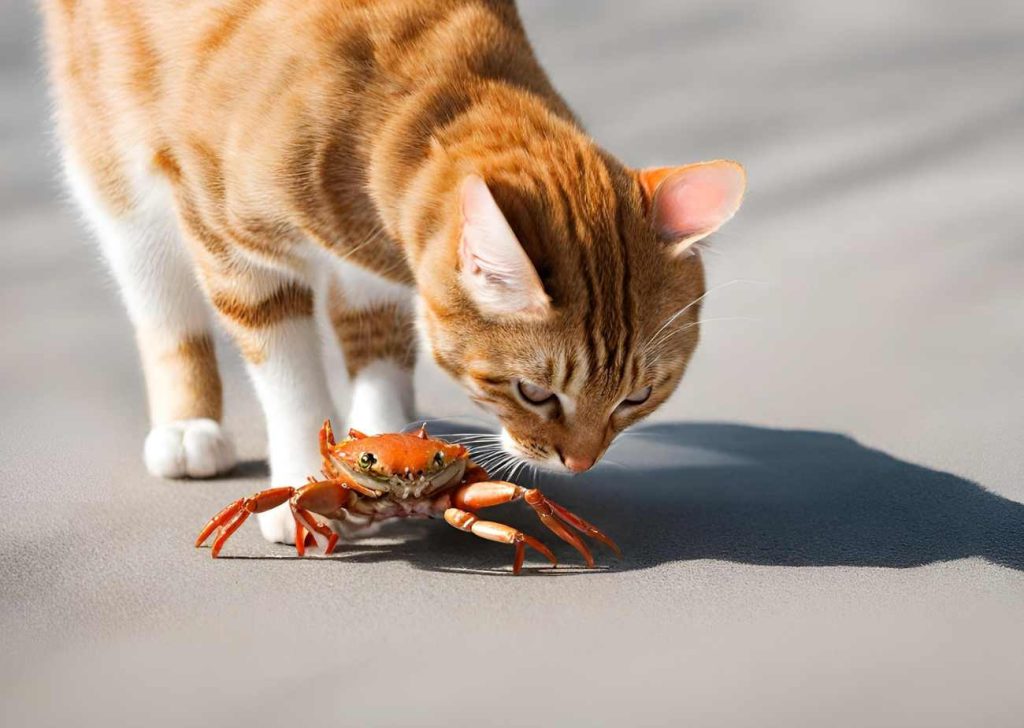
Over the years, I’ve observed how cats respond when imitation crab is introduced into their environment, and the reaction is usually immediate interest. The smell alone is enough to make most cats approach quickly, especially those used to fish-based foods. I’ve seen cats at pet boarding centers become fixated on it during meal prep, even when they weren’t regularly fed any seafood.
During one of my consultations at a local pet care facility, I worked closely with staff at an imitation seafood safety guide to better understand how processed seafood products affect animal digestion in controlled feeding environments. What stood out in those discussions was how frequently cats enjoyed the taste initially but showed mild digestive upset afterward when portions were not carefully controlled. The experience reinforced what I had already seen in practice over several years of handling dietary cases involving cats with sensitive stomachs.
In practical terms, some cats tolerate a tiny bite of imitation crab without visible issues, while others react quickly with vomiting or loose stool. I’ve noticed that younger cats tend to handle it slightly better than older cats, but that doesn’t make it a safe, regular treat. The inconsistency itself is one of the main reasons I advise caution.
Another thing I’ve learned is that cats don’t distinguish between healthy and unhealthy novelty foods the way humans might assume. If it smells like fish, they often treat it as food without hesitation. That instinct can mislead owners into thinking the food is suitable when it is really just appealing on a sensory level.
Risks I’ve seen with regular feeding
When imitation crab is offered more than once in a while, I start seeing patterns in digestive complaints. The most common issue I’ve dealt with is mild gastrointestinal irritation, which shows up as vomiting or inconsistent stool. In multi-cat households I’ve worked with, even small shared portions have caused uneven reactions across different cats.
Sodium content is one of the biggest concerns I discuss with owners. Imitation crab can contain surprisingly high levels of salt, which is not ideal for cats that already struggle with kidney stress or urinary tract sensitivity. I once worked with a senior cat whose diet had to be adjusted after repeated exposure to salty human foods, including small bites of processed seafood given by a well-meaning owner.
Preservatives and artificial flavorings also contribute to long-term concerns. While a single bite is unlikely to cause serious harm, repeated exposure builds unnecessary chemical load in a cat’s diet. I’ve seen cases where eliminating processed treats improved coat condition and energy levels within a few weeks, especially in indoor cats with limited activity.
There is also the behavioral side. Once a cat develops a taste for human seafood snacks, it becomes harder to maintain a consistent feeding routine. I’ve seen cats refuse regular food after repeated exposure to imitation crab, which frustrates owners trying to maintain balanced diets.
Safer alternatives I recommend instead
When owners ask me for safer substitutes, I usually suggest keeping things simple and closer to natural protein sources. Cooked plain fish like salmon or white fish, without seasoning or oil, is a far better option if someone wants to share seafood flavor with their cat. I’ve prepared these options in controlled feeding trials in small pet clinics where I worked part-time.
Chicken is another reliable alternative that I often recommend. Plain boiled chicken has been a go-to treat in many of the boarding environments I’ve managed, and it rarely causes digestive issues when given in small portions. Cats respond well to it because it better matches their natural dietary requirements than processed seafood products.
Tuna in water can also be used occasionally, but even that needs moderation. I’ve seen cats become overly dependent on tuna flavor, so I always caution against making it a daily habit. Balance matters more than novelty when it comes to feline nutrition.
At the end of the day, the safest approach is to treat imitation crab as something that is not part of a cat’s natural diet. I usually advise owners to think of it as a human snack that cats might enjoy the smell of, rather than a food item meant for regular feeding. A small accidental bite is not usually a crisis, but making it a habit creates more problems than benefits over time.