Different Types of Tabby Cats: What Years in Veterinary Practice Have Taught Me
After more than a decade working as a licensed veterinarian, I’ve learned that many cat owners misunderstand what a “tabby cat” actually is. People often walk into my clinic and say something like, “My tabby has been acting strange,” as if tabby refers to a breed. It doesn’t.
Tabby describes a coat pattern, not a breed. I’ve treated tabby-patterned cats from dozens of different breeds, along with plenty of mixed-breed house cats. The pattern itself is ancient and surprisingly varied, and once you know what to look for, you start noticing how different one tabby can be from another.
Over the years, I’ve also noticed that owners sometimes use the word “tabby” to describe almost any striped cat, which overlooks several distinct variations. Understanding these patterns isn’t just trivia for cat enthusiasts. It can help with identification, breeding records, and even tracking lost pets.
The Classic Tabby Pattern
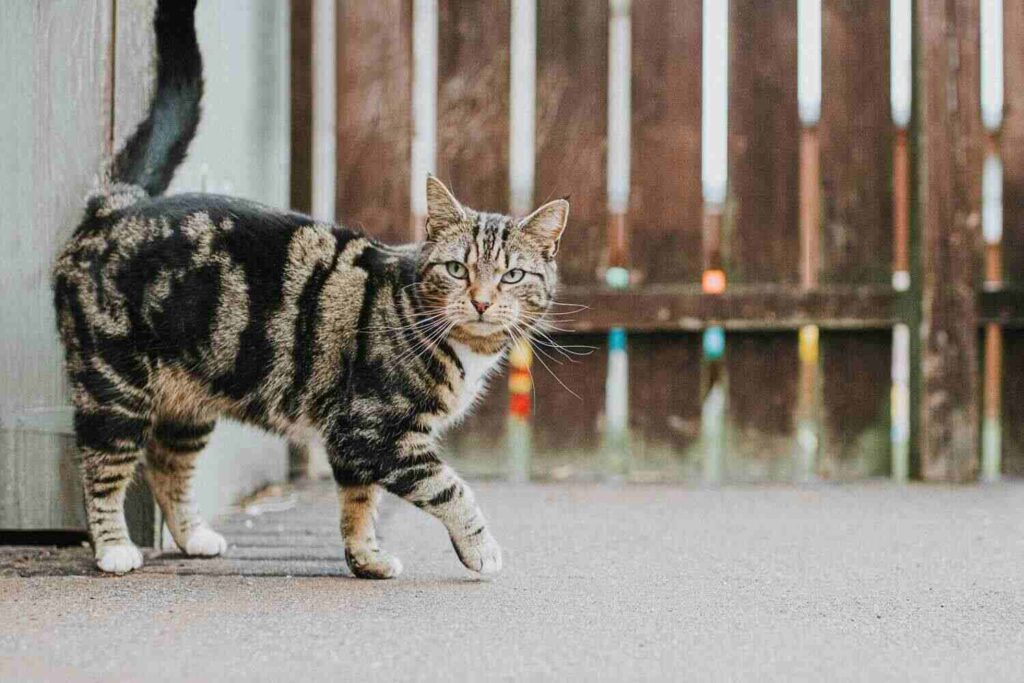
The classic tabby, sometimes called the “blotched tabby,” has one of the most recognizable coat patterns in domestic cats. Instead of narrow stripes, the markings form broad swirls that resemble marble.
I remember a client bringing in a large gray house cat one winter afternoon. She thought her cat had a skin condition because the fur looked “patchy” from a distance. Up close, though, the pattern was perfectly healthy—it was simply a dramatic classic tabby swirl pattern that stood out strongly against the lighter background coat.
Classic tabbies usually have:
- Bold circular or spiral markings along the sides
- Thick stripes along the spine
- The familiar “M” marking on the forehead
That forehead “M” appears on nearly every tabby pattern, and once you start noticing it, you’ll see it everywhere.
In my experience, classic tabbies often appear in breeds like the American Shorthair, though I also see them frequently in mixed-breed cats that owners simply call domestic shorthairs.
The Mackerel Tabby
If someone tells me they have a tabby cat but doesn’t provide a photo, the safest assumption is usually a mackerel tabby. This is the most common tabby pattern I see in practice.
Instead of swirls, the coat has narrow vertical stripes that run down the sides of the body. The pattern reminds many people of a fish skeleton, which is exactly where the name “mackerel” comes from.
A family adopted a stray with striking dark stripes, thinking it was part wildcat. It turned out to be a mackerel tabby with a sharp contrast between its stripes and base coat.
That bold striping can sometimes make these cats look more exotic than they really are.
Typical features include:
- Thin vertical stripes along the sides
- A single dark stripe running along the spine
- Banded markings around the legs and tail
Because the pattern is so widespread genetically, it shows up in countless mixed-breed cats.
The Spotted Tabby
Spotted tabbies look dramatically different at first glance, even though they come from the same genetic family.
Instead of long stripes, the markings break into spots. These can be small and evenly spaced or large and irregular, depending on the cat.
I once examined a rescue cat with perfectly round spots that the shelter believed might be a rare breed. After a closer look, it was simply a domestic shorthair with a striking spotted tabby pattern.
The spots are thought to form when the typical mackerel stripes become genetically “interrupted.” Rather than continuous lines, they split into dots or short dashes.
Breeds like Bengals or Egyptian Maus are famous for spotted coats, but many ordinary house cats display this pattern as well.
The Ticked Tabby
Ticked tabbies often confuse people because they don’t appear striped at all from a distance.
Instead of visible stripes across the body, each individual hair contains bands of color. This creates a subtle, almost sandy appearance across the coat.
As a young veterinarian, I examined a lean cat whose owner insisted it was a tabby, despite lacking stripes. On closer inspection, faint face and leg markings revealed a classic ticked pattern.
Cats with this pattern usually have:
- Minimal body striping
- Subtle facial tabby markings
- Agouti banding on individual hairs
The Abyssinian breed is well known for this coat style, though I’ve encountered similar patterns in mixed-breed cats, too.
The Patched Tabby (Torbie)
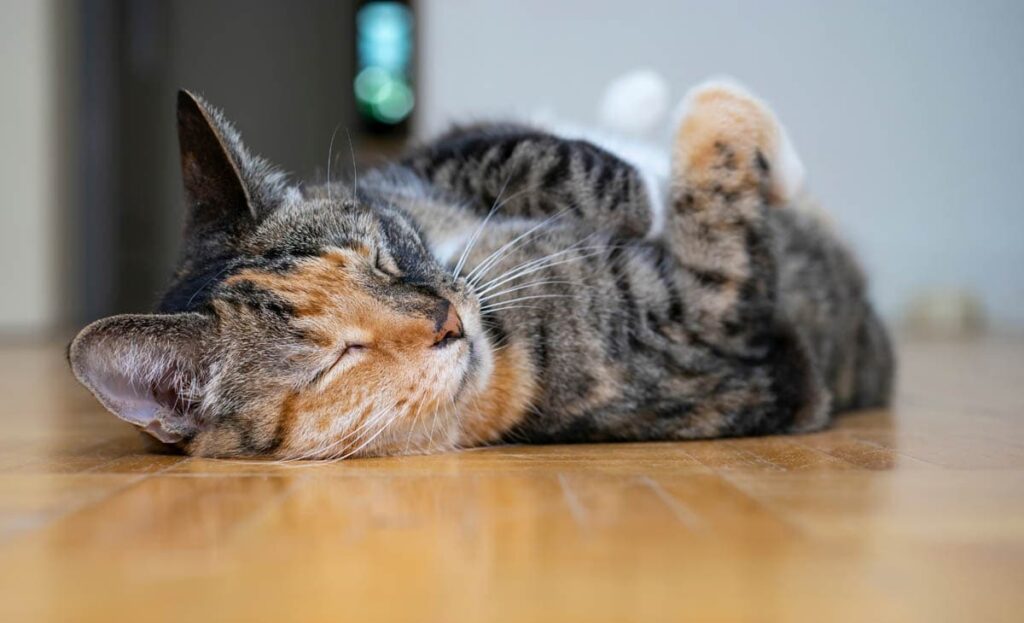
One pattern that often confuses new cat owners is the patched tabby. Veterinarians sometimes refer to this as a “torbie,” a blend of tortoiseshell and tabby patterns.
These cats have tabby striping with patches of orange or cream. The result is a complex coat that looks almost mosaic-like.
A client once brought in a cat with orange patches and gray striping, assuming it was a tortoiseshell-tabby mix. In reality, it was a torbie pattern, common in female cats.
Patched tabbies typically show:
- Tabby striping combined with orange patches
- Varied color zones across the body
- Distinct tabby markings on the face
Because of the genetics involved, most torbies are female. That’s something I often explain to curious owners who wonder why they rarely see male cats with the same pattern.
A Few Details Owners Often Miss
After examining thousands of cats, certain small tabby details become easy to spot.
Nearly all tabbies share several subtle features:
- The “M” marking on the forehead
- Dark lines extending from the eyes
- Banded tails
- Light-colored chin and muzzle areas
Even ticked tabbies usually have these facial markings.
Another detail I often point out during routine exams is the contrast between the base coat and the pattern. Healthy tabbies tend to have a very clear separation between those colors. When that contrast fades suddenly, it sometimes signals underlying health issues or nutritional problems.
It’s a small observation, but one that occasionally helps us catch problems earlier.
Why Understanding Tabby Patterns Matters
For most owners, knowing the type of tabby pattern is simply interesting. But it can also be surprisingly useful.
Shelters often rely on pattern descriptions when identifying or tracking animals. If a cat goes missing, describing it as a “brown tabby” may not narrow things down much. But describing a “spotted tabby with orange patches” dramatically improves the odds of correct identification.
In veterinary practice, I also see how patterns influence perception. Some owners assume certain markings mean their cat is a rare breed. Others worry unusual patterns signal health issues.
In reality, tabby patterns are simply one of the most common—and most beautiful—coat variations in domestic cats. After years of working with them daily, I still catch myself noticing a particularly striking swirl or unusual set of spots during routine checkups. Even after thousands of exams, tabby coats rarely look exactly the same from one cat to the next.