Ragdoll vs Siamese Cats From My Grooming Table
I work as a mobile cat groomer, driving a converted van across suburban neighborhoods and small towns, handling everything from heavy shedding to full coat maintenance. Over the years, two breeds that keep showing up in my schedule are Ragdolls and Siamese cats, and they could not behave more differently at my table. I’ve worked with both in homes where owners were deciding which breed better fits their lifestyle, often after dealing with very different grooming and behavioral experiences. Those real visits have shaped how I compare them far more than any textbook description ever did.
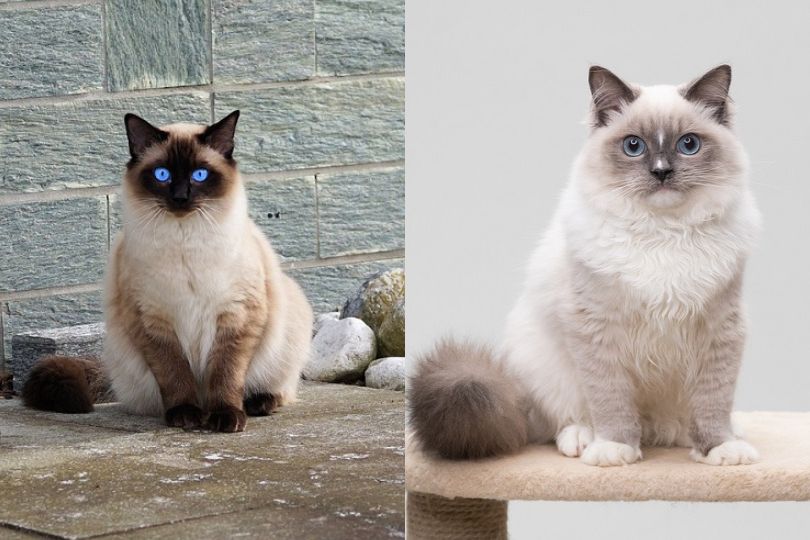
When people ask me about Ragdoll vs Siamese, I usually think of two very different energy levels sitting in front of me. One is relaxed and heavy in the arms, the other is alert and constantly tracking movement in the room. I’ve seen families switch from one breed to the other based on lifestyle changes, and I’ve also seen owners surprised by how intense grooming needs or attention demands can become. My comparisons come from hands-on work, not theory.
Personality Differences I See in Real Homes
Ragdolls are the cats I most often describe as “floor-to-couch travelers” because they tend to move slowly and prefer predictable environments. I’ve groomed Ragdolls in living rooms where they simply accepted whatever position I placed them in, almost as if they trusted the process without question. One customer last spring had a Ragdoll that would literally flop onto the grooming mat as soon as I laid it down, making my job almost too easy on calm days. That kind of temperament is not rare in this breed, from what I’ve experienced.
Siamese cats, on the other hand, rarely sit still for long. During one appointment, a Siamese followed me from room to room, vocalizing as if supervising my every step. The session took longer than expected because the cat insisted on being involved with every tool, and I had to pause several times just to let it settle. Their intelligence shows in how quickly they respond to changes, but it also means they get bored easily.
I’ve had owners tell me they chose Ragdolls because they wanted a quieter presence in the home, while Siamese were chosen for companionship that feels more interactive. Both choices make sense depending on household energy use, especially if there are children or multiple pets. I’ve noticed that Ragdolls blend into calmer households, while Siamese tend to shape the home’s rhythm around their own activity level. Neither is better, just very different in how they fit into daily life.
Grooming Needs and Coat Maintenance in Practice
Ragdolls require more coat attention than most new owners expect. Their semi-long fur doesn’t mat as aggressively as some long-haired breeds, but it still tends to build up in hidden areas, like behind the legs and under the chest. I once worked with a Ragdoll in a multi-cat household where brushing had been inconsistent for about a month, and it took nearly two hours to fully detangle without stressing the cat. That kind of coat care is manageable, but it requires consistency to keep the cat comfortable.
One family I worked with through a local referral service once asked for advice after struggling to shed in their Siamese. In cases like that, I often recommend checking a ragdoll vs siamese resource that breaks down grooming schedules and coat care expectations for short-haired breeds in a practical way. The Siamese coat is short, but it still benefits from regular brushing to reduce loose hair and skin oils building up over time. It is usually quick maintenance, but skipping it shows faster than people expect.
Siamese cats generally spend less time on my grooming table than Ragdolls, but they require more patience when it comes to behavior management. They do not like being restrained for long, and I often work in shorter intervals with breaks in between. Ragdolls allow longer sessions, which makes coat work easier in one sitting, but their fur requires more physical detangling. I adjust my approach depending on which breed I am handling that day.
Energy Levels, Training, and Household Fit
Energy level is probably the biggest dividing line I see between these two breeds. Siamese cats often act like they are part of every activity happening in the house, from cooking to cleaning to simple walking from room to room. I’ve seen them learn household routines quickly, sometimes even anticipating feeding times better than the owners do. That intelligence is impressive, but it also means they can become restless if not engaged.
Ragdolls usually take a slower approach to interaction. I’ve visited homes where a Ragdoll would observe guests quietly from a distance before deciding to approach, sometimes after several minutes of watching. They tend to adapt well to calm households, especially those with predictable routines. I’ve noticed they are less likely to interrupt daily activity, which some owners appreciate after long workdays.
Training differences also show up during grooming sessions. Siamese cats respond quickly to verbal cues but may test boundaries when bored or restricted, while Ragdolls generally accept handling without much resistance but may not respond as actively to training cues. I adjust my tone and pacing depending on the cat in front of me, because forcing either breed into the same handling style rarely works. Over time, I’ve learned that respecting those differences makes every session smoother and safer for both of us.
Between the two, I never tell owners one is better. I’ve seen families thrive with a calm Ragdoll in a quiet home, and I’ve also seen active households light up with a Siamese’s constant presence. The real decision usually comes down to whether someone wants a steady companion or an interactive one that shapes the energy of the entire space.