What I’ve Seen When Cats Eat Arugula in Real Households
I work as a mobile cat groomer in the Midwest. I spend hours in clients’ homes, observing what cats get into when owners aren’t watching. Food questions arise constantly—especially whether cats can eat arugula. I’ve seen cats nibble arugula from kitchen counters, unattended salads, and even home gardens. My insights come from these real experiences, not theory.
What happens when cats try leafy greens like arugula
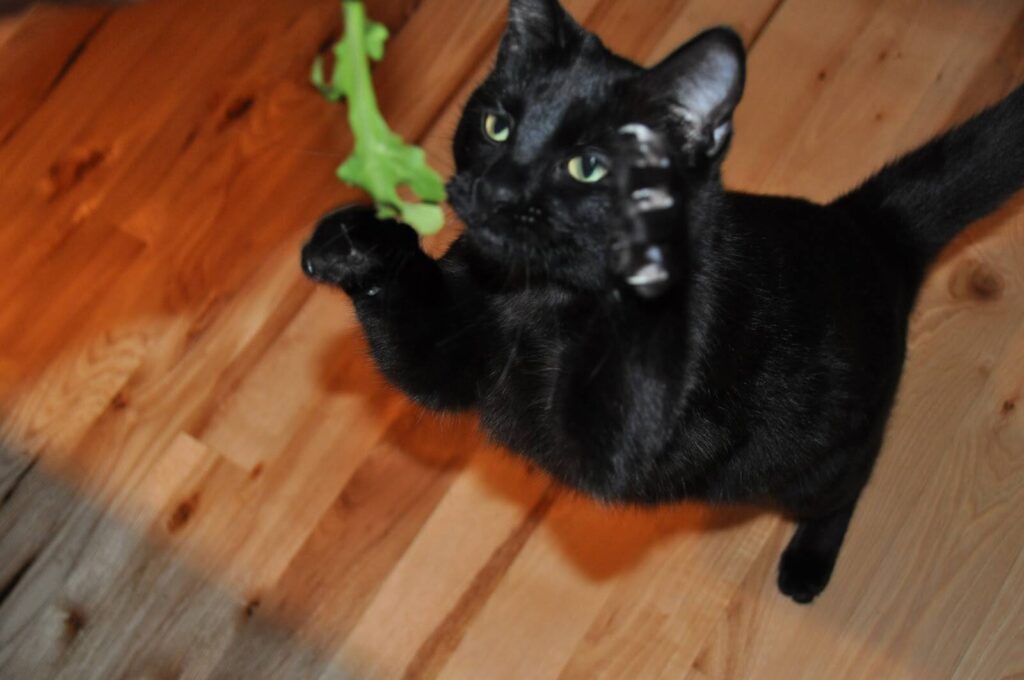
Most cats I’ve seen treat arugula more like a toy than food. They chew it once or twice, then lose interest, especially when it’s fresh and bitter. Last spring, I had a customer whose cat repeatedly jumped onto the counter to swipe leaves from a salad bowl before dinner. The owner found it funny at first, until it became a daily habit.
From what I’ve observed, arugula itself isn’t something cats actively seek out for nutrition. Cats are obligate carnivores, so their bodies don’t rely on leafy greens the same way ours do. Still, occasional nibbling does happen, especially in homes where plants are within easy reach. I’ve even seen cats in multi-pet households develop little habits of chewing greens just for fun, rather than out of hunger.
Digestive reactions vary, but most cats that eat a small amount show no serious issues beyond mild curiosity or quick disinterest. Short sentence here. Most just walk away. In a few cases, I’ve noticed mild stomach sensitivity, but it usually comes from eating too much too quickly rather than from the arugula itself.
How I respond when owners ask during grooming visits
During grooming appointments, owners often ask food-related questions while I’m brushing or trimming their cats. One client in a small suburban home asked me about arugula because her indoor cat kept stealing it from her grocery bags and chewing the edges. I explained what I’ve seen in similar cases and how most cats don’t have strong reactions unless they eat large amounts. That conversation stayed with me because it showed how common this behavior actually is.
I also sometimes point owners toward reliable feeding resources so they can double-check plant safety and general diet concerns without guessing. One local pet wellness center I’ve worked with occasionally helps owners sort through questions like these, especially when cats show unusual eating habits. The cat-safe diet consultation resource I’ve recommended before helped a client who had multiple cats sharing kitchen space, where greens were constantly left out. After that, they adjusted how they stored food and noticed fewer “counter raids” from their cats.
During grooming sessions, I focus on coat condition and hydration, which reveal more about diet than snacking habits. Well-fed, hydrated cats are less likely to go after greens on counters or tables. I once worked with two cats; only one showed interest in plants, and that one simply needed more stimulation. This difference shows up more often than people expect.
Possible risks and what I’ve actually seen in practice
Even though arugula is not considered toxic to cats, I’ve still seen problems arise from overconsumption or poor storage. Cats that get into large amounts of leafy greens sometimes experience mild vomiting or soft stool, not because of poison but because their digestive system isn’t built for plant-heavy intake. I’ve had a case in a city apartment where a cat repeatedly chewed salad greens left near the sink, leading to repeated stomach upset until the owner changed their food storage habits.
Another issue I’ve noticed isn’t the arugula itself, but what it’s mixed with. Dressings, oils, and seasonings cause more trouble than the leaf alone. Cats don’t process additives well. I once saw a cat lick leftover dressing off arugula and develop mild digestive distress, so I took it to the vet out of caution.
Some cats also develop repetitive plant-chewing habits that signal boredom or lack of stimulation rather than dietary need. In those situations, I usually recommend environmental changes, such as more playtime or alternative, chew-safe toys, rather than focusing solely on removing the plant. I’ve noticed that once enrichment improves, interest in kitchen greens often drops naturally, with little effort from the owner.
What I tell owners based on real-world experience
Cats can have a little arugula on occasion—it isn’t dangerous in moderation, but it shouldn’t be a diet staple. The main issue is not toxicity; it’s repeated or accidental overfeeding. Cats’ curiosity often leads them to eat food not intended for them. In summary, occasional small amounts are safe, but limit access and avoid making it a habit.
I also remind owners that every cat reacts differently. It depends on age, health, and diet. One older cat I groomed sniffed arugula and walked away, while a younger one in the same house treated it as a toy when it was within reach. These differences matter more than the ingredient itself.
The key takeaway is to stay aware, not panic. Keep leafy greens out of reach if your cat likes to explore counters. Instead of worrying about rare bites, monitor ongoing behavioral patterns. This approach helps prevent issues before they become problems.