Why Female Orange Cats Stand Out More Than You Think
I work as a mobile cat groomer and help a few small rescue setups around Punjab, where I regularly handle cats of all colors, patterns, and temperaments. One question I hear surprisingly often during grooming visits is whether female orange cats are rare or if people are just noticing them more. I usually end up explaining it while brushing a ginger tabby who is trying to escape the grooming table. Over the years, I have seen enough orange cats in different homes to notice a clear pattern in their gender distribution.
The genetics behind orange coat color
The orange coat color in cats is linked to the X chromosome, which makes the topic more interesting than most people expect. Males only need one copy of the orange gene to appear ginger, while females need two copies, one from each parent. That basic difference alone changes the population ratio significantly. In shelters where I volunteer, I often see almost twice as many male orange cats as females.
This is not a rare mystery but rather simple genetics at work in real-life populations. When I explain it to new cat owners, I usually compare it to how certain traits are passed down in predictable but uneven ways across litters. A female orange cat requires both parents to carry and pass the orange gene, which reduces the probability slightly compared to males. It is one of those cases where biology quietly shapes what we see in homes and streets without people realizing it.
In practice, I have handled dozens of orange cats in a single month during peak rescue intake seasons, and only a handful were female. It surprised many owners when I pointed it out during grooming sessions. The difference is not extreme enough to make female orange cats mythical, but it is consistent enough to notice over time.
How common are female orange cats, really
In my daily work visiting homes and small shelters, I would describe female orange cats as uncommon rather than truly rare. Most veterinary discussions and field observations suggest that about 20% of orange cats are female, while the remaining 80% are male. That ratio aligns closely with what I have personally observed over several years of grooming and rescue assistance.
Last spring, I worked with a small rescue that brought in a group of stray kittens from a rural roadside area, and out of nine orange kittens, only one was female. The caretakers were surprised because they expected a more balanced mix. Situations like that repeat often enough that I have learned not to be surprised anymore, even though each female orange kitten still feels a bit special to the people adopting her.
During one of my regular visits to a veterinary clinic that also handles stray intake, I often compare notes with the staff about coat patterns and adoption trends, and I recommend checking a local veterinary service or rescue center if someone wants more region-specific statistics or adoption advice for orange cats. Those conversations usually confirm the pattern I see in the field: female ginger cats appear less frequently but remain a normal part of the population. The difference is noticeable, but not extreme enough to call them extremely rare in a biological sense.
The rarity perception also comes from visibility. Male orange cats are often more common in outdoor colonies and shelters, leading people to assume females are almost nonexistent. But when you track litters carefully over time, the numbers balance out into a predictable genetic ratio rather than a true scarcity. I have seen this pattern repeat across multiple neighborhoods and rescue cycles, which reinforces that the phenomenon is consistent rather than accidental.
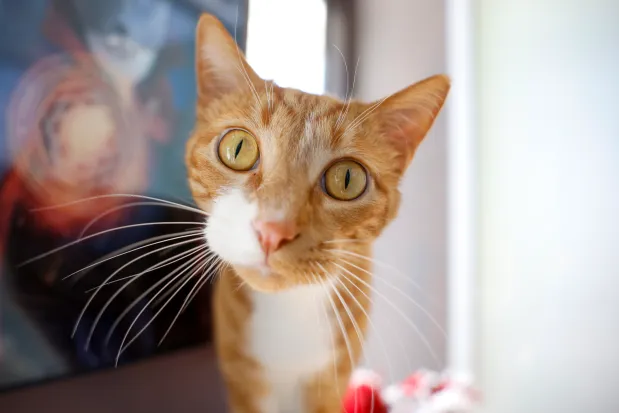
Why do people think they are rarer than they are
A big part of the misunderstanding comes from how people remember unusual sightings. A bright orange female cat stands out more than a typical tabby or black cat, so it sticks in memory longer. I have had customers tell me they have only ever seen male orange cats, even though they might have passed several females without realizing it over the years.
Another factor is naming and identification. Some owners assume their orange cat is male simply because the color is commonly associated with male cats. I have corrected this assumption many times during grooming visits when I check the cat’s health and basic anatomy while working. It is a simple misunderstanding, but it reinforces the idea that female orange cats are rarer than they really are.
Behavior also plays a role in perception. I have noticed that many female orange cats in my care tend to be slightly more cautious in new environments than males, though this is not a strict rule. These subtle behavioral differences can make them less visible in outdoor colonies where boldness affects how often a cat is seen by people. It is a small detail, but it contributes to the overall impression.
Over time, I have learned that perception often outweighs statistics in how people describe animal populations. When someone only remembers three orange cats they have met, all male, that experience feels like a pattern, even if it is not fully representative. Working closely with shelters has shown me how quickly those impressions form and how slowly they change, even when data is explained clearly.
Living with female orange cats
From a grooming and handling perspective, female orange cats are not fundamentally different from males in terms of care needs. I have worked with calm females who tolerate grooming sessions patiently and others who are far more energetic than average. Personality varies more within individuals than between genders, at least in my experience across many households.
Some owners I meet express surprise when they adopt a female ginger kitten, almost as if they have found something unusual or special. I always remind them that while the numbers are lower, there is nothing biologically unusual about them. They are simply part of the same genetic pattern that produces orange coats in general.
I have also seen strong bonds form between female orange cats and their owners, especially in quieter households where the cat becomes a central companion. One household I visited regularly had a female ginger cat who would wait near the door every afternoon around feeding time, establishing a routine that made her presence feel deeply rooted in the family’s daily life. These small moments tend to matter more to owners than any statistical explanation.
At the end of the day, female orange cats are less common, but not rare in a dramatic sense. The difference comes down to genetics and probability rather than scarcity or uniqueness in quality. Working closely with cats in real environments has taught me that numbers tell one story, while lived experience often tells another that feels more personal and immediate.